College of Environmental Science and Engineering, Nankai University, Tianjin, 300071, China.
Tianjin Engineering Center of Environmental Diagnosis and Contamination Remediation, Tianjin, 300071, China.
Sci Rep. 2017 Nov 1;7(1):14856. doi: 10.1038/s41598-017-14032-5.
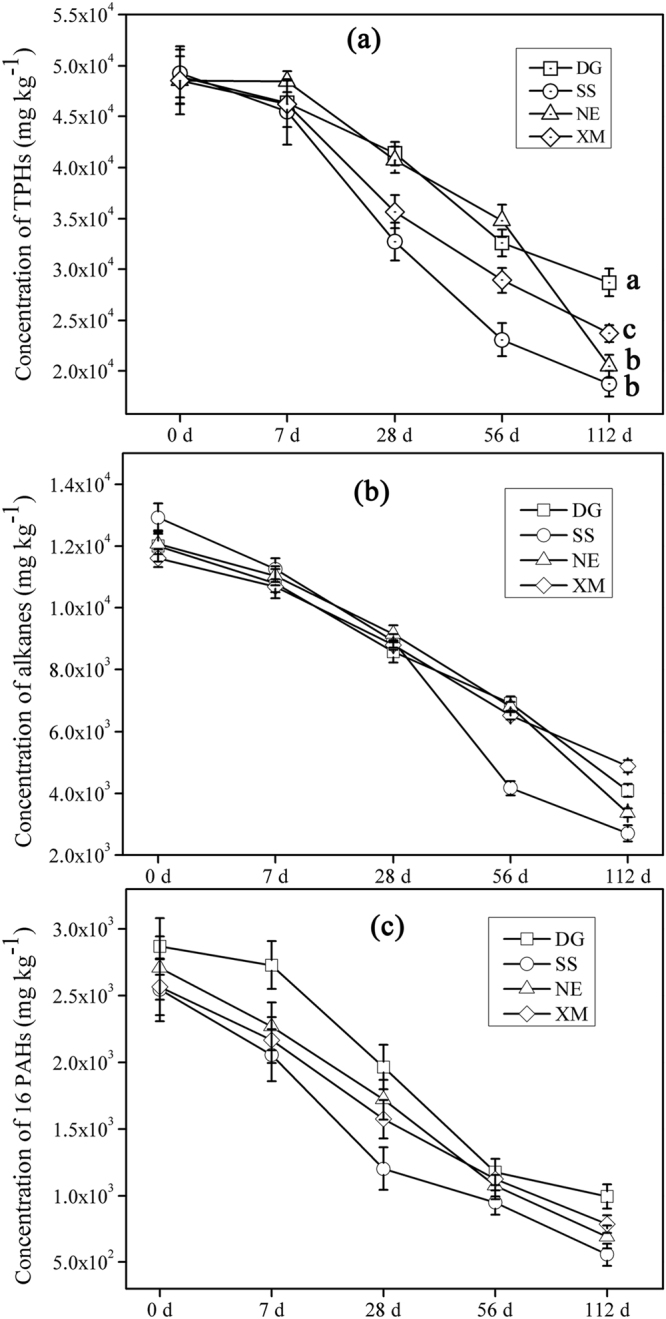
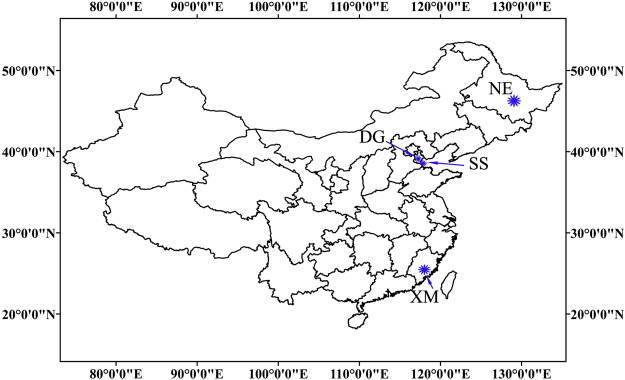
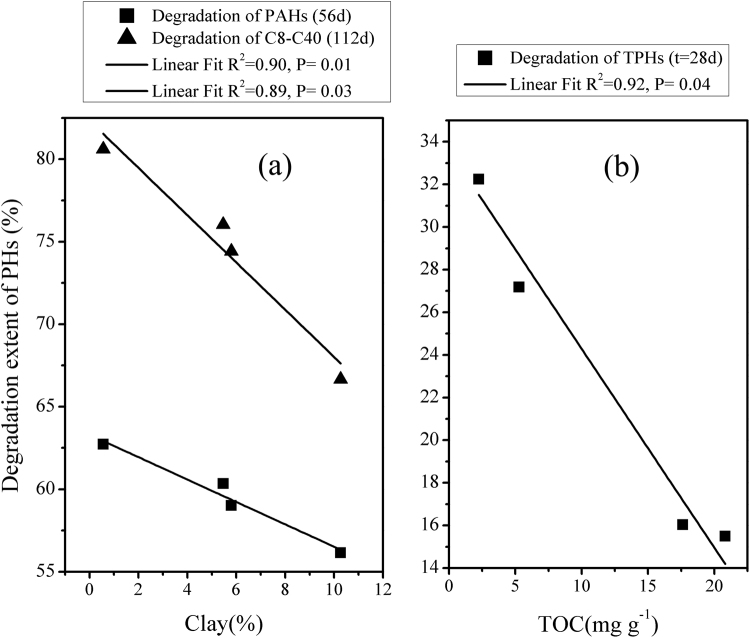
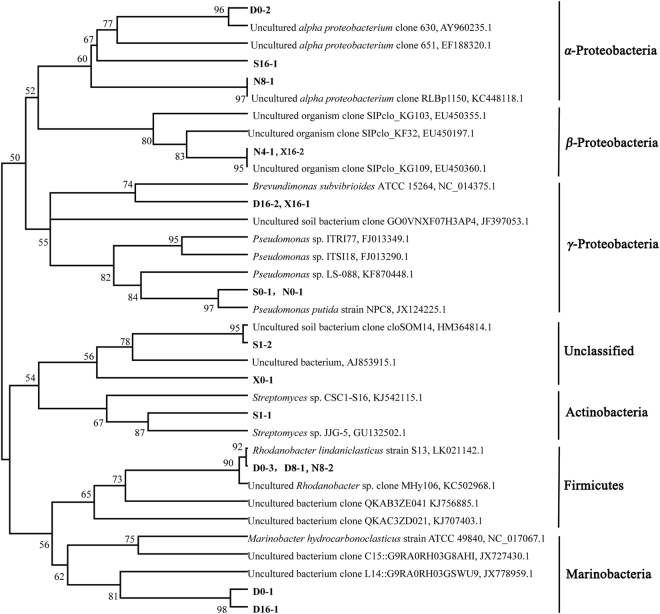
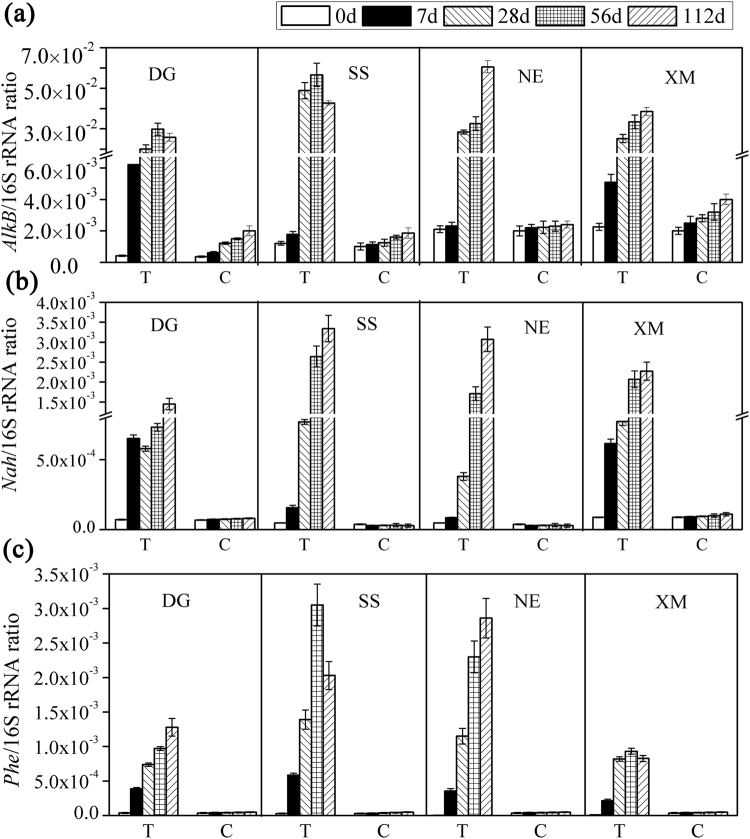
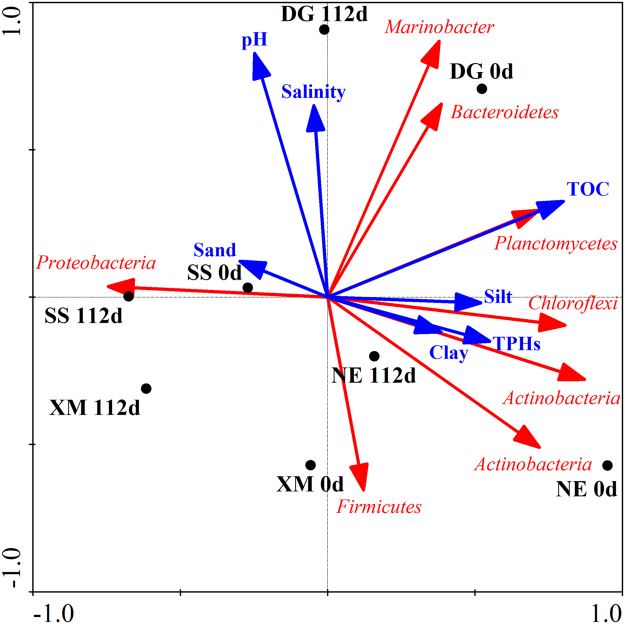
A microcosm experiment was conducted for 112 d by spiking petroleum hydrocarbons into soils from four regions of China. Molecular analyses of soils from microcosms revealed changes in taxonomic diversity and oil catabolic genes of microbial communities. Degradation of total petroleum hydrocarbons (TPHs) in Sand from the Bohai Sea (SS) and Northeast China (NE) exhibited greater microbial mineralization than those of the Dagang Oilfield (DG) and Xiamen (XM). High-throughput sequencing and denaturing gradient gel electrophoresis (DGGE) profiles demonstrated an obvious reconstruction of the bacterial community in all soils. The dominant phylum of the XM with clay soil texture was Firmicutes instead of Proteobacteria in others (DG, SS, and NE) with silty or sandy soil texture. Abundances of alkane monooxygenase gene AlkB increased by 10- to 1000-fold, relative to initial values, and were positively correlated with rates of degradation of TPHs and n-alkanes C13-C30. Abundances of naphthalene dioxygenase gene Nah were positively correlated with degradation of naphthalene and total tricyclic PAHs. Redundancy analysis (RDA) showed that abiotic process derived from geographical heterogeneity was the primary effect on bioremediation of soils contaminated with oil. The optimization of abiotic and biotic factors should be the focus of future bioremediation of oil contaminated soil.
对来自中国四个地区的土壤进行了为期 112 天的石油烃加标微宇宙实验。微宇宙土壤的分子分析揭示了微生物群落分类多样性和石油代谢基因的变化。来自渤海(SS)和中国东北(NE)的沙土壤中石油烃(TPHs)的降解表现出比大港油田(DG)和厦门(XM)土壤更高的微生物矿化作用。高通量测序和变性梯度凝胶电泳(DGGE)图谱表明,所有土壤中的细菌群落都明显重建。含粘土土壤质地的 XM 的主要门是Firmicutes,而其他(DG、SS 和 NE)含粉砂或砂质土壤质地的主要门是Proteobacteria。烷烃单加氧酶基因 AlkB 的丰度相对于初始值增加了 10-1000 倍,与 TPHs 和 n-烷烃 C13-C30 的降解速率呈正相关。萘二氧酶基因 Nah 的丰度与萘和总三环 PAHs 的降解呈正相关。冗余分析(RDA)表明,源自地理异质性的非生物过程是受污染土壤生物修复的主要影响因素。未来应重点优化生物和非生物因素,以实现受污染土壤的生物修复。