Okabe Hinako, Aoki Katsuhiko, Yogosawa Satomi, Saito Mitsuru, Marumo Keishi, Yoshida Kiyotsugu
Department of Biochemistry, Jikei University School of Medicine, Tokyo, Japan.
Department of Orthopedic Surgery, Jikei University School of Medicine, Tokyo, Japan.
Cancer Sci. 2018 Jan;109(1):112-120. doi: 10.1111/cas.13435. Epub 2017 Nov 29.
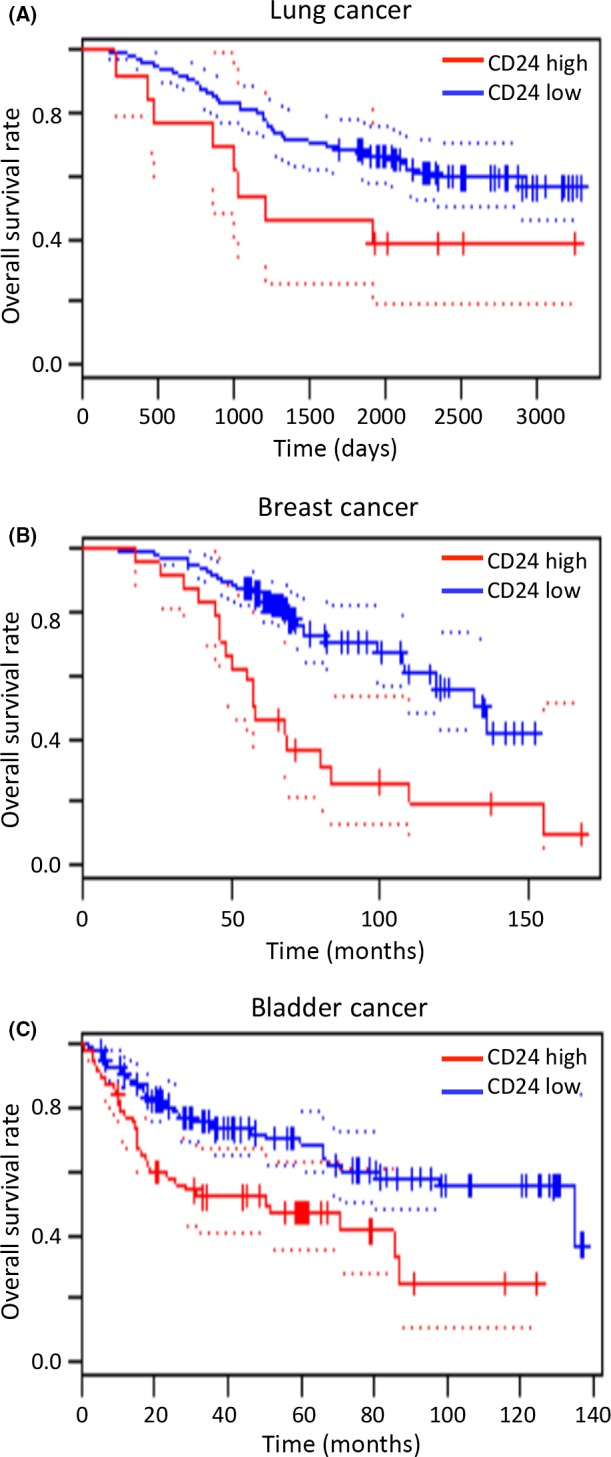
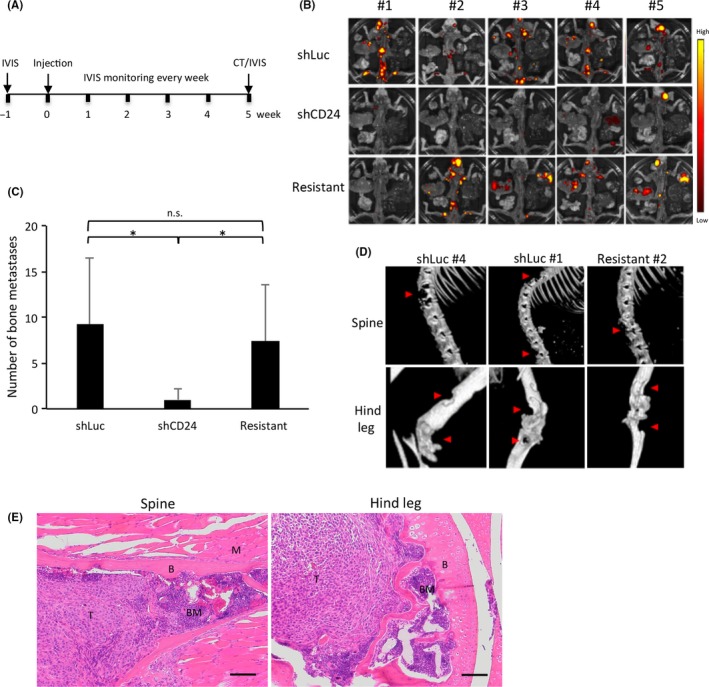
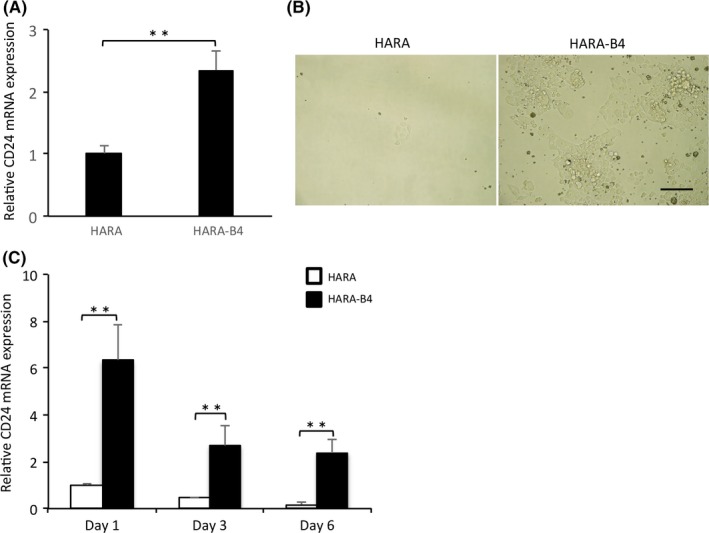
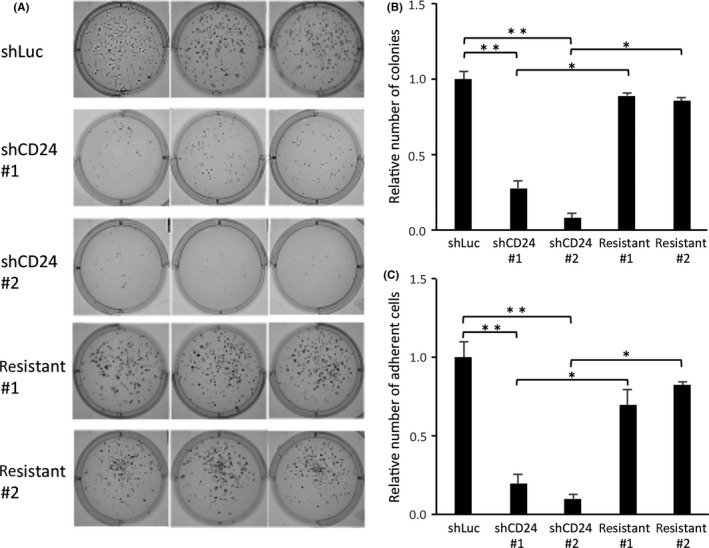
Suppression of bone metastasis can improve patient quality of life. Current drugs for bone metastasis have been shown to prolong progression-free survival but not overall survival; therefore, other potential therapeutic targets for bone metastasis should be investigated. Cell-surface antigens, such as CD24, have been recently shown to be involved in the metastasis of various cancers. However, whether CD24 plays a role in bone metastasis of lung cancer remains unknown. To observe metastasis of lung cancer cells by imaging technology, we introduced a near-infrared fluorescent protein, iRFP720, into a bone-seeking subclone established from lung cancer cells, HARA-B4 cells. The anchorage-independent growth of these cells was then evaluated by colony formation assays. We also compared cancer cell tropism to bone tissue with HARA-B4 cells in the presence or absence of CD24 by cell adhesion assays. To clarify the role of CD24 in bone metastasis, we intracardially injected CD24-knockdown HARA-B4 cells into mice and monitored metastasis through detection of iRFP720 using an in vivo imaging system. CD24-knockdown HARA-B4 cells in vitro showed reduced anchorage-independent growth and cancer cell tropism to bone. Bone metastasis was diminished in mice inoculated with CD24-knockdown HARA-B4 cells, which was rescued by add-back of CD24 in cells. Our findings indicate that iRFP720 is effective for in vivo imaging analysis of bone metastasis and that downregulation of CD24 suppresses bone metastasis of lung cancer cells. These findings collectively indicate that CD24 may be considered a promising new therapeutic candidate for the prevention of bone metastasis of lung cancer.
抑制骨转移可改善患者生活质量。目前用于骨转移的药物已显示能延长无进展生存期,但不能延长总生存期;因此,应研究骨转移的其他潜在治疗靶点。细胞表面抗原,如CD24,最近已被证明与多种癌症的转移有关。然而,CD24是否在肺癌骨转移中起作用仍不清楚。为了通过成像技术观察肺癌细胞的转移,我们将一种近红外荧光蛋白iRFP720导入从肺癌细胞HARA-B4细胞建立的趋骨性亚克隆中。然后通过集落形成试验评估这些细胞的非锚定依赖性生长。我们还通过细胞粘附试验比较了在有或没有CD24的情况下HARA-B4细胞对骨组织的癌细胞嗜性。为了阐明CD24在骨转移中的作用,我们将CD24敲低的HARA-B4细胞经心内注射到小鼠体内,并使用体内成像系统通过检测iRFP720来监测转移情况。CD24敲低的HARA-B4细胞在体外显示出非锚定依赖性生长减少以及对骨的癌细胞嗜性降低。接种CD24敲低的HARA-B4细胞的小鼠骨转移减少,而细胞中CD24的回补可挽救这种情况。我们的研究结果表明,iRFP720对骨转移的体内成像分析有效,并且CD24的下调可抑制肺癌细胞的骨转移。这些研究结果共同表明,CD24可能被认为是预防肺癌骨转移的一种有前景的新治疗候选物。