Biederer Thomas, Kaeser Pascal S, Blanpied Thomas A
Department of Neuroscience, Tufts University School of Medicine, Boston, MA 02111, USA.
Department of Neurobiology, Harvard Medical School, Boston, MA 02115, USA.
Neuron. 2017 Nov 1;96(3):680-696. doi: 10.1016/j.neuron.2017.10.006.
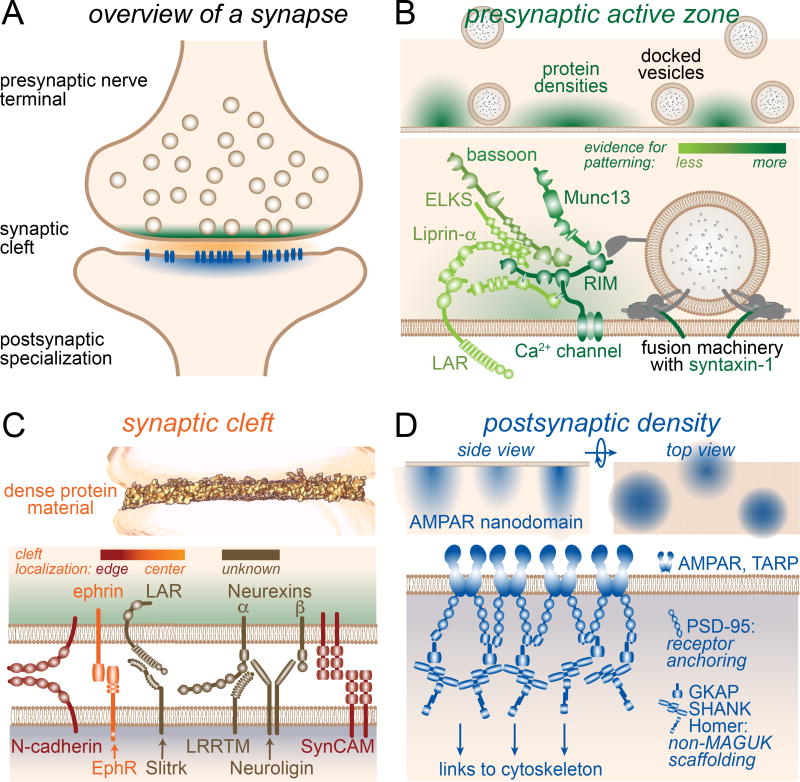
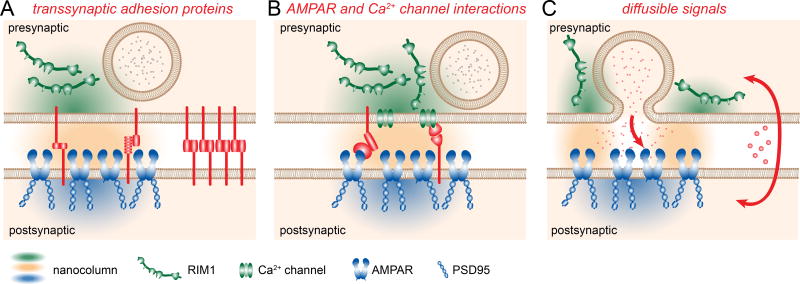
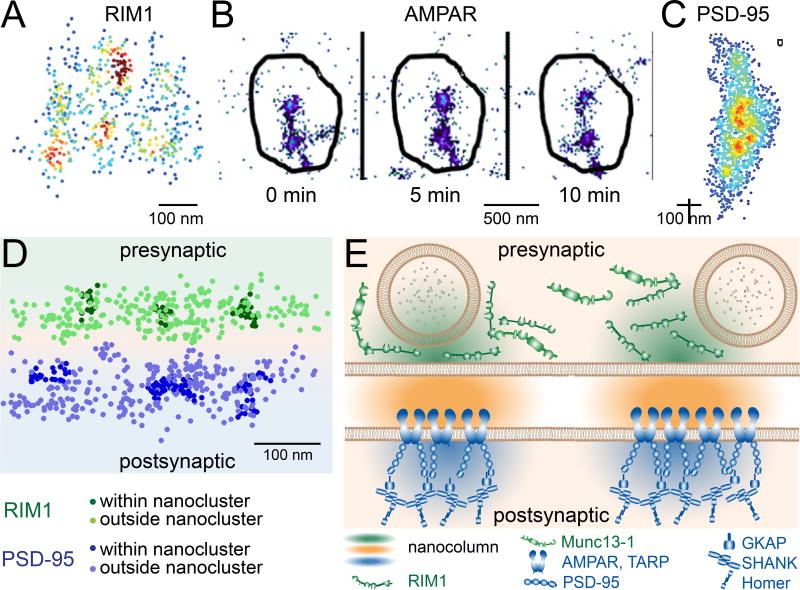
At each of the brain's vast number of synapses, the presynaptic nerve terminal, synaptic cleft, and postsynaptic specialization form a transcellular unit to enable efficient transmission of information between neurons. While we know much about the molecular machinery within each compartment, we are only beginning to understand how these compartments are structurally registered and functionally integrated with one another. This review will describe the organization of each compartment and then discuss their alignment across pre- and postsynaptic cells at a nanometer scale. We propose that this architecture may allow for precise synaptic information exchange and may be modulated to contribute to the remarkable plasticity of brain function.
在大脑大量的突触中,突触前神经末梢、突触间隙和突触后特化结构共同构成一个跨细胞单元,以实现神经元之间信息的高效传递。虽然我们对每个部分的分子机制了解很多,但我们才刚刚开始理解这些部分是如何在结构上定位并在功能上相互整合的。这篇综述将描述每个部分的组织结构,然后讨论它们在纳米尺度上跨突触前和突触后细胞的排列情况。我们认为,这种结构可能允许精确的突触信息交换,并可能受到调节,从而对大脑功能的显著可塑性做出贡献。