Mimetas BV, Leiden, The Netherlands.
NIH, Bethesda, Maryland, USA.
BMC Cancer. 2017 Nov 2;17(1):709. doi: 10.1186/s12885-017-3709-3.
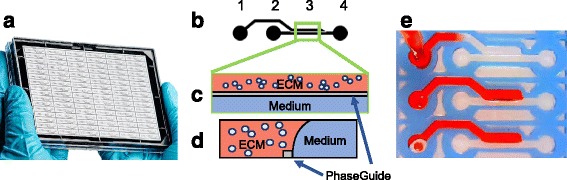
Breast cancer is the most common invasive cancer among women. Currently, there are only a few models used for therapy selection, and they are often poor predictors of therapeutic response or take months to set up and assay. In this report, we introduce a microfluidic OrganoPlate® platform for extracellular matrix (ECM) embedded tumor culture under perfusion as an initial study designed to investigate the feasibility of adapting this technology for therapy selection.
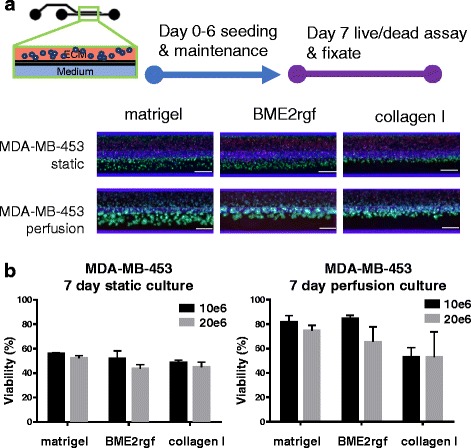
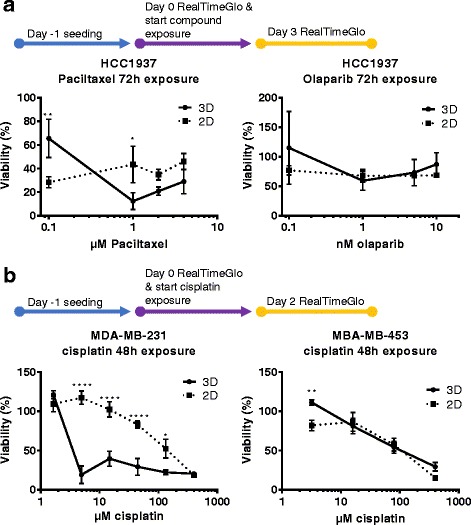
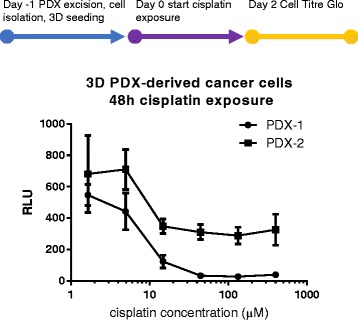
The triple negative breast cancer cell lines MDA-MB-453, MDA-MB-231 and HCC1937 were selected based on their different BRCA1 and P53 status, and were seeded in the platform. We evaluate seeding densities, ECM composition (Matrigel®, BME2rgf, collagen I) and biomechanical (perfusion vs static) conditions. We then exposed the cells to a series of anti-cancer drugs (paclitaxel, olaparib, cisplatin) and compared their responses to those in 2D cultures. Finally, we generated cisplatin dose responses in 3D cultures of breast cancer cells derived from 2 PDX models.
The microfluidic platform allows the simultaneous culture of 96 perfused micro tissues, using limited amounts of material, enabling drug screening of patient-derived material. 3D cell culture viability is improved by constant perfusion of the medium. Furthermore, the drug response of these triple negative breast cancer cells was attenuated by culture in 3D and differed from that observed in 2D substrates.
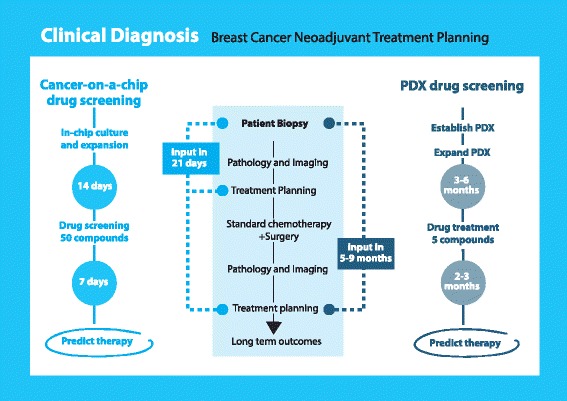
We have investigated the use of a high-throughput organ-on-a-chip platform to select therapies. Our results have raised the possibility to use this technology in personalized medicine to support selection of appropriate drugs and to predict response to therapy in a real time fashion.
乳腺癌是女性中最常见的侵袭性癌症。目前,用于治疗选择的模型很少,而且它们往往不能很好地预测治疗反应,或者需要数月时间才能建立和检测。在本报告中,我们介绍了一种用于灌注下细胞外基质(ECM)包埋肿瘤培养的微流控器官板®平台,作为一项旨在研究适应该技术进行治疗选择的可行性的初步研究。
根据不同的 BRCA1 和 P53 状态,选择三阴性乳腺癌细胞系 MDA-MB-453、MDA-MB-231 和 HCC1937 并在平台上接种。我们评估了接种密度、ECM 组成(Matrigel®、BME2rgf、胶原 I)和生物力学(灌注与静态)条件。然后,我们将细胞暴露于一系列抗癌药物(紫杉醇、奥拉帕利、顺铂)中,并将其与 2D 培养物中的反应进行比较。最后,我们在源自 2 个 PDX 模型的乳腺癌细胞的 3D 培养物中生成了顺铂剂量反应。
微流控平台允许同时培养 96 个灌注微组织,使用少量材料,实现了患者来源材料的药物筛选。培养基的持续灌注可提高 3D 细胞培养的活力。此外,这些三阴性乳腺癌细胞的药物反应在 3D 培养中减弱,与在 2D 基质中观察到的反应不同。
我们研究了使用高通量器官芯片平台选择治疗方法。我们的结果提出了在个性化医学中使用该技术的可能性,以支持选择合适的药物,并实时预测对治疗的反应。