Stanford University School of Medicine, CA, USA
Avera Cancer Institute, Sioux Falls, SD, USA.
Haematologica. 2018 Jan;103(1):101-106. doi: 10.3324/haematol.2017.172353. Epub 2017 Nov 2.
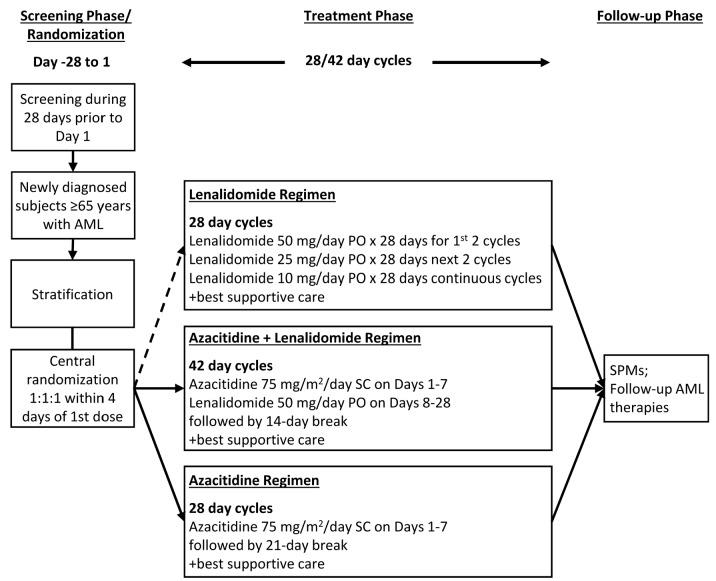
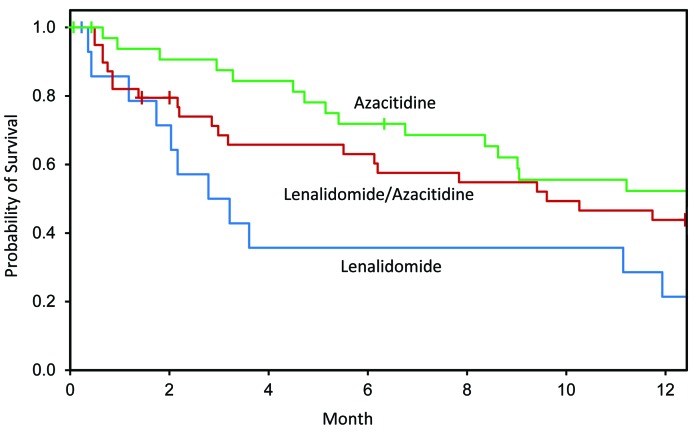
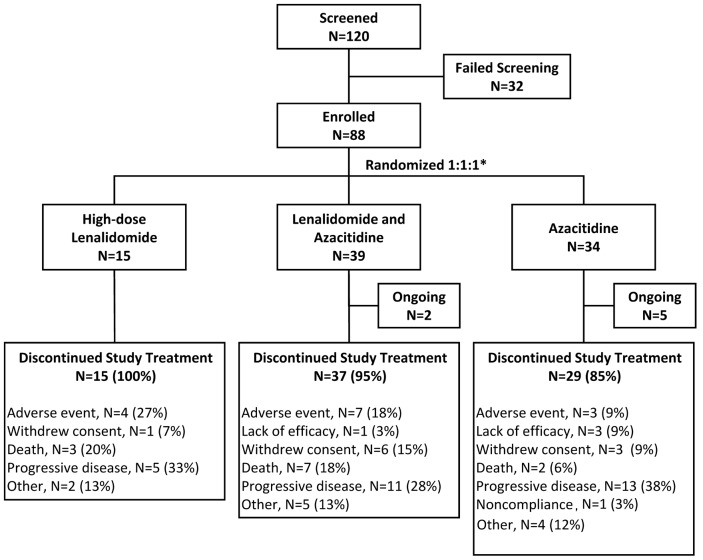
Therapy of acute myeloid leukemia in older persons is associated with poor outcomes because of intolerance to intensive therapy, resistant disease and co-morbidities. This multi-center, randomized, open-label, phase II trial compared safety and efficacy of three therapeutic strategies in patients 65 years or over with newly-diagnosed acute myeloid leukemia: 1) continuous high-dose lenalidomide (n=15); 2) sequential azacitidine and lenalidomide (n=39); and 3) azacitidine only (n=34). The efficacy end point was 1-year survival. Median age was 76 years (range 66-87 years). Thirteen subjects (15%) had prior myelodysplastic syndrome and 41 (47%) had adverse cytogenetics. One-year survival was 21% [95% confidence interval (CI): 0, 43%] with high-dose lenalidomide, 44% (95%CI: 28, 60%) with sequential azacitidine and lenalidomide, and 52% (95%CI: 35, 70%) with azacitidine only. Lenalidomide at a continuous high-dose schedule was poorly-tolerated resulting in a high rate of early therapy discontinuations. Hazard of death in the first four months was greatest in subjects receiving continuous high-dose lenalidomide; hazards of death thereafter were similar. These data do not favor use of continuous high-dose lenalidomide or sequential azacitidine and lenalidomide over the conventional dose and schedule of azacitidine only in patients aged 65 years or over with newly-diagnosed acute myeloid leukemia. ().
治疗老年人急性髓系白血病的疗效较差,这是由于不能耐受强化治疗、疾病耐药和合并症导致的。这项多中心、随机、开放标签、二期临床试验比较了三种治疗策略在 65 岁或以上初诊急性髓系白血病患者中的安全性和疗效:1)持续高剂量来那度胺(n=15);2)阿扎胞苷和来那度胺序贯治疗(n=39);3)仅阿扎胞苷(n=34)。疗效终点为 1 年生存率。中位年龄为 76 岁(范围 66-87 岁)。13 例(15%)患者有先前的骨髓增生异常综合征,41 例(47%)患者有不良细胞遗传学。高剂量来那度胺治疗的 1 年生存率为 21%[95%置信区间(CI):0,43%],阿扎胞苷和来那度胺序贯治疗为 44%(95%CI:28,60%),仅阿扎胞苷为 52%(95%CI:35,70%)。持续高剂量方案的来那度胺耐受性差,导致早期治疗中断率高。在接受持续高剂量来那度胺治疗的患者中,前四个月死亡风险最大;此后的死亡风险相似。这些数据不支持在 65 岁或以上初诊急性髓系白血病患者中使用持续高剂量来那度胺或阿扎胞苷和来那度胺序贯治疗代替常规剂量和方案的阿扎胞苷。()