Experimental Therapeutics, Radcliffe Department of Medicine, University of Oxford, Oxford, OX3 9DU, UK.
Division of Cardiovascular Medicine, Radcliffe Department of Medicine, University of Oxford, Oxford, OX3 9DU, UK.
Nat Commun. 2017 Nov 2;8(1):1258. doi: 10.1038/s41467-017-01342-5.
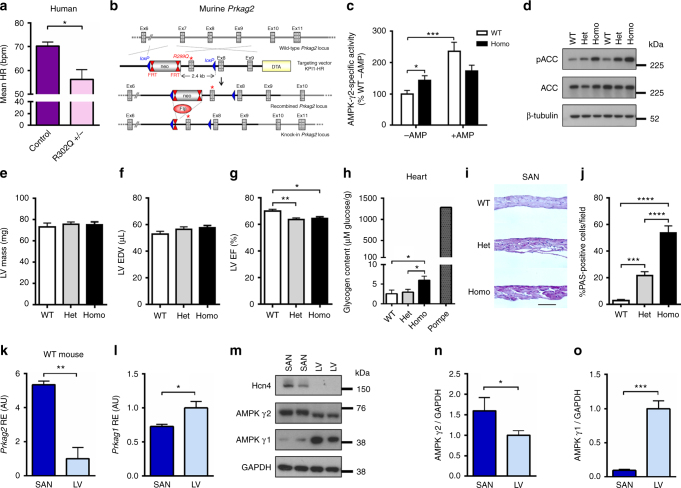
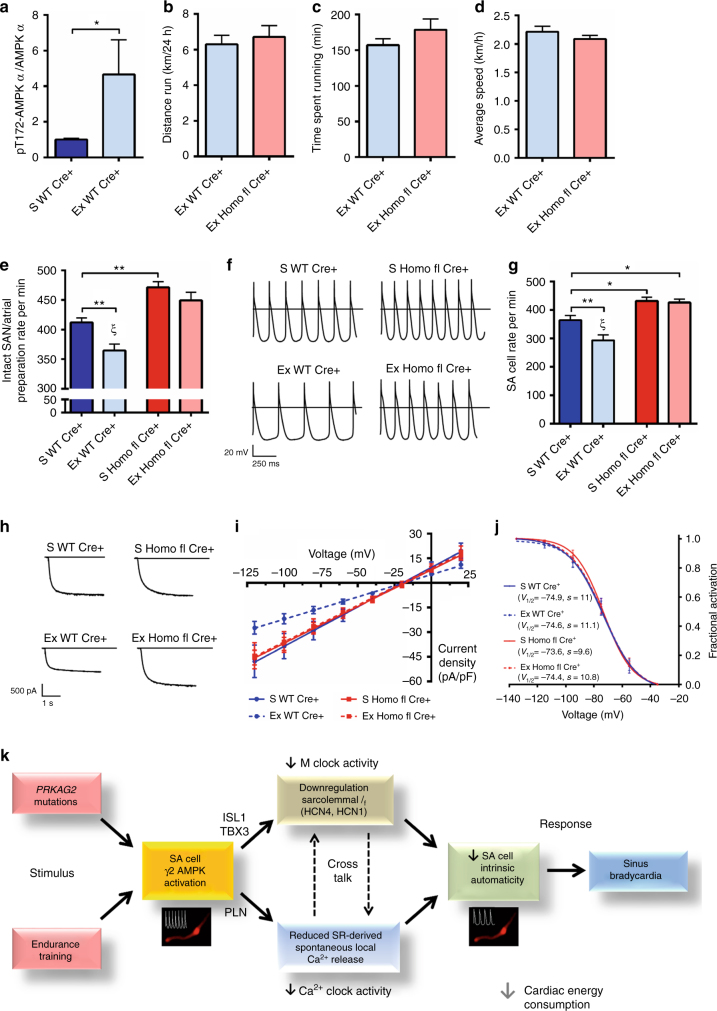
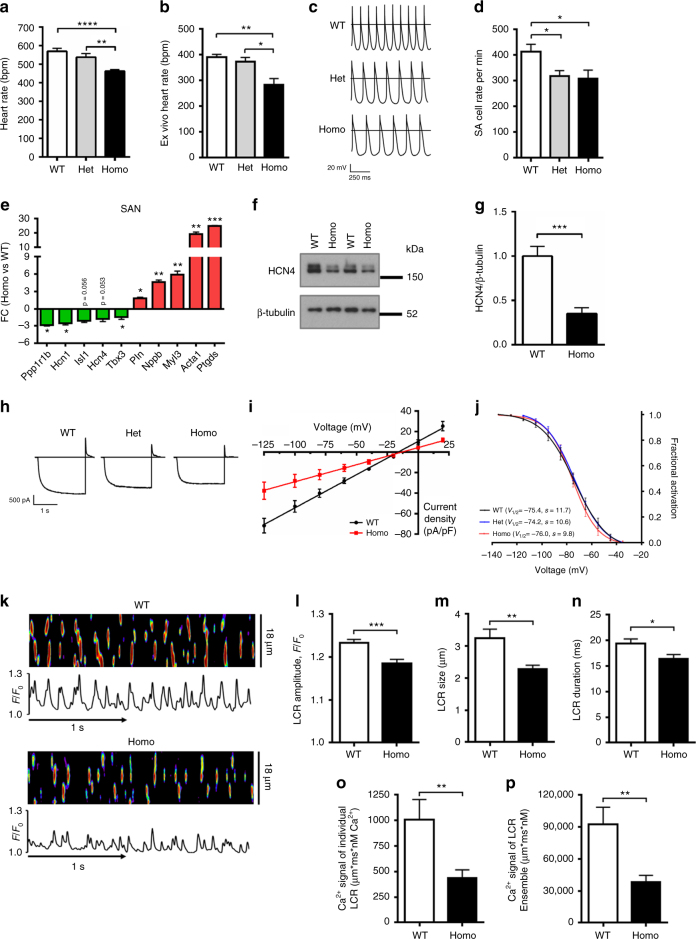
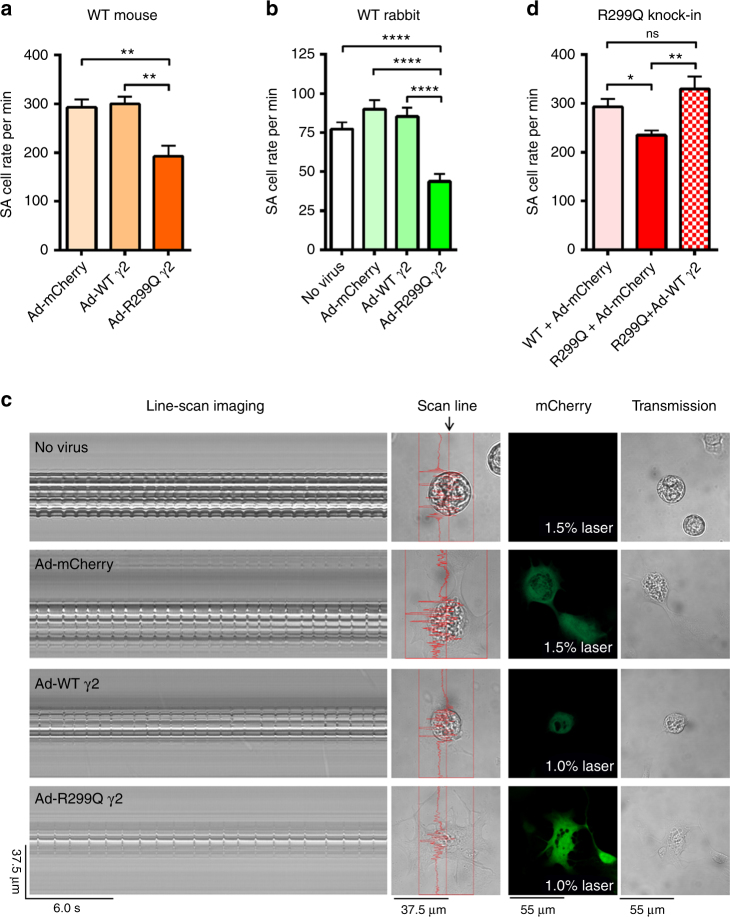
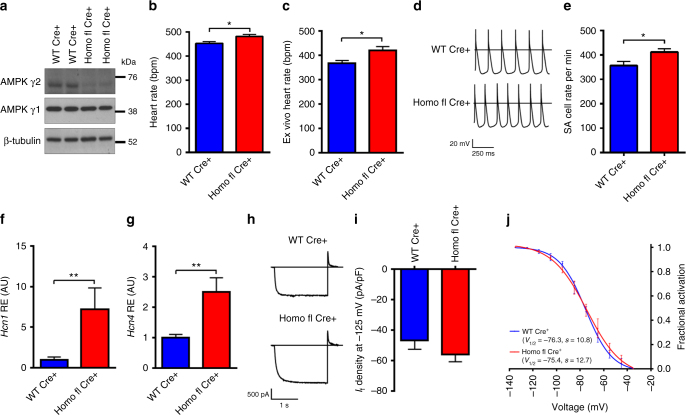
AMPK is a conserved serine/threonine kinase whose activity maintains cellular energy homeostasis. Eukaryotic AMPK exists as αβγ complexes, whose regulatory γ subunit confers energy sensor function by binding adenine nucleotides. Humans bearing activating mutations in the γ2 subunit exhibit a phenotype including unexplained slowing of heart rate (bradycardia). Here, we show that γ2 AMPK activation downregulates fundamental sinoatrial cell pacemaker mechanisms to lower heart rate, including sarcolemmal hyperpolarization-activated current (I ) and ryanodine receptor-derived diastolic local subsarcolemmal Ca release. In contrast, loss of γ2 AMPK induces a reciprocal phenotype of increased heart rate, and prevents the adaptive intrinsic bradycardia of endurance training. Our results reveal that in mammals, for which heart rate is a key determinant of cardiac energy demand, AMPK functions in an organ-specific manner to maintain cardiac energy homeostasis and determines cardiac physiological adaptation to exercise by modulating intrinsic sinoatrial cell behavior.
AMPK 是一种保守的丝氨酸/苏氨酸激酶,其活性维持细胞能量平衡。真核 AMPK 以 αβγ 复合物的形式存在,其调节 γ 亚基通过结合腺嘌呤核苷酸赋予能量传感器功能。携带 γ2 亚基激活突变的人类表现出一种表型,包括不明原因的心率减慢(心动过缓)。在这里,我们表明 γ2 AMPK 的激活下调了基本窦房结细胞起搏机制以降低心率,包括肌浆网去极化激活电流(I)和 Ryanodine 受体衍生的舒张性局部亚肌浆网 Ca 释放。相比之下,丧失 γ2 AMPK 会引起心率增加的相反表型,并防止耐力训练的适应性内在心动过缓。我们的结果表明,在哺乳动物中,心率是心脏能量需求的关键决定因素,AMPK 以器官特异性的方式发挥作用,以维持心脏能量平衡,并通过调节内在窦房结细胞行为来决定心脏对运动的生理适应。