Department of Microbiology and Molecular Genetics, Michigan State University, East Lansing, MI 48824, USA.
School of Medicine, Hunan Normal University, Changsha, Hunan 410013, China.
ISME J. 2018 Jan;12(1):277-288. doi: 10.1038/ismej.2017.174. Epub 2017 Nov 3.
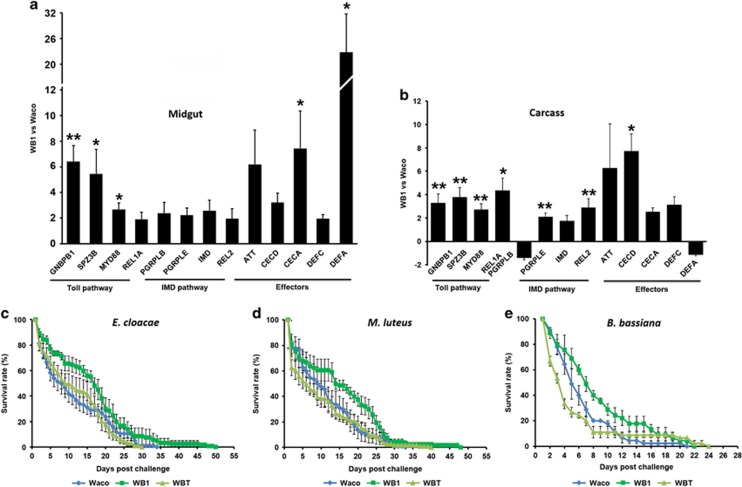
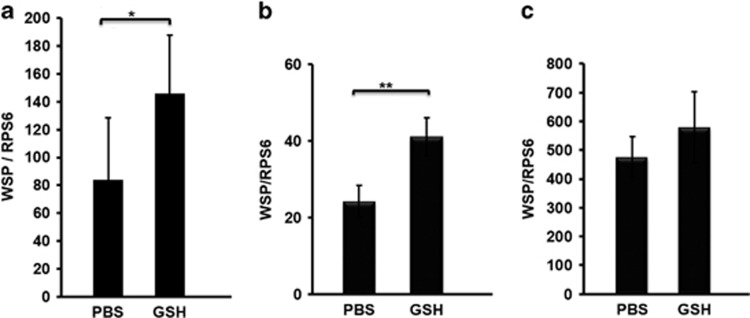
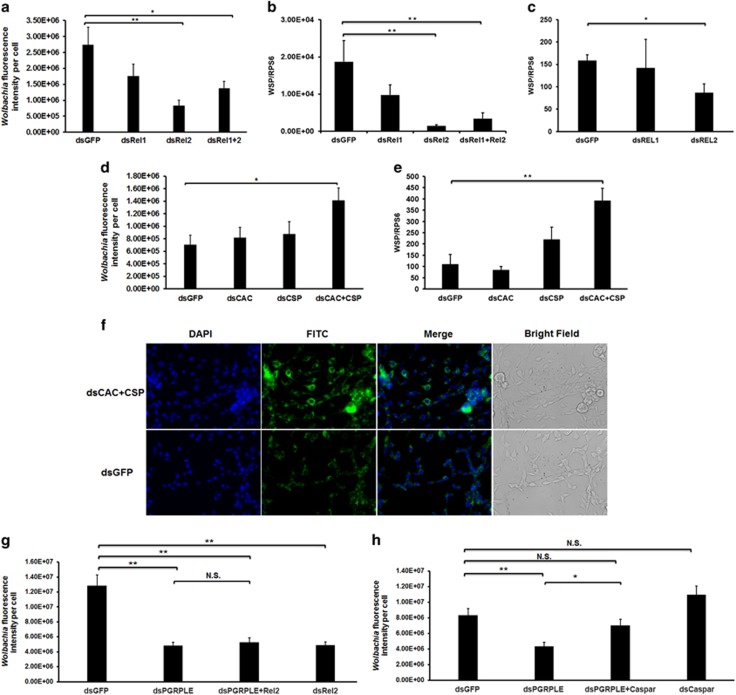
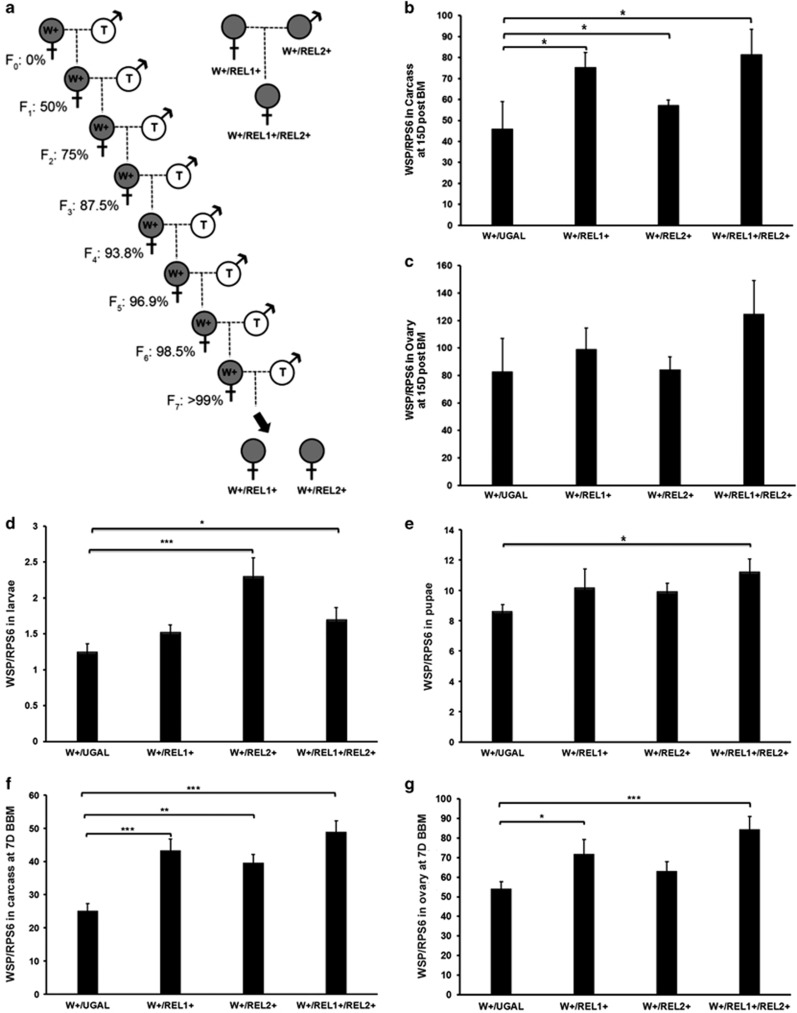
A host's immune system plays a central role in shaping the composition of the microbiota and, in return, resident microbes influence immune responses. Symbiotic associations of the maternally transmitted bacterium Wolbachia occur with a wide range of arthropods. It is, however, absent from the dengue and Zika vector mosquito Aedes aegypti in nature. When Wolbachia is artificially forced to form symbiosis with this new mosquito host, it boosts the basal immune response and enhances the mosquito's resistance to pathogens, including dengue, Zika virus and malaria parasites. The mechanisms involved in establishing a symbiotic relationship between Wolbachia and A. aegypti, and the long-term outcomes of this interaction, are not well understood. Here, we have demonstrated that both the immune deficiency (IMD) and Toll pathways are activated by the Wolbachia strain wAlbB upon its introduction into A. aegypti. Silencing the Toll and IMD pathways via RNA interference reduces the wAlbB load. Notably, wAlbB induces peptidoglycan recognition protein (PGRP)-LE expression in the carcass of A. aegypti, and its silencing results in a reduction of symbiont load. Using transgenic mosquitoes with stage-specific induction of the IMD and Toll pathways, we have shown that elevated wAlbB infection in these mosquitoes is maintained via maternal transmission. These results indicate that host innate immunity is utilized to establish and promote host-microbial symbiosis. Our results will facilitate a long-term projection of the stability of the Wolbachia-A. aegypti mosquito system that is being developed to control dengue and Zika virus transmission to humans.
宿主的免疫系统在塑造微生物组的组成方面起着核心作用,而常驻微生物则影响免疫反应。母体传播的细菌沃尔巴克氏体与广泛的节肢动物共生。然而,在自然界中,登革热和寨卡病毒的传播媒介埃及伊蚊中却不存在。当沃尔巴克氏体被人为地迫使与这种新的蚊子宿主形成共生关系时,它会增强蚊子的基础免疫反应,并增强蚊子对病原体的抵抗力,包括登革热、寨卡病毒和疟原虫。沃尔巴克氏体与埃及伊蚊之间建立共生关系的机制以及这种相互作用的长期结果尚不清楚。在这里,我们已经证明,当沃尔巴克氏体菌株 wAlbB 被引入埃及伊蚊时,免疫缺陷 (IMD) 和 Toll 途径都会被激活。通过 RNA 干扰沉默 Toll 和 IMD 途径会降低 wAlbB 的负荷。值得注意的是,wAlbB 会诱导埃及伊蚊尸体中肽聚糖识别蛋白 (PGRP)-LE 的表达,而其沉默会导致共生体负荷减少。利用具有 IMD 和 Toll 途径阶段特异性诱导的转基因蚊子,我们已经表明,这些蚊子中高水平的 wAlbB 感染通过母系传播得以维持。这些结果表明,宿主先天免疫被用来建立和促进宿主-微生物共生关系。我们的研究结果将有助于对正在开发用于控制登革热和寨卡病毒向人类传播的沃尔巴克氏体-埃及伊蚊蚊子系统的稳定性进行长期预测。