Sabatini Maria Elisa, Pagano Andrea, Araùjo Susana, Balestrazzi Alma, Macovei Anca
Department of Biology and Biotechnology 'L. Spallanzani', via Ferrata 9, 27100 Pavia, Italy.
Plant Cell Biotechnology Laboratory, Instituto de Tecnologia Química e Biológica António Xavier, Universidade Nova de Lisboa (ITQB-UNL), Avenida da República, EAN, 2780-157 Oeiras, Portugal.
Genes (Basel). 2017 Nov 3;8(11):305. doi: 10.3390/genes8110305.
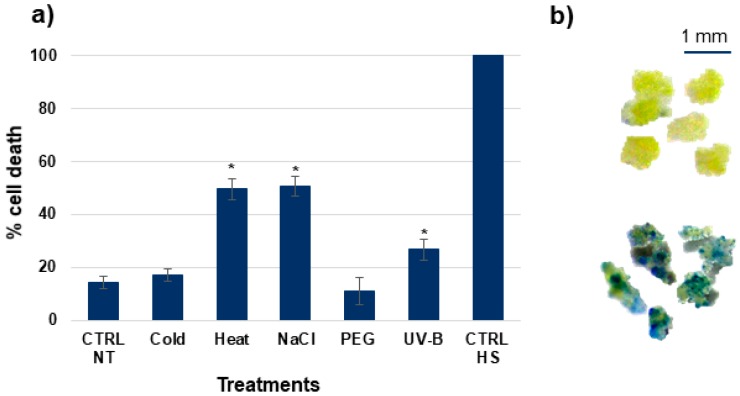
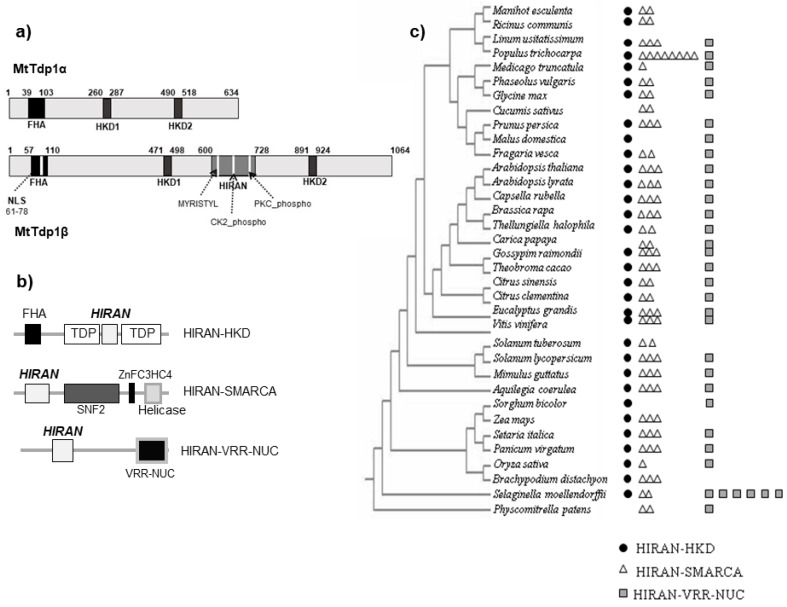
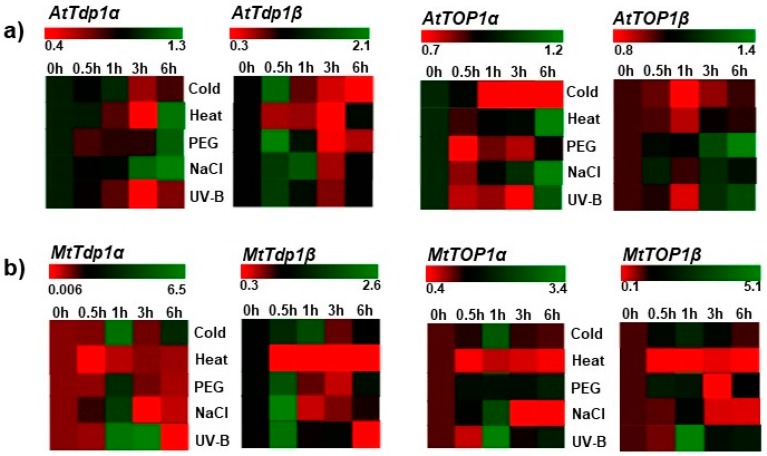
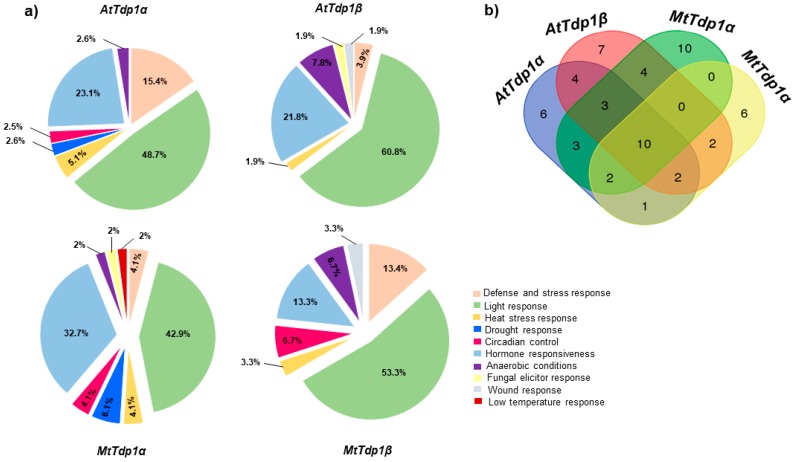
Tyrosyl-DNA phosphodiesterase 1 (Tdp1) is involved in DNA repair pathways as it mends the topoisomerase I-DNA covalent complexes. In plants, a small gene family, composed by and genes, was identified, but the roles of these genes in abiotic stress responses are not fully understood. To investigate their specific stress response patterns, the present study made use of bioinformatic and molecular tools to look into the gene function, so far described only in the plant kingdom, and compare it with gene coding for the canonical, highly conserved α isoform. The expression profiles of and genes were examined under abiotic stress conditions (cold, heat, high osmolarity, salt, and UV-B) in two model species, and . The two isoforms of topoisomerase I ( and ) were also taken into consideration in view of their known roles in DNA metabolism and cell proliferation. Data relative to gene expression in were retrieved from the AtGenExpress microarray dataset, while quantitative Real-Time PCR was carried out to evaluate the stress response in cell cultures. These analyses revealed that gene expression was enhanced during the first hour of treatment, whereas enhanced expression succeeded at subsequent timepoints. In agreement with the gene-specific responses to abiotic stress conditions, the promoter regions of and genes are well equipped with stress-related -elements. An in-depth bioinformatic characterization of the HIRAN motif, a distinctive feature of the protein, showed its wide distribution in chromatin remodeling and DNA repair proteins. The reported data suggests that functions in the early response to abiotic stresses.
酪氨酰-DNA磷酸二酯酶1(Tdp1)参与DNA修复途径,因为它能修复拓扑异构酶I-DNA共价复合物。在植物中,已鉴定出一个由 和 基因组成的小基因家族,但这些基因在非生物胁迫反应中的作用尚未完全了解。为了研究它们特定的胁迫反应模式,本研究利用生物信息学和分子工具来探究 基因的功能(该基因目前仅在植物界被描述),并将其与编码典型的、高度保守的α同工型的 基因进行比较。在两种模式植物 和 中,研究了 基因和 基因在非生物胁迫条件(寒冷、高温、高渗透压、盐和UV-B)下的表达谱。鉴于拓扑异构酶I的两种同工型( 和 )在DNA代谢和细胞增殖中的已知作用,也对其进行了考虑。关于 基因表达的数据从AtGenExpress微阵列数据集中获取,同时进行了定量实时PCR以评估 细胞培养物中的胁迫反应。这些分析表明, 基因的表达在处理的第一个小时增强,而 基因增强的表达在随后的时间点出现。与对非生物胁迫条件的基因特异性反应一致, 基因和 基因的启动子区域富含与胁迫相关的 元件。对HIRAN基序( 蛋白的一个独特特征)进行的深入生物信息学表征表明,它在染色质重塑和DNA修复蛋白中广泛分布。所报道的数据表明, 在对非生物胁迫的早期反应中发挥作用。