Ke Jun, Dong Nianguo, Wang Lei, Li Yong, Dasgupta Chiranjib, Zhang Lubo, Xiao Daliao
Department of Cardiovascular Surgery, Union Hospital, Tongji Medical College, Huazhong University of Science and Technology, Wuhan, China.
Center for Perinatal Biology, Department of Basic Sciences, Loma Linda University School of Medicine, Loma Linda, California, USA.
Oncotarget. 2017 Aug 10;8(44):76865-76880. doi: 10.18632/oncotarget.20172. eCollection 2017 Sep 29.
Maternal cigarette smoking increases the risk of cardiovascular disease in offspring. Recently, we have demonstrated that perinatal nicotine exposure alters heart development and increases heart susceptibility to ischemia/reperfusion (I/R) injury in rat offspring. The present study tested the hypothesis that DNA methylation plays a key role in the nicotine-induced development of heart ischemia-sensitive phenotype in offspring.
Nicotine was administered to pregnant rats subcutaneous osmotic minipumps from gestational day 4 until postnatal day 10. After birth, the postnatal offspring were treated with the DNA methylation inhibitor, 5-aza-2'-deoxycytidine (5-Aza) or saline from postnatal day 3 to day 10. Experiments were conducted in 1 month old offspring.
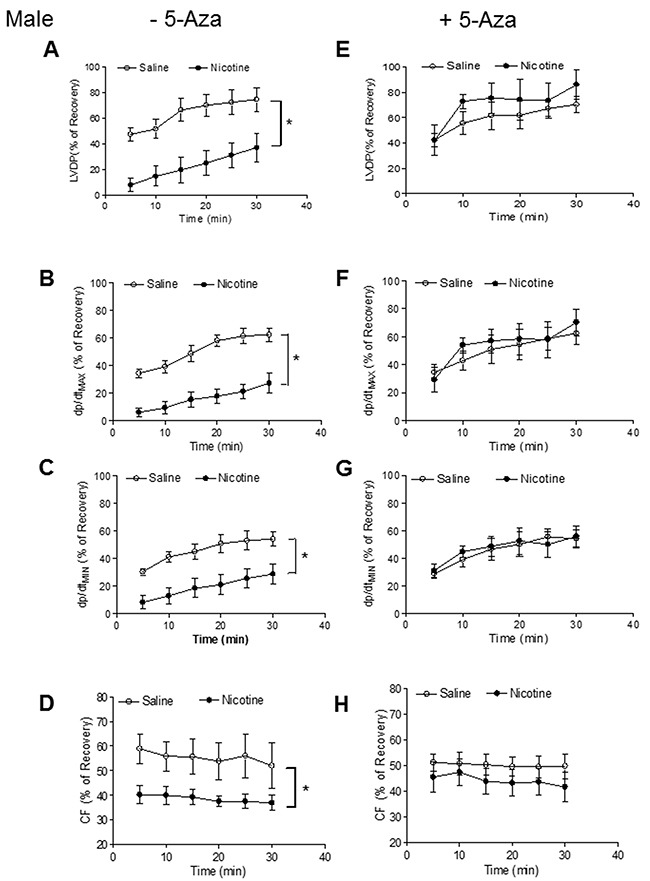
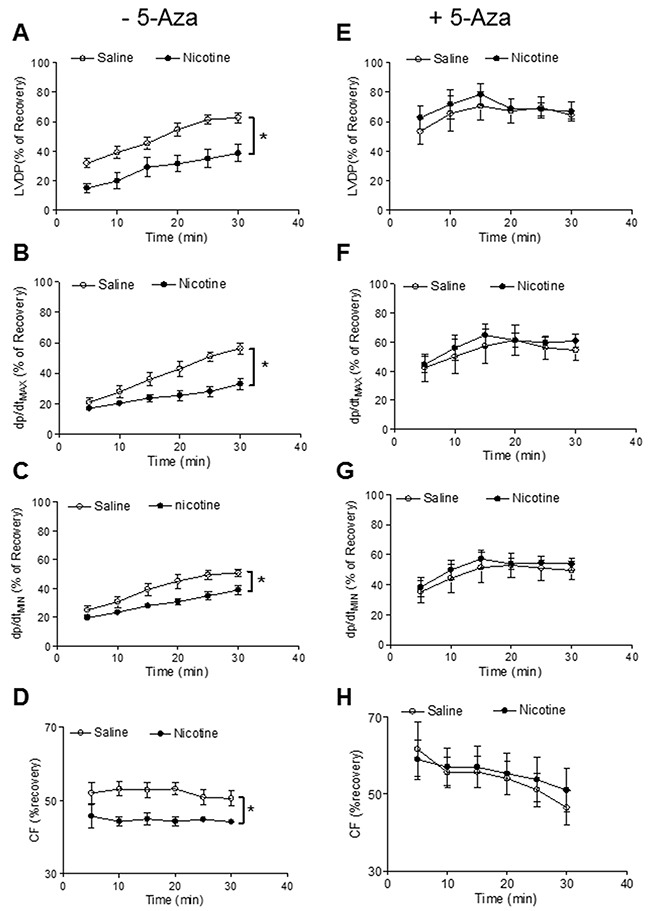
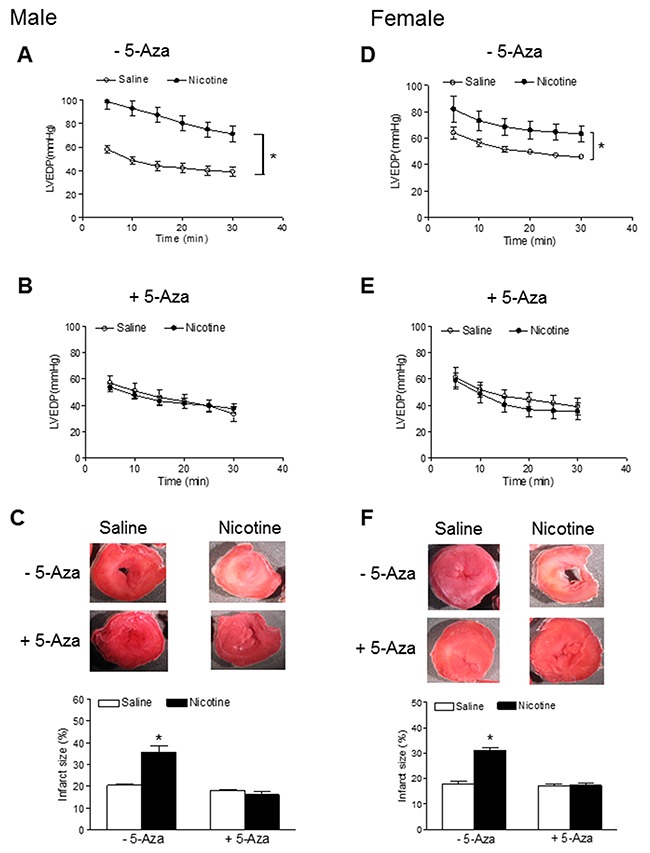
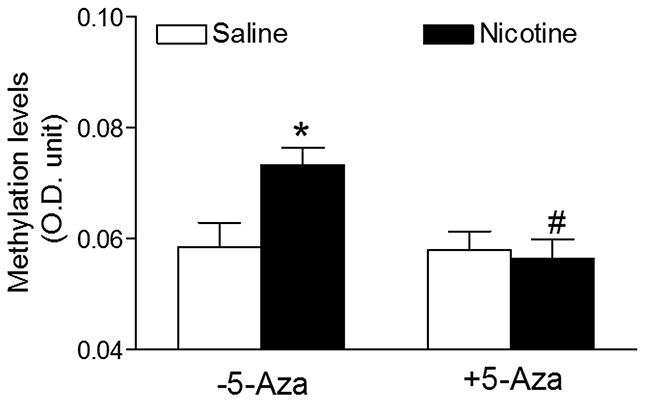
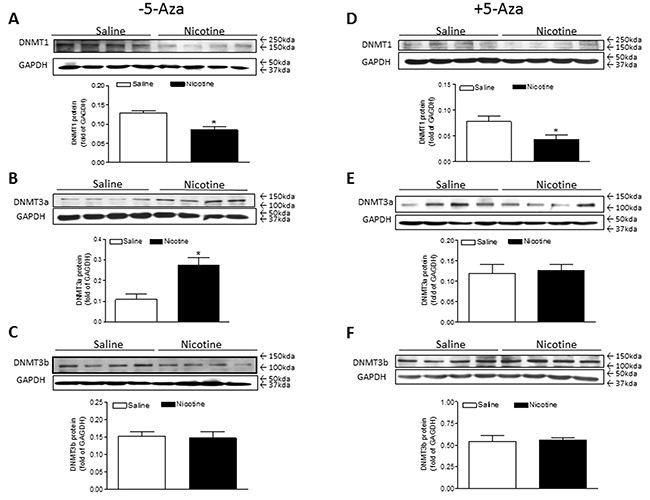
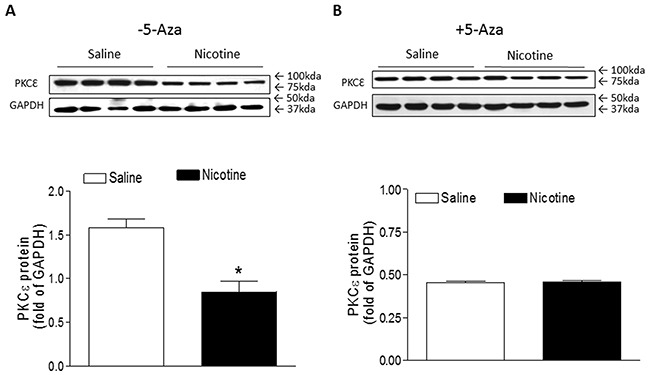
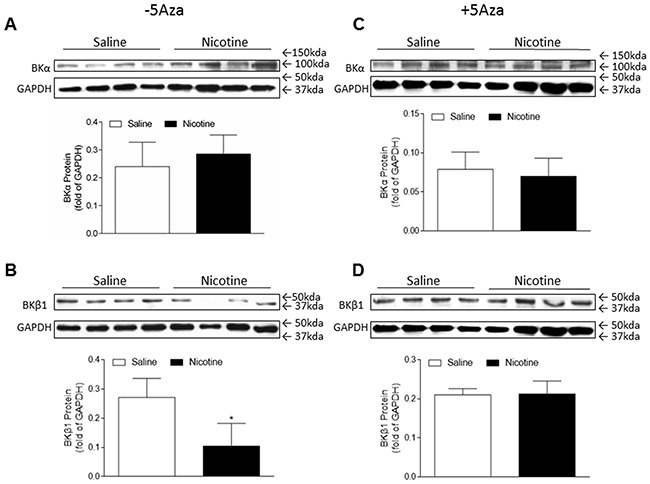
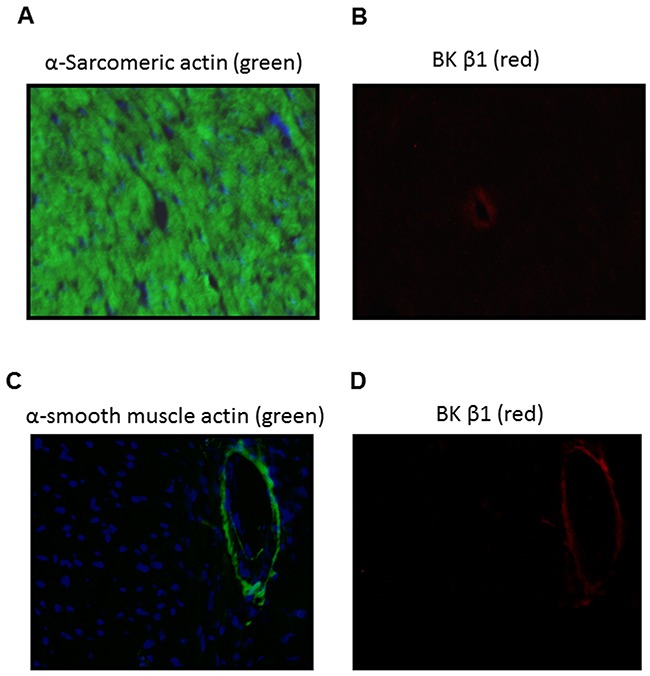
Perinatal nicotine increased I/R-induced left ventricular (LV) injury, and decreased post-ischemic recovery of the LV function and coronary flow rate in both male and female offspring. Nicotine differentially increased DNMT3a expression and global DNA methylation levels in LV tissues. Treatment with 5-Aza inhibited nicotine-induced an increase in DNMT3a and global DNA methylation, and blocked the nicotine-induced increase in I/R injury and dysfunction in the heart. In addition, nicotine attenuated protein kinases C and large-conductance Ca(2+)-activated K(+) (BKca) channel β1 subunit protein abundances in the heart, which were reversed by 5-Aza treatment.
The present findings provide novel evidence that the increased DNA methylation plays a causal role in nicotine-induced development of heart ischemic sensitive phenotype, and suggest a potential therapeutic target of DNA demethylation for the fetal programming of heart ischemic disease later in life.
母亲吸烟会增加后代患心血管疾病的风险。最近,我们已经证明围产期尼古丁暴露会改变心脏发育,并增加大鼠后代心脏对缺血/再灌注(I/R)损伤的易感性。本研究检验了DNA甲基化在尼古丁诱导的后代心脏缺血敏感表型发育中起关键作用这一假说。
从妊娠第4天至出生后第10天,通过皮下渗透微型泵给怀孕大鼠注射尼古丁。出生后,从出生后第3天至第10天,给产后子代注射DNA甲基化抑制剂5-氮杂-2'-脱氧胞苷(5-Aza)或生理盐水。实验在1月龄子代中进行。
围产期尼古丁增加了I/R诱导的左心室(LV)损伤,并降低了雄性和雌性子代缺血后左心室功能和冠状动脉血流速度的恢复。尼古丁差异性地增加了LV组织中DNMT3a的表达和整体DNA甲基化水平。用5-Aza处理可抑制尼古丁诱导的DNMT3a增加和整体DNA甲基化,并阻断尼古丁诱导的心脏I/R损伤和功能障碍增加。此外,尼古丁减弱了心脏中蛋白激酶C和大电导钙激活钾(BKca)通道β1亚基的蛋白丰度,而5-Aza处理可使其逆转。
本研究结果提供了新的证据,表明DNA甲基化增加在尼古丁诱导的心脏缺血敏感表型发育中起因果作用,并提示DNA去甲基化可能是胎儿期编程导致后期生命中心脏缺血性疾病的潜在治疗靶点。