Rorabaugh Boyd R
Department of Pharmaceutical Science, Marshall University School of Pharmacy, Huntington, WV, United States.
Front Cardiovasc Med. 2021 Mar 4;8:652634. doi: 10.3389/fcvm.2021.652634. eCollection 2021.
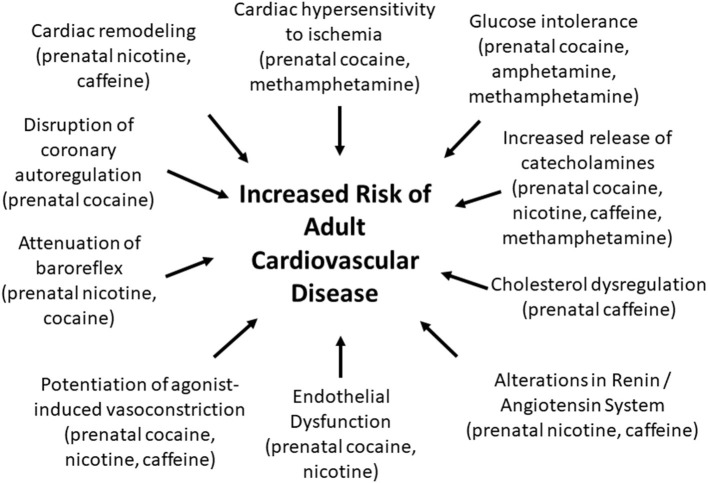
Prenatal exposure to an adverse uterine environment can have long lasting effects on adult offspring through DNA methylation, histone acetylation, and other epigenetic effects that alter gene expression and physiology. It is well-known that consumption of CNS stimulants such as caffeine, nicotine, amphetamines, and cocaine during pregnancy can adversely impact the offspring. However, most work in this area has focused on neurological and behavioral outcomes and has been limited to assessments in young offspring. The impact of prenatal exposure to these agents on the adult cardiovascular system has received relatively little attention. Evidence from both animal and human studies indicate that exposure to CNS stimulants during the gestational period can negatively impact the adult heart and vasculature, potentially leading to cardiovascular diseases later in life. This review discusses our current understanding of the impact of prenatal exposure to cocaine, methamphetamine, nicotine, and caffeine on the adult cardiovascular system.
产前暴露于不良子宫环境可通过DNA甲基化、组蛋白乙酰化及其他改变基因表达和生理功能的表观遗传效应,对成年后代产生长期影响。众所周知,孕期摄入咖啡因、尼古丁、苯丙胺和可卡因等中枢神经系统兴奋剂会对后代产生不利影响。然而,该领域的大多数研究都集中在神经和行为结果上,并且仅限于对幼年后代的评估。产前暴露于这些物质对成人心血管系统的影响相对较少受到关注。动物和人类研究的证据均表明,孕期暴露于中枢神经系统兴奋剂会对成年心脏和血管产生负面影响,可能导致日后患心血管疾病。本综述讨论了我们目前对产前暴露于可卡因、甲基苯丙胺、尼古丁和咖啡因对成人心血管系统影响的理解。