Hou Yonghui, Ni Ming, Lin Sien, Sun Yuxin, Lin Weiping, Liu Yamei, Wang Haibin, He Wei, Li Gang, Xu Liangliang
Key Laboratory of Orthopaedics & Traumatology, The First Affiliated Hospital of Guangzhou University of Chinese Medicine, The First Clinical Medical College, Guangzhou University of Chinese Medicine, Guangzhou, P.R. China.
Department of Orthopaedics & Traumatology, Faculty of Medicine, The Chinese University of Hong Kong, Prince of Wales Hospital, Hong Kong, P.R. China.
Oncotarget. 2017 Aug 24;8(44):77424-77435. doi: 10.18632/oncotarget.20495. eCollection 2017 Sep 29.
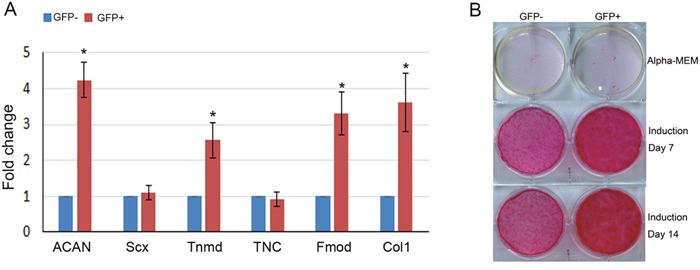
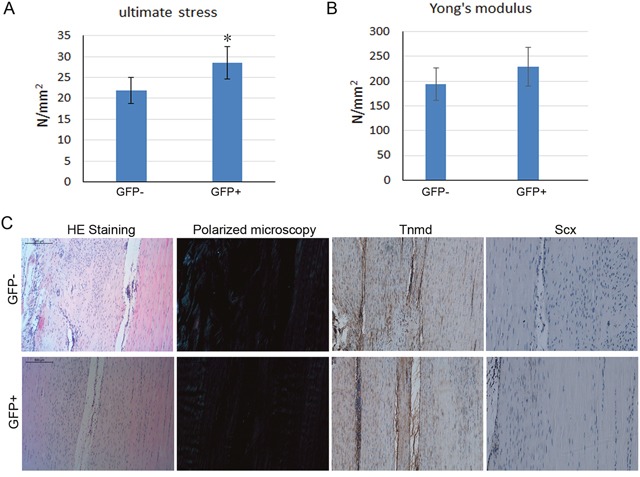
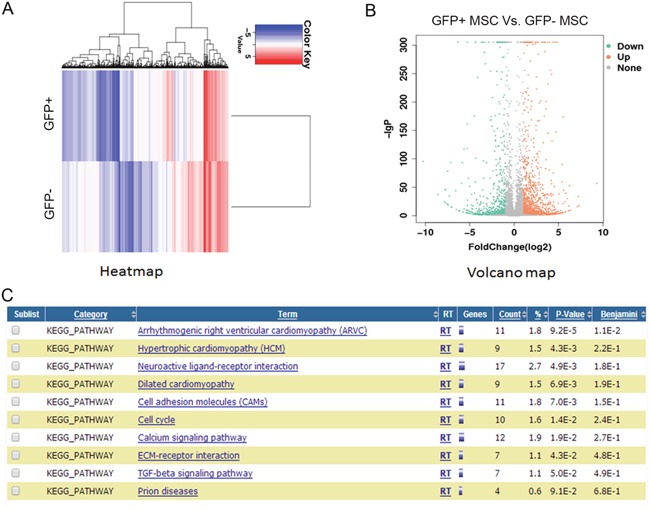
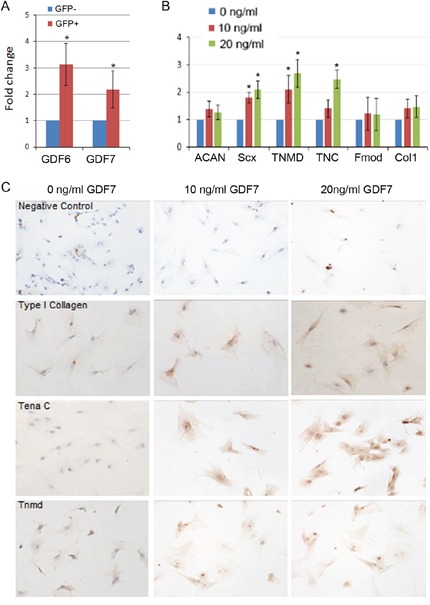
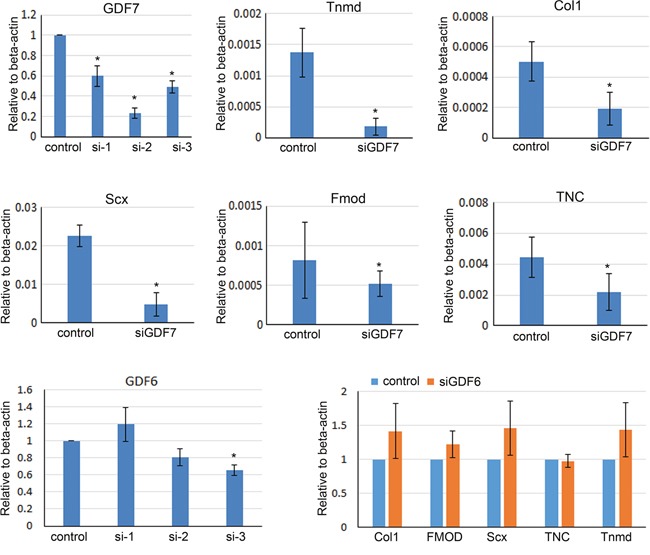
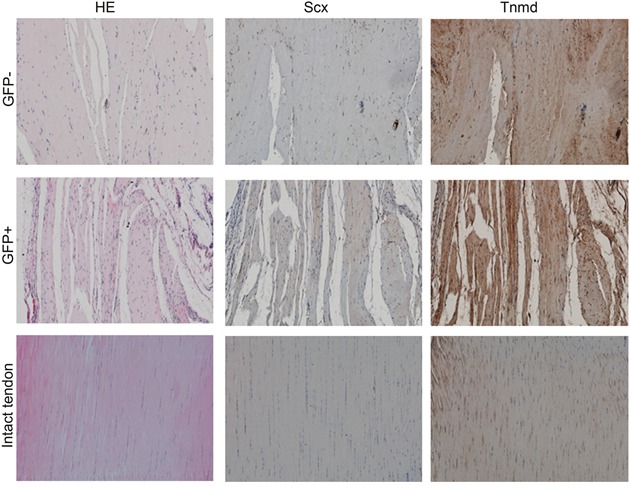
Tendon injuries are common orthopedic problems which may cause severe morbidity. MSCs (mesenchymal stem cells) have shown promising effect on tissue engineering and have been used for the treatment of tendon injury. But the low tenogenic differentiation capacity of MSCs have hindered their application. In the present study, we have constructed the Tenomodulin (Tnmd) promoter-driven GFP expression lentiviral plasmid. After transduced into BMSCs, the expression of GFP was used to select BMSCs highly expressing Tnmd by flow cytometry. We found that MSCs with higher level of Tnmd expression had stronger tenogenic differentiation ability. Furthermore, RNA sequencing was performed to identify the molecular difference between BMSCs expressing higher and lower levels of Tnmd. And finally we demonstrated that GDF7 was upregulated in BMSCs highly expressing Tnmd and played an vital role in promoting tenogenic differentiation of BMSCs. GDF7 was mainly accounted for the elevated tenogenic differentiation ability of BMSCs with higher Tnmd expression as silencing the endogenous GDF7 significantly inhibited tenogenesis in BMSCs. In addition, the effect of BMSCs with higher Tnmd level on tendon healing was evaluated by a rat patellar tendon injury model. Taken together, our study showed that Tnmd could be used as an ideal cell surface marker to select cells with higher tenogenic differentiation ability from BMSCs, and GDF7 was indispensable for tenogenesis of MSCs.
肌腱损伤是常见的骨科问题,可能导致严重的发病率。间充质干细胞(MSCs)在组织工程中显示出有前景的效果,并已用于治疗肌腱损伤。但MSCs的低肌腱分化能力阻碍了它们的应用。在本研究中,我们构建了肌腱调节蛋白(Tnmd)启动子驱动的绿色荧光蛋白(GFP)表达慢病毒质粒。转导到骨髓间充质干细胞(BMSCs)后,利用GFP的表达通过流式细胞术筛选高表达Tnmd的BMSCs。我们发现Tnmd表达水平较高的MSCs具有更强的肌腱分化能力。此外,进行RNA测序以鉴定高表达和低表达Tnmd的BMSCs之间的分子差异。最后我们证明,在高表达Tnmd的BMSCs中生长分化因子7(GDF7)上调,并且在促进BMSCs的肌腱分化中起重要作用。GDF7主要解释了Tnmd表达较高的BMSCs肌腱分化能力的提高,因为沉默内源性GDF7显著抑制了BMSCs中的肌腱生成。此外,通过大鼠髌腱损伤模型评估了高Tnmd水平的BMSCs对肌腱愈合的影响。综上所述,我们的研究表明,Tnmd可作为一种理想的细胞表面标志物,从BMSCs中筛选出具有较高肌腱分化能力的细胞,并且GDF7对MSCs的肌腱生成是不可或缺的。