
用于肌腱模拟构建体工程的磁性纳米颗粒介导的胶原水凝胶取向
Magnetic Nanoparticle-Mediated Orientation of Collagen Hydrogels for Engineering of Tendon-Mimetic Constructs.
作者信息
Wright Abigail L, Righelli Lucrezia, Broomhall T J, Lamont Hannah C, El Haj Alicia J
机构信息
Healthcare Technologies Institute, Department of Chemical Engineering, University of Birmingham, Birmingham, United Kingdom.
出版信息
Front Bioeng Biotechnol. 2022 Mar 17;10:797437. doi: 10.3389/fbioe.2022.797437. eCollection 2022.
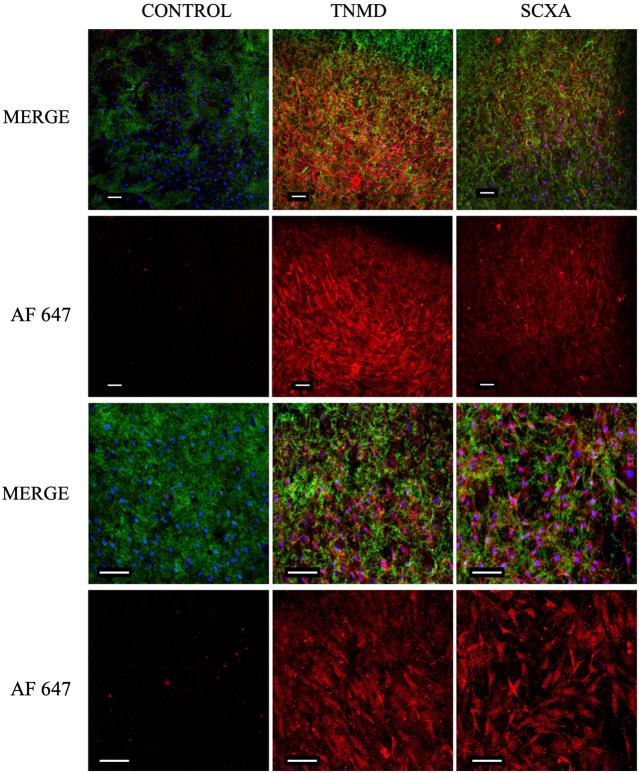
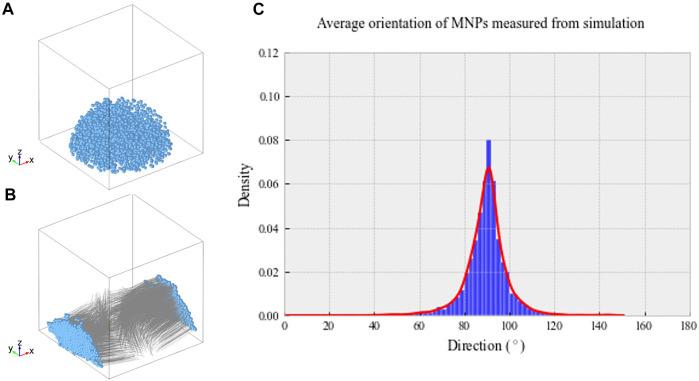
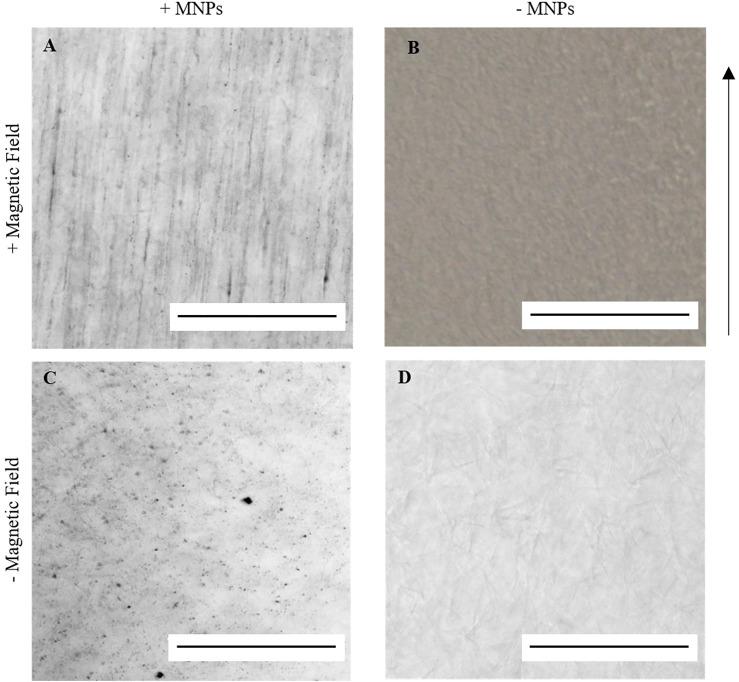
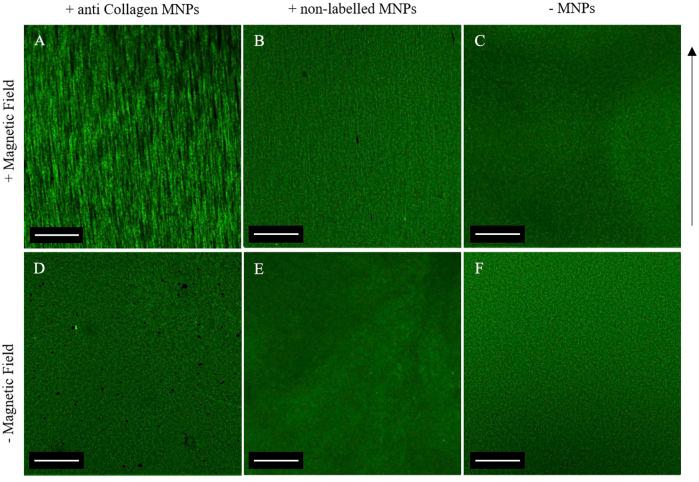
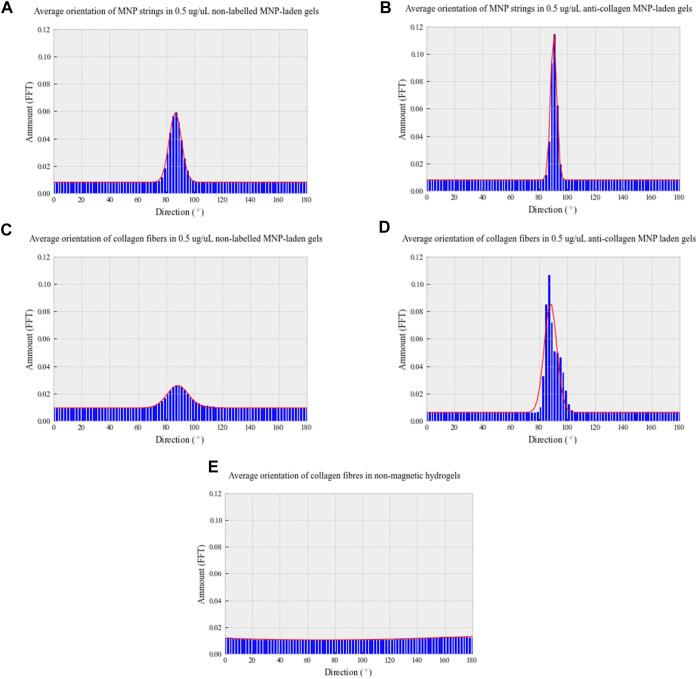
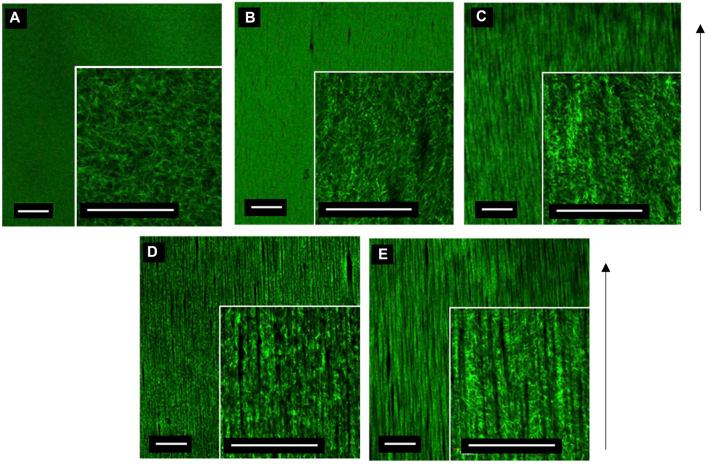
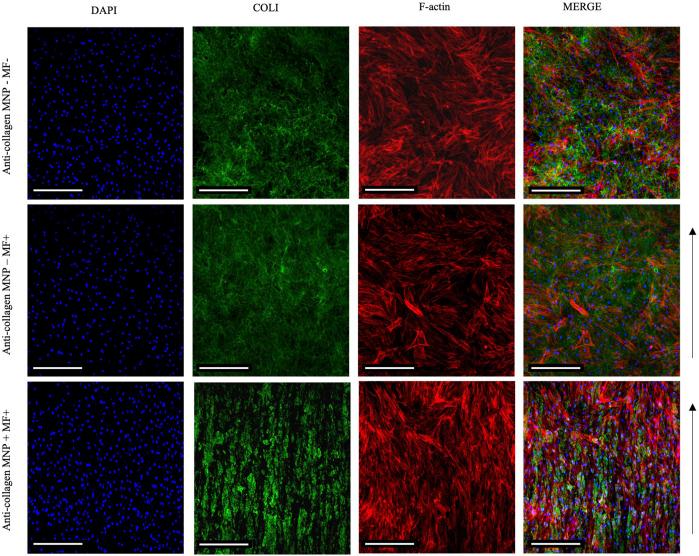
Despite the high incidence of tendon injuries worldwide, an optimal treatment strategy has yet to be defined. A key challenge for tendon repair is the alignment of the repaired matrix into orientations which provide maximal mechanical strength. Using oriented implants for tissue growth combined with either exogenous or endogenous stem cells may provide a solution. Previous research has shown how oriented fiber-like structures within 3D scaffolds can provide a framework for organized extracellular matrix deposition. In this article, we present our data on the remote magnetic alignment of collagen hydrogels which facilitates long-term collagen orientation. Magnetic nanoparticles (MNPs) at varying concentrations can be contained within collagen hydrogels. Our data show how, in response to the magnetic field lines, MNPs align and form string-like structures orientating at 90 degrees from the applied magnetic field from our device. This can be visualized by light and fluorescence microscopy, and it persists for 21 days post-application of the magnetic field. Confocal microscopy demonstrates the anisotropic macroscale structure of MNP-laden collagen gels subjected to a magnetic field, compared to gels without MNP dosing. Matrix fibrillation was compared between non- and biofunctionalized MNP hydrogels, and different gels dosed with varying MNP concentrations. Human adipose stem cells (hASCs) seeded within the magnetically aligned gels were observed to align in parallel to MNP and collagen orientation 7 days post-application of the magnetic field. hASCs seeded in isotropic gels were randomly organized. Tenocyte-likeness of the cells 7 days post-seeding in collagen I scaffolds was confirmed by the positive expression of tenomodulin and scleraxis proteins. To summarize, we have developed a convenient, non-invasive protocol to control the collagen I hydrogel architecture. Through the presence or absence of MNP dosing and a magnetic field, collagen can be remotely aligned or randomly organized, respectively, . Tendon-like cells were observed to organize in parallel to unidirectionally aligned collagen fibers and polydirectionally in non-aligned collagen constructs. In this way, we were able to engineer the constructs emulating a physiologically and pathologically relevant tendon niche. This can be considered as an innovative approach particularly useful in tissue engineering or organ-on-a-chip applications for remotely controlling collagen matrix organization to recapitulate the native tendon.
尽管全球范围内肌腱损伤的发生率很高,但尚未确定最佳的治疗策略。肌腱修复的一个关键挑战是将修复后的基质排列成能提供最大机械强度的方向。使用定向植入物促进组织生长并结合外源性或内源性干细胞可能提供一种解决方案。先前的研究表明,三维支架内的定向纤维状结构如何能够为有组织的细胞外基质沉积提供框架。在本文中,我们展示了关于胶原水凝胶远程磁排列的数据,该排列有助于胶原的长期定向。不同浓度的磁性纳米颗粒(MNPs)可以包含在胶原水凝胶中。我们的数据表明,响应于磁力线,MNPs排列并形成与我们设备施加的磁场成90度角定向的串状结构。这可以通过光学显微镜和荧光显微镜观察到,并且在施加磁场后持续21天。共聚焦显微镜显示,与未添加MNP的凝胶相比,施加磁场的含MNP胶原凝胶具有各向异性的宏观结构。比较了非生物功能化和生物功能化MNP水凝胶以及不同MNP浓度的不同凝胶之间的基质原纤维形成情况。观察到接种在磁排列凝胶中的人脂肪干细胞(hASCs)在施加磁场7天后与MNP和胶原的方向平行排列。接种在各向同性凝胶中的hASCs随机组织。在I型胶原支架中接种7天后,肌腱调节蛋白和硬骨蛋白的阳性表达证实了细胞的肌腱样特性。总之,我们开发了一种方便、非侵入性的方案来控制I型胶原水凝胶的结构。通过添加或不添加MNP以及施加磁场,胶原可以分别远程排列或随机组织。观察到肌腱样细胞与单向排列的胶原纤维平行组织,在未排列的胶原构建体中多方向组织。通过这种方式,我们能够构建模拟生理和病理相关肌腱微环境的构建体。这可以被认为是一种创新方法,在组织工程或芯片器官应用中特别有用,用于远程控制胶原基质组织以重现天然肌腱。

 Zotero 插件