Coudriet Gina M, Delmastro-Greenwood Meghan M, Previte Dana M, Marré Meghan L, O'Connor Erin C, Novak Elizabeth A, Vincent Garret, Mollen Kevin P, Lee Sojin, Dong H Henry, Piganelli Jon D
Department of Surgery, Children's Hospital of Pittsburgh of UPMC, School of Medicine, University of Pittsburgh, Pittsburgh, PA 15224, USA.
Department of Pediatrics, Children's Hospital of Pittsburgh of UPMC, School of Medicine, University of Pittsburgh, Pittsburgh, PA 15224, USA.
Antioxidants (Basel). 2017 Nov 1;6(4):85. doi: 10.3390/antiox6040085.
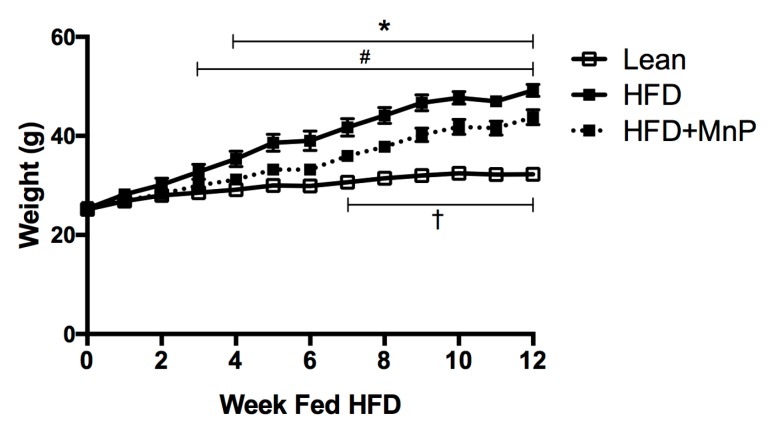
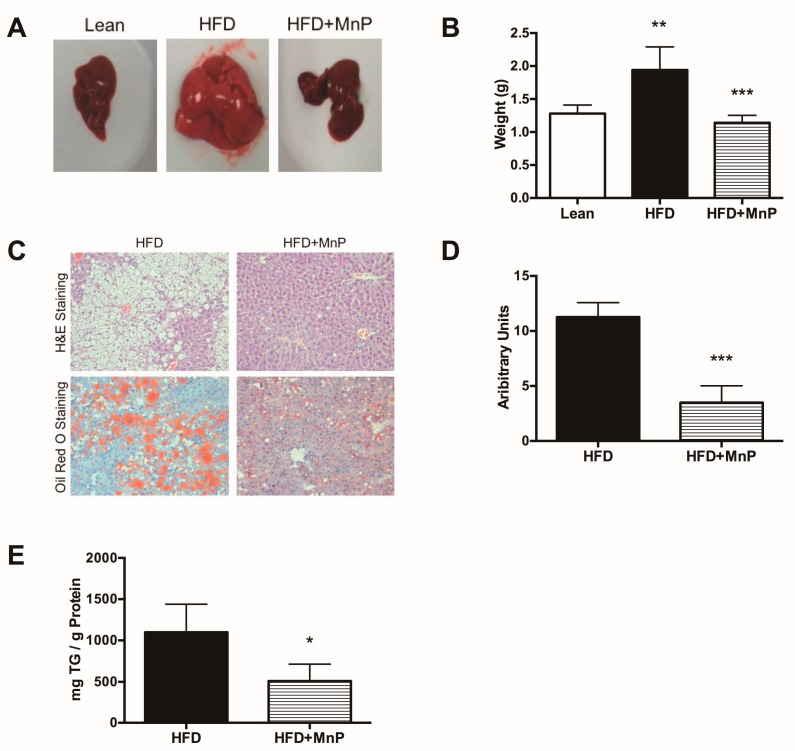
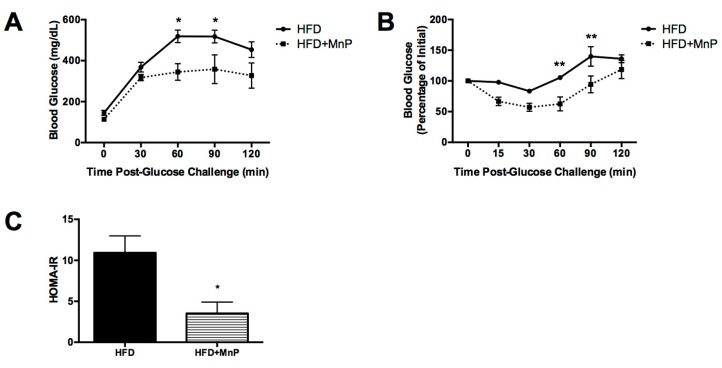
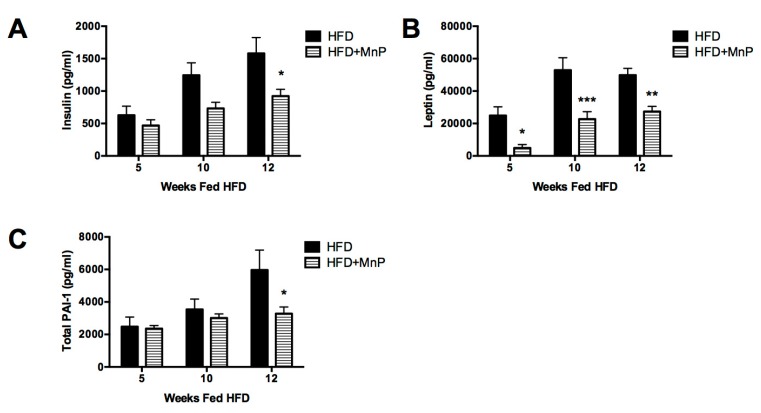
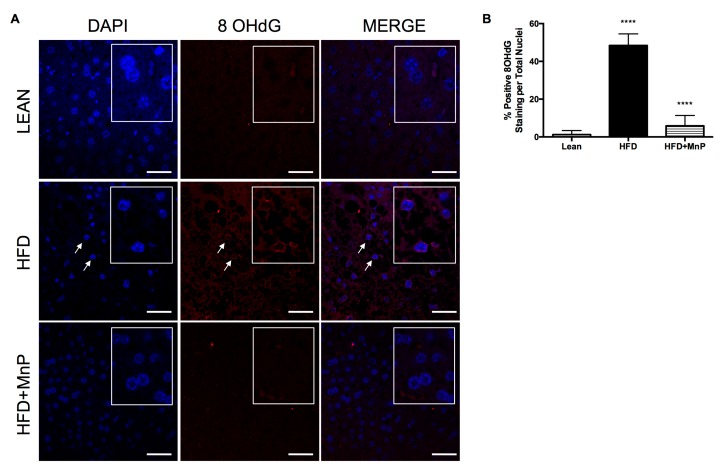
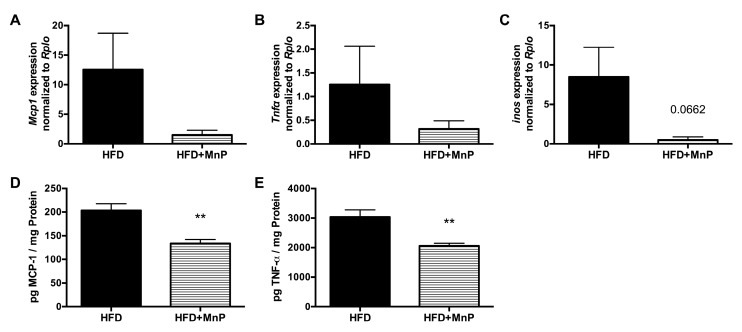
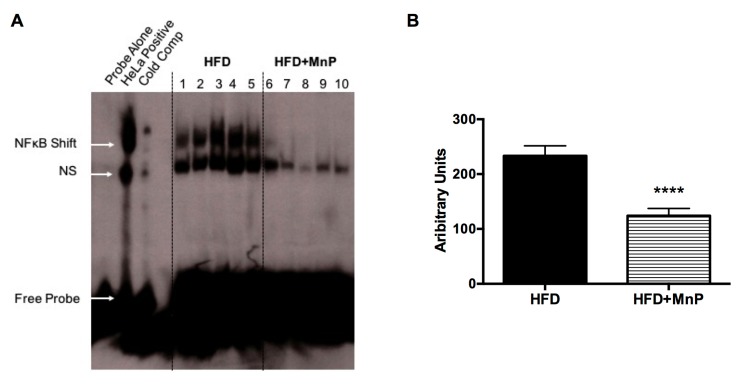
Oxidative stress and persistent inflammation are exaggerated through chronic over-nutrition and a sedentary lifestyle, resulting in insulin resistance. In type 2 diabetes (T2D), impaired insulin signaling leads to hyperglycemia and long-term complications, including metabolic liver dysfunction, resulting in non-alcoholic fatty liver disease (NAFLD). The manganese metalloporphyrin superoxide dismustase (SOD) mimetic, manganese (III) meso-tetrakis (-ethylpyridinium-2-yl) porphyrin (MnP), is an oxidoreductase known to scavenge reactive oxygen species (ROS) and decrease pro-inflammatory cytokine production, by inhibiting nuclear factor kappa-light-chain-enhancer of activated B cells (NF-κB) activation. We hypothesized that targeting oxidative stress-induced inflammation with MnP would assuage liver complications and enhance insulin sensitivity and glucose tolerance in a high-fat diet (HFD)-induced mouse model of T2D. During 12 weeks of feeding, we saw significant improvements in weight, hepatic steatosis, and biomarkers of liver dysfunction with redox modulation by MnP treatment in HFD-fed mice. Additionally, MnP treatment improved insulin sensitivity and glucose tolerance, while reducing serum insulin and leptin levels. We attribute these effects to redox modulation and inhibition of hepatic NF-κB activation, resulting in diminished ROS and pro-inflammatory cytokine production. This study highlights the importance of controlling oxidative stress and secondary inflammation in obesity-mediated insulin resistance and T2D. Our data confirm the role of NF-κB-mediated inflammation in the development of T2D, and demonstrate the efficacy of MnP in preventing the progression to disease by specifically improving liver pathology and hepatic insulin resistance in obesity.
慢性营养过剩和久坐不动的生活方式会加剧氧化应激和持续性炎症,从而导致胰岛素抵抗。在2型糖尿病(T2D)中,胰岛素信号传导受损会导致高血糖和长期并发症,包括代谢性肝功能障碍,进而引发非酒精性脂肪性肝病(NAFLD)。锰金属卟啉超氧化物歧化酶(SOD)模拟物,中-四(-乙基吡啶鎓-2-基)卟啉锰(III)(MnP),是一种氧化还原酶,已知其可清除活性氧(ROS)并通过抑制活化B细胞核因子κB(NF-κB)的激活来减少促炎细胞因子的产生。我们假设,在高脂饮食(HFD)诱导的T2D小鼠模型中,用MnP靶向氧化应激诱导的炎症将缓解肝脏并发症并增强胰岛素敏感性和葡萄糖耐量。在为期12周的喂养过程中,我们发现通过对高脂饮食喂养的小鼠进行MnP处理进行氧化还原调节后,其体重、肝脂肪变性和肝功能障碍生物标志物有显著改善。此外,MnP处理改善了胰岛素敏感性和葡萄糖耐量,同时降低了血清胰岛素和瘦素水平。我们将这些作用归因于氧化还原调节和对肝脏NF-κB激活的抑制,从而减少了ROS和促炎细胞因子的产生。这项研究强调了控制肥胖介导的胰岛素抵抗和T2D中的氧化应激和继发性炎症的重要性。我们的数据证实了NF-κB介导的炎症在T2D发展中的作用,并证明了MnP通过特异性改善肥胖症中的肝脏病理和肝脏胰岛素抵抗来预防疾病进展的功效。