• 文献检索
  • 文档翻译
  • 深度研究
  • 学术资讯
  • Suppr Zotero 插件Zotero 插件
  • 邀请有礼
  • 套餐&价格
  • 历史记录
应用&插件
Suppr Zotero 插件Zotero 插件浏览器插件Mac 客户端Windows 客户端微信小程序
定价
高级版会员购买积分包购买API积分包
服务
文献检索文档翻译深度研究API 文档MCP 服务
关于我们
关于 Suppr公司介绍联系我们用户协议隐私条款
关注我们

Suppr 超能文献

核心技术专利:CN118964589B侵权必究
粤ICP备2023148730 号-1Suppr @ 2026

文献检索

告别复杂PubMed语法,用中文像聊天一样搜索,搜遍4000万医学文献。AI智能推荐,让科研检索更轻松。

立即免费搜索

文件翻译

保留排版,准确专业,支持PDF/Word/PPT等文件格式,支持 12+语言互译。

免费翻译文档

深度研究

AI帮你快速写综述,25分钟生成高质量综述,智能提取关键信息,辅助科研写作。

立即免费体验

利用诱导多能干细胞衍生的脑内皮细胞模拟B组与血脑屏障的相互作用

Modeling Group B and Blood-Brain Barrier Interaction by Using Induced Pluripotent Stem Cell-Derived Brain Endothelial Cells.

作者信息

Kim Brandon J, Bee Olivia B, McDonagh Maura A, Stebbins Matthew J, Palecek Sean P, Doran Kelly S, Shusta Eric V

机构信息

Department of Chemical and Biological Engineering, University of Wisconsin, Madison, Wisconsin, USA.

Department of Immunology and Microbiology, University of Colorado School of Medicine, Aurora, Colorado, USA.

出版信息

mSphere. 2017 Nov 1;2(6). doi: 10.1128/mSphere.00398-17. eCollection 2017 Nov-Dec.

DOI:10.1128/mSphere.00398-17
PMID:29104935
原文链接:https://pmc.ncbi.nlm.nih.gov/articles/PMC5663983/
Abstract

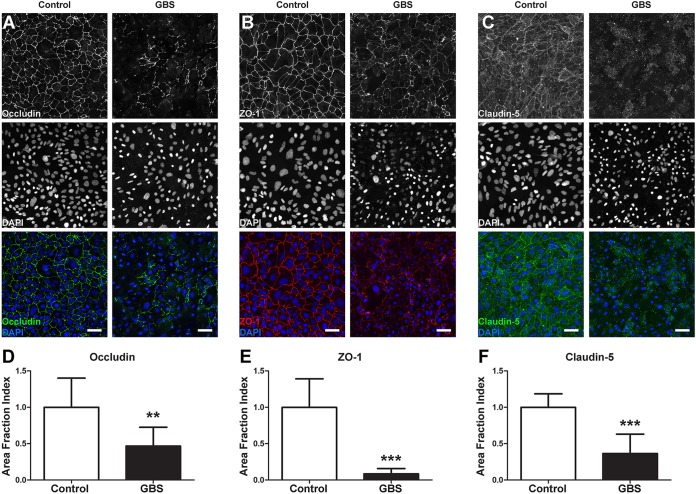
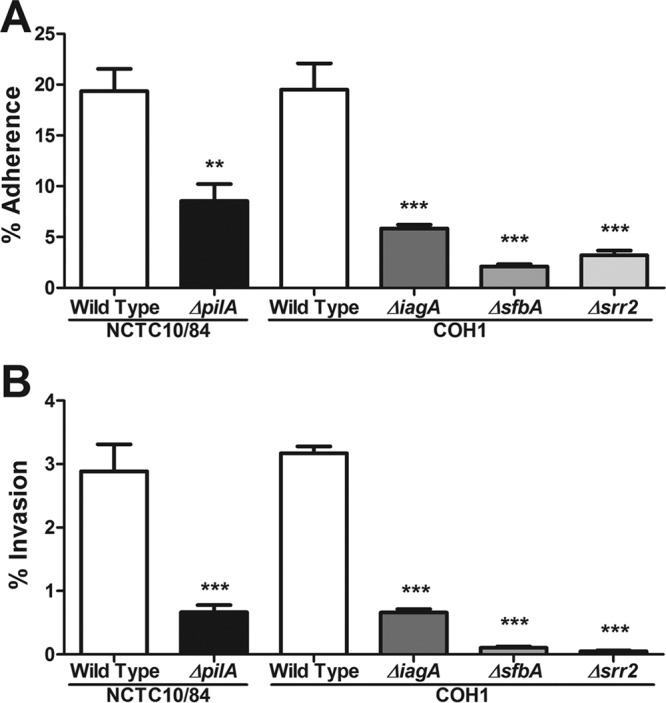
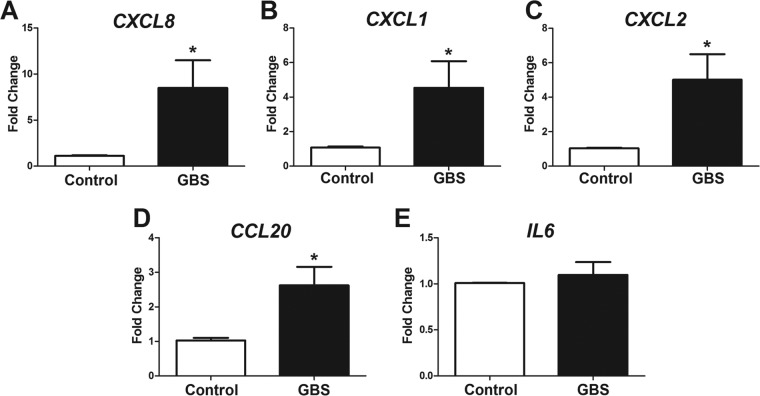
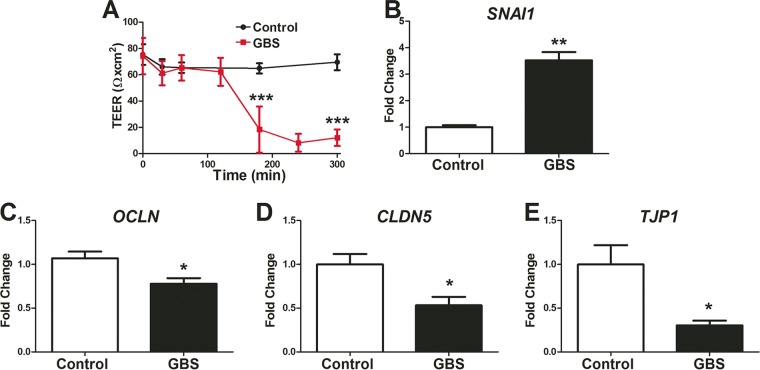
Bacterial meningitis is a serious infection of the central nervous system (CNS) that occurs after bacteria interact with and penetrate the blood-brain barrier (BBB). The BBB is comprised of highly specialized brain microvascular endothelial cells (BMECs) that function to separate the circulation from the CNS and act as a formidable barrier for toxins and pathogens. Certain bacteria, such as (group B [GBS]), possess the ability to interact with and penetrate the BBB to cause meningitis. Modeling bacterial interaction with the BBB has been limited to primary and immortalized BMEC culture. While useful, these cells often do not retain BBB-like properties, and human primary cells have limited availability. Recently, a human induced pluripotent stem cell (iPSC)-derived BMEC model has been established that is readily renewable and retains key BBB phenotypes. Here, we sought to evaluate whether the iPSC-derived BMECs were appropriate for modeling bacterial interaction with the BBB. Using GBS as a model meningeal pathogen, we demonstrate that wild-type GBS adhered to, invaded, and activated the iPSC-derived BMECs, while GBS mutants known to have diminished BBB interaction were attenuated in the iPSC-derived model. Furthermore, bacterial infection resulted in the disruption of tight junction components ZO-1, occludin, and claudin-5. Thus, we show for the first time that the iPSC-derived BBB model can be utilized to study BBB interaction with a bacterial CNS pathogen. Here for the first time, human iPSC-derived BMECs were used to model bacterial interaction with the BBB. Unlike models previously used to study these interactions, iPSC-derived BMECs possess robust BBB properties, such as the expression of complex tight junctions that are key components for the investigation of bacterial effects on the BBB. Here, we demonstrated that GBS interacts with the iPSC-derived BMECs and specifically disrupts these tight junctions. Thus, using this BBB model may allow researchers to uncover novel mechanisms of BBB disruption during meningitis that are inaccessible to immortalized or primary cell models that lack substantial tight junctions.

摘要

细菌性脑膜炎是一种中枢神经系统(CNS)的严重感染,它发生在细菌与血脑屏障(BBB)相互作用并穿透血脑屏障之后。血脑屏障由高度特化的脑微血管内皮细胞(BMECs)组成,其功能是将循环系统与中枢神经系统分隔开,并作为毒素和病原体的强大屏障。某些细菌,如B组链球菌(GBS),具有与血脑屏障相互作用并穿透血脑屏障导致脑膜炎的能力。模拟细菌与血脑屏障的相互作用一直局限于原代和永生化的BMEC培养。虽然这些细胞有用,但它们通常不保留类似血脑屏障的特性,而且人类原代细胞的可用性有限。最近,已经建立了一种人诱导多能干细胞(iPSC)衍生的BMEC模型,该模型易于再生并保留关键的血脑屏障表型。在这里,我们试图评估iPSC衍生的BMECs是否适合模拟细菌与血脑屏障的相互作用。使用GBS作为模型脑膜病原体,我们证明野生型GBS粘附、侵入并激活了iPSC衍生的BMECs,而已知与血脑屏障相互作用减弱的GBS突变体在iPSC衍生模型中则减弱。此外,细菌感染导致紧密连接成分ZO-1、闭合蛋白和claudin-5的破坏。因此,我们首次表明iPSC衍生的血脑屏障模型可用于研究血脑屏障与细菌性中枢神经系统病原体的相互作用。在这里首次使用人iPSC衍生的BMECs来模拟细菌与血脑屏障的相互作用。与以前用于研究这些相互作用的模型不同,iPSC衍生的BMECs具有强大的血脑屏障特性,例如复杂紧密连接的表达,这些紧密连接是研究细菌对血脑屏障影响的关键成分。在这里,我们证明GBS与iPSC衍生的BMECs相互作用并特异性破坏这些紧密连接。因此,使用这个血脑屏障模型可能使研究人员发现脑膜炎期间血脑屏障破坏的新机制,而这些机制是缺乏大量紧密连接的永生化或原代细胞模型无法触及的。
https://cdn.ncbi.nlm.nih.gov/pmc/blobs/434d/5663983/7094b0ba6d01/sph0051723910005.jpg
https://cdn.ncbi.nlm.nih.gov/pmc/blobs/434d/5663983/9862a6f16657/sph0051723910001.jpg
https://cdn.ncbi.nlm.nih.gov/pmc/blobs/434d/5663983/1c0328d2d201/sph0051723910002.jpg
https://cdn.ncbi.nlm.nih.gov/pmc/blobs/434d/5663983/4d84e1af32fd/sph0051723910003.jpg
https://cdn.ncbi.nlm.nih.gov/pmc/blobs/434d/5663983/3a997af3ac58/sph0051723910004.jpg
https://cdn.ncbi.nlm.nih.gov/pmc/blobs/434d/5663983/7094b0ba6d01/sph0051723910005.jpg
https://cdn.ncbi.nlm.nih.gov/pmc/blobs/434d/5663983/9862a6f16657/sph0051723910001.jpg
https://cdn.ncbi.nlm.nih.gov/pmc/blobs/434d/5663983/1c0328d2d201/sph0051723910002.jpg
https://cdn.ncbi.nlm.nih.gov/pmc/blobs/434d/5663983/4d84e1af32fd/sph0051723910003.jpg
https://cdn.ncbi.nlm.nih.gov/pmc/blobs/434d/5663983/3a997af3ac58/sph0051723910004.jpg
https://cdn.ncbi.nlm.nih.gov/pmc/blobs/434d/5663983/7094b0ba6d01/sph0051723910005.jpg

相似文献

1
Modeling Group B and Blood-Brain Barrier Interaction by Using Induced Pluripotent Stem Cell-Derived Brain Endothelial Cells.利用诱导多能干细胞衍生的脑内皮细胞模拟B组与血脑屏障的相互作用
mSphere. 2017 Nov 1;2(6). doi: 10.1128/mSphere.00398-17. eCollection 2017 Nov-Dec.
2
Cryopreservation of Brain Endothelial Cells Derived from Human Induced Pluripotent Stem Cells Is Enhanced by Rho-Associated Coiled Coil-Containing Kinase Inhibition.抑制含 Rho 相关卷曲螺旋结构域蛋白激酶可增强人诱导多能干细胞来源的脑内皮细胞的冷冻保存效果。
Tissue Eng Part C Methods. 2016 Dec;22(12):1085-1094. doi: 10.1089/ten.TEC.2016.0345.
3
Accelerated differentiation of human induced pluripotent stem cells to blood-brain barrier endothelial cells.人诱导多能干细胞向血脑屏障内皮细胞的加速分化。
Fluids Barriers CNS. 2017 Apr 13;14(1):9. doi: 10.1186/s12987-017-0059-0.
4
An isogenic blood-brain barrier model comprising brain endothelial cells, astrocytes, and neurons derived from human induced pluripotent stem cells.一种由源自人类诱导多能干细胞的脑内皮细胞、星形胶质细胞和神经元组成的同基因血脑屏障模型。
J Neurochem. 2017 Mar;140(6):874-888. doi: 10.1111/jnc.13923. Epub 2017 Feb 14.
5
Mechanisms of Blood Brain Barrier Disruption by Different Types of Bacteria, and Bacterial-Host Interactions Facilitate the Bacterial Pathogen Invading the Brain.不同类型细菌破坏血脑屏障的机制,以及细菌-宿主相互作用促进细菌病原体入侵大脑。
Cell Mol Neurobiol. 2018 Oct;38(7):1349-1368. doi: 10.1007/s10571-018-0609-2. Epub 2018 Aug 16.
6
Group B transcriptome when interacting with brain endothelial cells.B 组转录组与脑内皮细胞相互作用时。
J Bacteriol. 2024 Jun 20;206(6):e0008724. doi: 10.1128/jb.00087-24. Epub 2024 May 21.
7
Bacterial induction of Snail1 contributes to blood-brain barrier disruption.细菌诱导Snail1导致血脑屏障破坏。
J Clin Invest. 2015 Jun;125(6):2473-83. doi: 10.1172/JCI74159. Epub 2015 May 11.
8
Activation of RARα, RARγ, or RXRα Increases Barrier Tightness in Human Induced Pluripotent Stem Cell-Derived Brain Endothelial Cells.激活视黄酸受体 α、γ 或 X 受体 α 可增加人诱导多能干细胞衍生的脑内皮细胞的屏障紧密性。
Biotechnol J. 2018 Feb;13(2). doi: 10.1002/biot.201700093. Epub 2017 Sep 28.
9
Induced Pluripotent Stem Cell (iPSC)-Derived Endothelial Cells to Study Bacterial-Brain Endothelial Cell Interactions.诱导多能干细胞(iPSC)衍生的内皮细胞用于研究细菌-脑内皮细胞相互作用。
Methods Mol Biol. 2022;2492:73-101. doi: 10.1007/978-1-0716-2289-6_4.
10
Prediction of Drug Permeability Using Blood-Brain Barrier Models with Human Induced Pluripotent Stem Cell-Derived Brain Microvascular Endothelial Cells.利用人诱导多能干细胞衍生的脑微血管内皮细胞构建血脑屏障模型预测药物渗透性
Biores Open Access. 2019 Nov 14;8(1):200-209. doi: 10.1089/biores.2019.0026. eCollection 2019.

引用本文的文献

1
Neisseria meningitidis regulates P-glycoprotein transporter activity in brain endothelial cells via sphingosine 1-phosphate receptor 1.脑膜炎奈瑟菌通过鞘氨醇-1-磷酸受体1调节脑内皮细胞中的P-糖蛋白转运体活性。
Fluids Barriers CNS. 2025 Jul 22;22(1):78. doi: 10.1186/s12987-025-00687-0.
2
In Vitro Comparison of Two Python-Based Programs for the Automated Analysis of Tight-Junction Phenotype in Brain Endothelium During Bacterial Infection.基于Python的两个程序在细菌感染期间对脑内皮紧密连接表型进行自动分析的体外比较
Cell Biochem Funct. 2025 Jun;43(6):e70093. doi: 10.1002/cbf.70093.
3
Old World alphaviruses use distinct mechanisms to infect brain microvascular endothelial cells for neuroinvasion.

本文引用的文献

1
Modeling Psychomotor Retardation using iPSCs from MCT8-Deficient Patients Indicates a Prominent Role for the Blood-Brain Barrier.使用MCT8缺陷患者的诱导多能干细胞对精神运动迟缓进行建模表明血脑屏障具有重要作用。
Cell Stem Cell. 2017 Jun 1;20(6):831-843.e5. doi: 10.1016/j.stem.2017.04.002. Epub 2017 May 16.
2
Huntington's Disease iPSC-Derived Brain Microvascular Endothelial Cells Reveal WNT-Mediated Angiogenic and Blood-Brain Barrier Deficits.亨廷顿舞蹈病诱导多能干细胞衍生的脑微血管内皮细胞揭示了WNT介导的血管生成和血脑屏障缺陷。
Cell Rep. 2017 May 16;19(7):1365-1377. doi: 10.1016/j.celrep.2017.04.021.
3
Accelerated differentiation of human induced pluripotent stem cells to blood-brain barrier endothelial cells.
旧大陆甲病毒利用不同机制感染脑微血管内皮细胞以实现神经侵袭。
bioRxiv. 2025 Jan 24:2025.01.22.634395. doi: 10.1101/2025.01.22.634395.
4
Common Chemical Plasticizer Di(2-Ethhylhexyl) Phthalate Exposure Exacerbates Coxsackievirus B3 Infection.常见化学增塑剂邻苯二甲酸二(2-乙基己基)酯暴露会加剧柯萨奇病毒B3感染。
Viruses. 2024 Nov 23;16(12):1821. doi: 10.3390/v16121821.
5
Group B Streptococcal Membrane Vesicles Induce Proinflammatory Cytokine Production and Are Sensed in an NLRP3 Inflammasome-Dependent Mechanism in a Human Macrophage-like Cell Line.B族链球菌膜泡可诱导促炎细胞因子产生,并在人巨噬细胞样细胞系中通过NLRP3炎性小体依赖性机制被感知。
ACS Infect Dis. 2025 Feb 14;11(2):453-462. doi: 10.1021/acsinfecdis.4c00641. Epub 2025 Jan 6.
6
Transcriptomic analysis of coxsackievirus B3 infection in induced pluripotent stem cell-derived brain-like endothelial cells.诱导多能干细胞衍生的脑样内皮细胞中柯萨奇病毒B3感染的转录组学分析
J Virol. 2025 Jan 31;99(1):e0182424. doi: 10.1128/jvi.01824-24. Epub 2024 Dec 13.
7
strain COH1 transcriptome in association with stem cell-derived brain-like endothelial cells.与干细胞衍生的脑样内皮细胞相关的COH1菌株转录组
Microbiol Resour Announc. 2024 Dec 12;13(12):e0045524. doi: 10.1128/mra.00455-24. Epub 2024 Nov 11.
8
iPSC-derived blood-brain barrier modeling reveals APOE isoform-dependent interactions with amyloid beta.iPSC 衍生的血脑屏障模型揭示 APOE 异构体与淀粉样蛋白-β的依赖相互作用。
Fluids Barriers CNS. 2024 Oct 11;21(1):79. doi: 10.1186/s12987-024-00580-2.
9
Group B transcriptome when interacting with brain endothelial cells.B 组转录组与脑内皮细胞相互作用时。
J Bacteriol. 2024 Jun 20;206(6):e0008724. doi: 10.1128/jb.00087-24. Epub 2024 May 21.
10
Host-microbe interactions at the blood-brain barrier through the lens of induced pluripotent stem cell-derived brain-like endothelial cells.通过诱导多能干细胞衍生的类脑内皮细胞研究血脑屏障中的宿主-微生物相互作用。
mBio. 2024 Feb 14;15(2):e0286223. doi: 10.1128/mbio.02862-23. Epub 2024 Jan 9.
人诱导多能干细胞向血脑屏障内皮细胞的加速分化。
Fluids Barriers CNS. 2017 Apr 13;14(1):9. doi: 10.1186/s12987-017-0059-0.
4
In vitro model of cerebral ischemia by using brain microvascular endothelial cells derived from human induced pluripotent stem cells.利用源自人诱导多能干细胞的脑微血管内皮细胞建立脑缺血的体外模型。
Biochem Biophys Res Commun. 2017 Apr 29;486(2):577-583. doi: 10.1016/j.bbrc.2017.03.092. Epub 2017 Mar 21.
5
Streptococcus suis small RNA rss04 contributes to the induction of meningitis by regulating capsule synthesis and by inducing biofilm formation in a mouse infection model.猪链球菌小RNA rss04通过调节荚膜合成以及在小鼠感染模型中诱导生物膜形成,促进脑膜炎的发生。
Vet Microbiol. 2017 Feb;199:111-119. doi: 10.1016/j.vetmic.2016.12.034. Epub 2016 Dec 31.
6
An isogenic blood-brain barrier model comprising brain endothelial cells, astrocytes, and neurons derived from human induced pluripotent stem cells.一种由源自人类诱导多能干细胞的脑内皮细胞、星形胶质细胞和神经元组成的同基因血脑屏障模型。
J Neurochem. 2017 Mar;140(6):874-888. doi: 10.1111/jnc.13923. Epub 2017 Feb 14.
7
Analysis of Cancer-Targeting Alkylphosphocholine Analogue Permeability Characteristics Using a Human Induced Pluripotent Stem Cell Blood-Brain Barrier Model.使用人诱导多能干细胞血脑屏障模型分析靶向癌症的烷基磷胆碱类似物的渗透特性
Mol Pharm. 2016 Sep 6;13(9):3341-9. doi: 10.1021/acs.molpharmaceut.6b00441. Epub 2016 Aug 4.
8
SILAC and LC-MS/MS identification of Streptococcus equi ssp. zooepidemicus proteins that contribute to mouse brain microvascular endothelial cell infection.利用稳定同位素标记氨基酸在细胞培养中进行定量(SILAC)和液相色谱-串联质谱(LC-MS/MS)鉴定马链球菌兽疫亚种中有助于感染小鼠脑微血管内皮细胞的蛋白质。
Appl Microbiol Biotechnol. 2016 Aug;100(16):7125-36. doi: 10.1007/s00253-016-7579-4. Epub 2016 May 13.
9
Identification of CiaR Regulated Genes That Promote Group B Streptococcal Virulence and Interaction with Brain Endothelial Cells.鉴定促进B族链球菌毒力及与脑内皮细胞相互作用的CiaR调控基因。
PLoS One. 2016 Apr 21;11(4):e0153891. doi: 10.1371/journal.pone.0153891. eCollection 2016.
10
Immortalized endothelial cell lines for in vitro blood-brain barrier models: A systematic review.用于体外血脑屏障模型的永生化内皮细胞系:一项系统综述。
Brain Res. 2016 Jul 1;1642:532-545. doi: 10.1016/j.brainres.2016.04.024. Epub 2016 Apr 14.