Yan Wensheng, Zhang Yanhong, Chen Xinbin
The Comparative Oncology Laboratory, Schools of Veterinary Medicine and Medicine, University of California at Davis, Davis, California, USA.
Oncotarget. 2017 Jun 13;8(45):78327-78339. doi: 10.18632/oncotarget.18463. eCollection 2017 Oct 3.
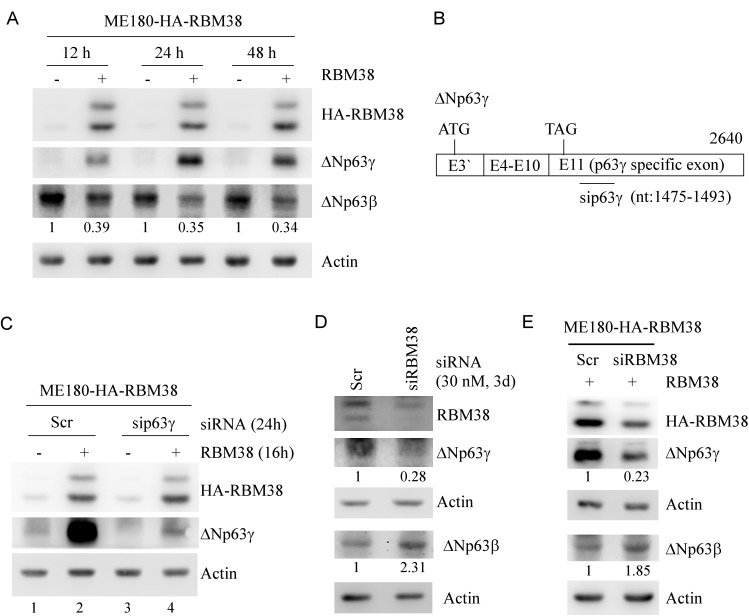
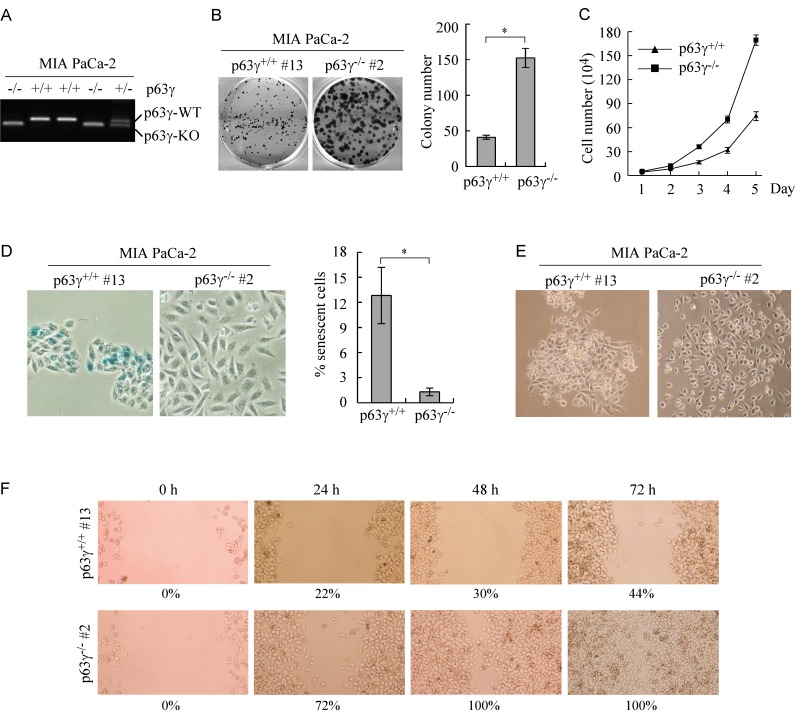
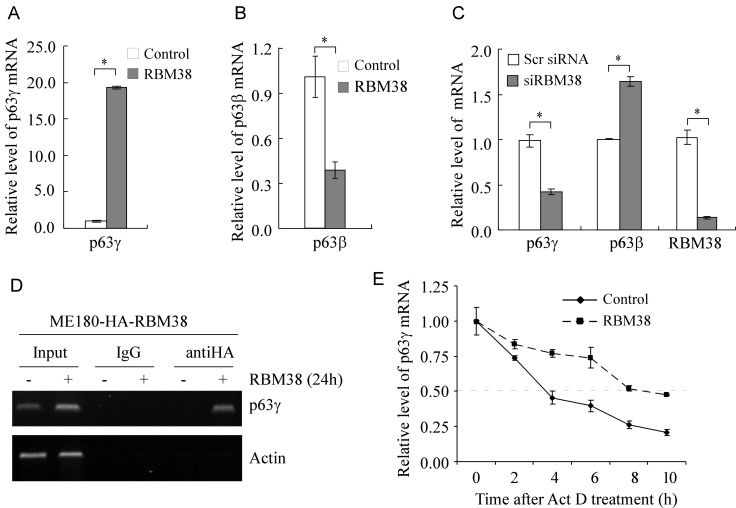
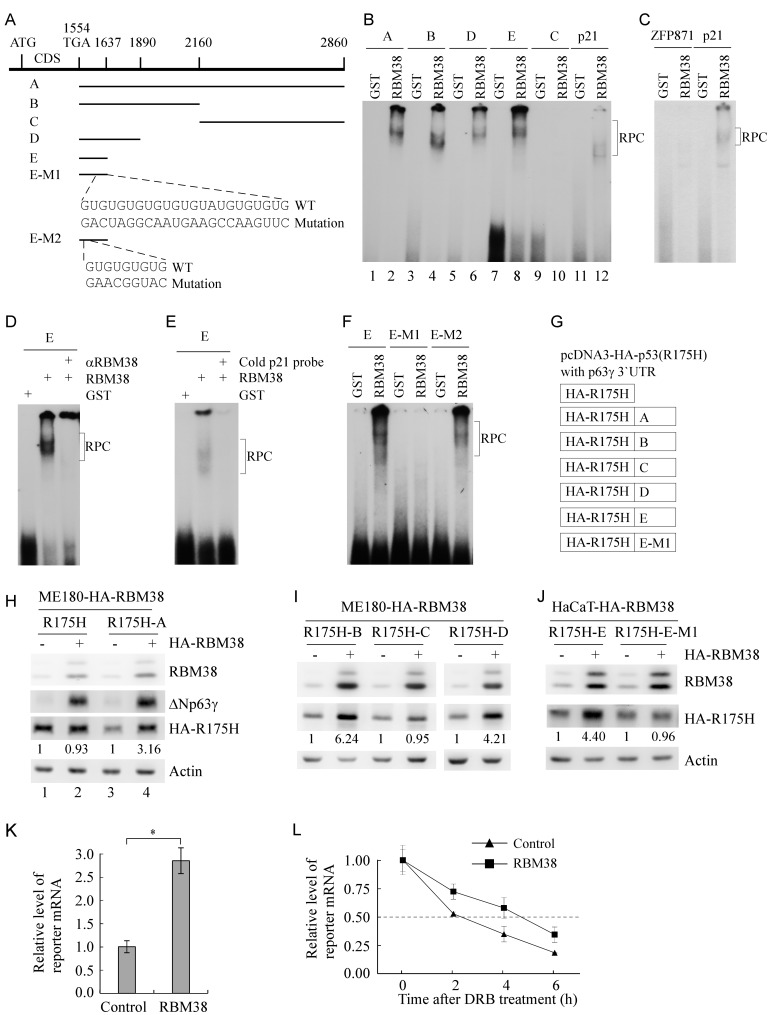
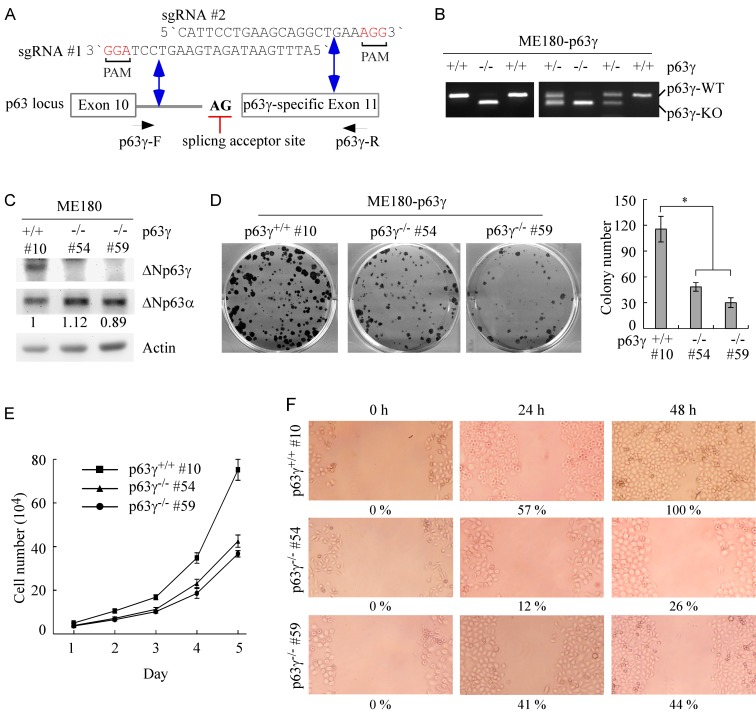
The gene is expressed as TAp63 from the P1 promoter and as ΔNp63 from the P2 promoter. Through alternative splicing, five TA and five ΔN isoforms (α-ε) are expressed. Isoforms α-β and δ share an identical 3' untranslated region (3'UTR) whereas isoform γ has a unique 3'UTR. Recently, we found that RBM38 RNA-binding protein is a target of p63 and RBM38 in turn regulates p63α/β expression via mRNA stability. However, it is uncertain whether p63γ has a unique biological activity and whether p63γ is regulated by RBM38. Here, we found that the levels of ΔNp63γ transcript and protein are induced upon overexpression of RBM38 but decreased by RBM38 knockdown. Conversely, we found that the levels of ΔNp63β transcript and protein are decreased by ectopic expression of RBM38 but increased by RBM38 knockdown, consistent with our previous report. Interestingly, RBM38 increases the half-life of p63γ mRNA by binding to a GU-rich element in p63γ 3'UTR. In contrast, our previous studies showed that RBM38 decreases the half-life of p63α/β mRNAs by binding to AU-/U-rich elements in their 3'UTR. We also found that knockout of p63γ in ME180 and HaCaT cells, in which ΔNp63 isoforms are predominant, inhibits cell proliferation and migration, suggesting that ΔNp63γ has a pro-growth activity. In contrast, we found that knockout of TAp63γ in MIA PaCa-2 cells, in which TAp63 isoforms are predominant, promotes cell proliferation, migration, and inhibits cellular senescence. Taken together, we conclude that ΔNp63γ has an oncogenic potential whereas TAp63γ is a tumor suppressor.
该基因从P1启动子表达为TAp63,从P2启动子表达为ΔNp63。通过可变剪接,表达出五种TA和五种ΔN亚型(α-ε)。α-β和δ亚型共享相同的3'非翻译区(3'UTR),而γ亚型有独特的3'UTR。最近,我们发现RBM38 RNA结合蛋白是p63的一个靶点,而RBM38反过来通过mRNA稳定性调节p63α/β的表达。然而,p63γ是否具有独特的生物学活性以及p63γ是否受RBM38调节尚不确定。在这里,我们发现RBM38过表达时,ΔNp63γ转录本和蛋白水平升高,但RBM38敲低时则降低。相反,我们发现RBM38异位表达时,ΔNp63β转录本和蛋白水平降低,但RBM38敲低时则升高,这与我们之前的报告一致。有趣的是,RBM38通过与p63γ 3'UTR中的富含GU元件结合来增加p63γ mRNA的半衰期。相比之下,我们之前的研究表明,RBM38通过与p63α/β mRNA 3'UTR中的富含AU/U元件结合来降低其半衰期。我们还发现,在以ΔNp63亚型为主的ME180和HaCaT细胞中敲除p63γ会抑制细胞增殖和迁移,这表明ΔNp63γ具有促生长活性。相比之下,我们发现在以TAp63亚型为主的MIA PaCa-2细胞中敲除TAp63γ会促进细胞增殖、迁移并抑制细胞衰老。综上所述,我们得出结论,ΔNp63γ具有致癌潜力,而TAp63γ是一种肿瘤抑制因子。