Hiyoshi Yukiharu, Akiyoshi Takashi, Inoue Ramu, Murofushi Keiko, Yamamoto Noriko, Fukunaga Yosuke, Ueno Masashi, Baba Hideo, Mori Seiichi, Yamaguchi Toshiharu
Gastroenterological Center, Department of Gastroenterological Surgery, The Cancer Institute Hospital of Japanese Foundation for Cancer Research, Tokyo, Japan.
Clinical Research Center, The Cancer Institute Hospital of Japanese Foundation for Cancer Research, Tokyo, Japan.
Oncotarget. 2017 Mar 31;8(45):79201-79211. doi: 10.18632/oncotarget.16760. eCollection 2017 Oct 3.
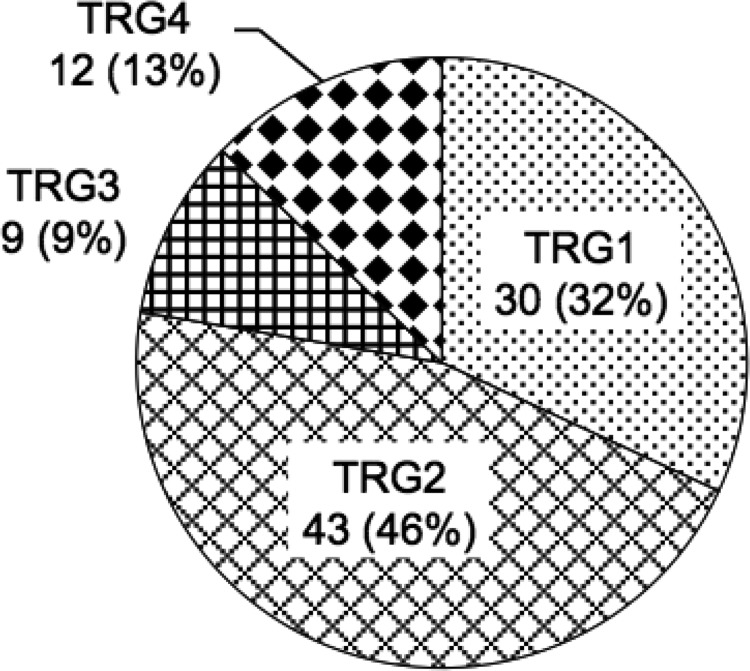
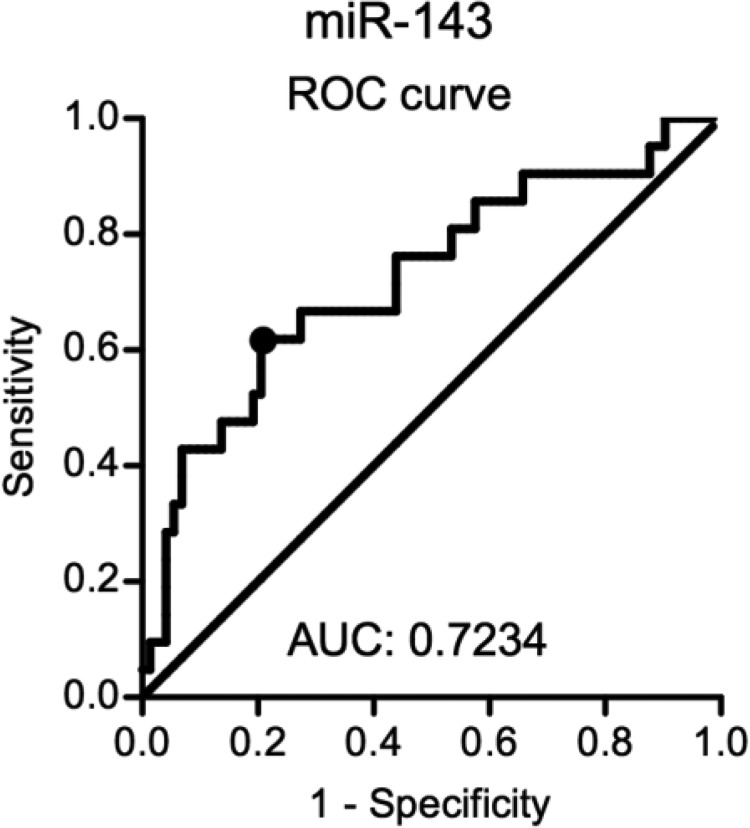
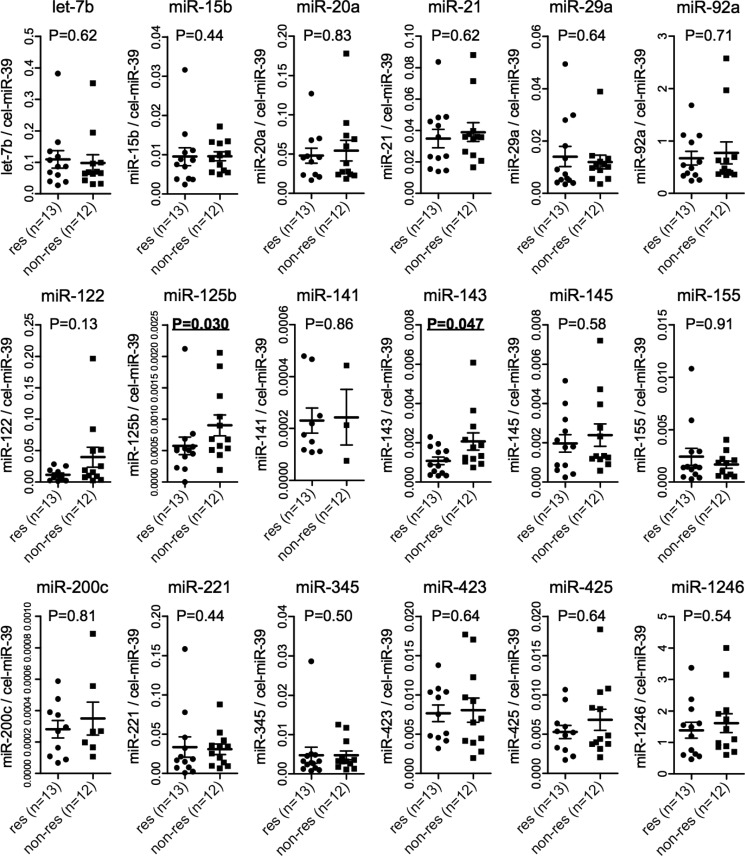
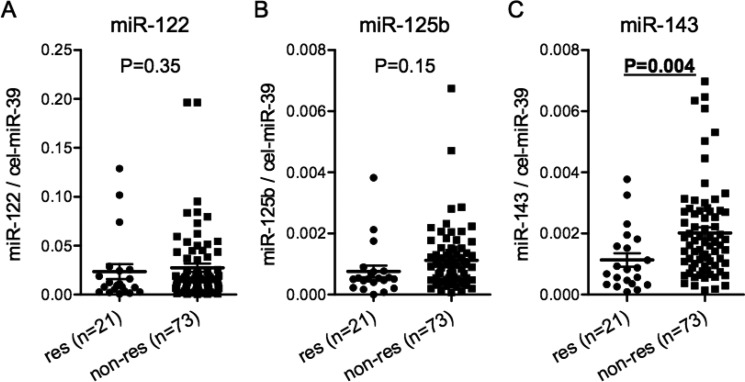
Recently, several circulating miRNAs have been reported as promising, minimally invasive biomarkers for the diagnosis or prediction of the prognosis in various types of cancer. However, the utility of circulating miRNAs as predictive markers of the cancer response to neoadjuvant chemoradiotherapy (nCRT) for locally advanced rectal cancer is still unclear. To identify circulating serum miRNAs useful for predicting a pathological good response to nCRT, total 18 serum miRNAs of interest were analyzed by real-time polymerase chain reaction in 94 rectal cancer patients treated with nCRT and surgery. Pathological complete response (pCR; Dworak TRG4) and near-pCR (TRG3) were obtained in 12 (13%) and 9 (9%) patients respectively, and we regarded them as nCRT-responders. Of the 18 serum miRNAs, only the serum level of miR-143 was identified significantly associated with a pathological response to nCRT in 94 patients; the serum miR-143 level was significantly lower in nCRT-responders than in non-responders. A multivariate analysis incorporating other clinicopathological factors showed that only the serum miR-143 level was an independent predictor of a good pathological response. The circulating serum miR-143 level may be a novel, non-invasive predictive marker of a response to nCRT in locally advanced rectal cancer patients.
最近,有报道称几种循环miRNA有望成为各类癌症诊断或预后预测的微创生物标志物。然而,循环miRNA作为局部晚期直肠癌新辅助放化疗(nCRT)癌症反应预测标志物的效用仍不明确。为了鉴定可用于预测nCRT病理良好反应的循环血清miRNA,我们采用实时聚合酶链反应分析了94例接受nCRT和手术治疗的直肠癌患者血清中总共18种感兴趣的miRNA。分别有12例(13%)和9例(9%)患者获得了病理完全缓解(pCR;Dworak TRG4)和接近pCR(TRG3),我们将这些患者视为nCRT反应者。在这18种血清miRNA中,仅发现miR-143的血清水平与94例患者对nCRT的病理反应显著相关;nCRT反应者的血清miR-143水平显著低于无反应者。纳入其他临床病理因素的多因素分析显示,只有血清miR-143水平是良好病理反应的独立预测因子。循环血清miR-143水平可能是局部晚期直肠癌患者对nCRT反应的一种新型非侵入性预测标志物。