CAS Key Laboratory of Geospace Environment, Department of Geophysics and Planetary Sciences, University of Science and Technology of China, 230026, Hefei, China.
Collaborative Innovation Center of Astronautical Science and Technology, 230026, Hefei, China.
Nat Commun. 2017 Nov 6;8(1):1330. doi: 10.1038/s41467-017-01207-x.
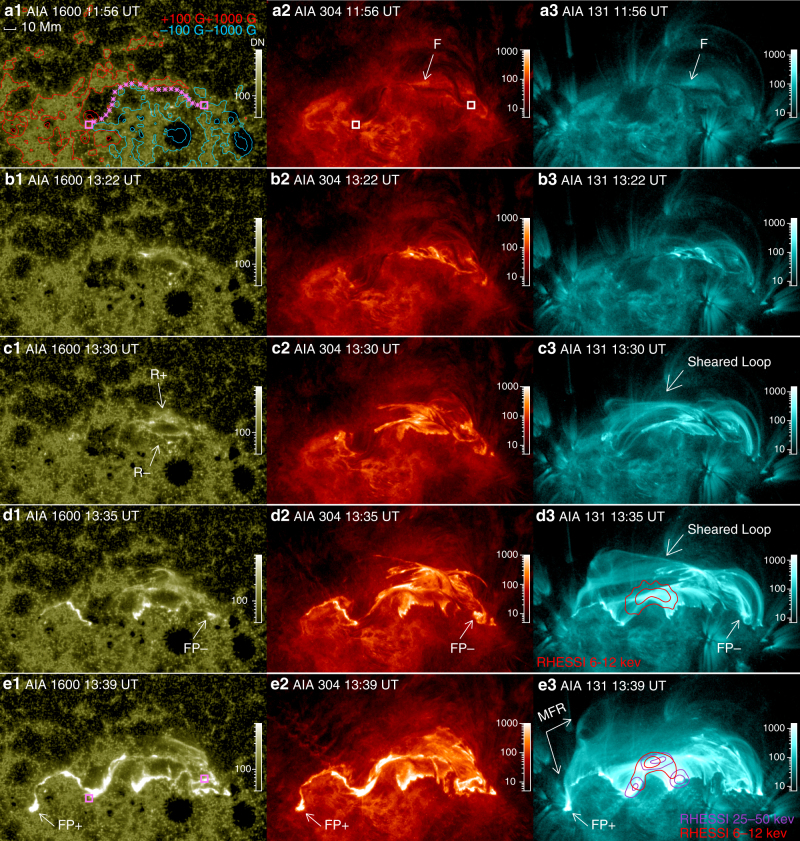
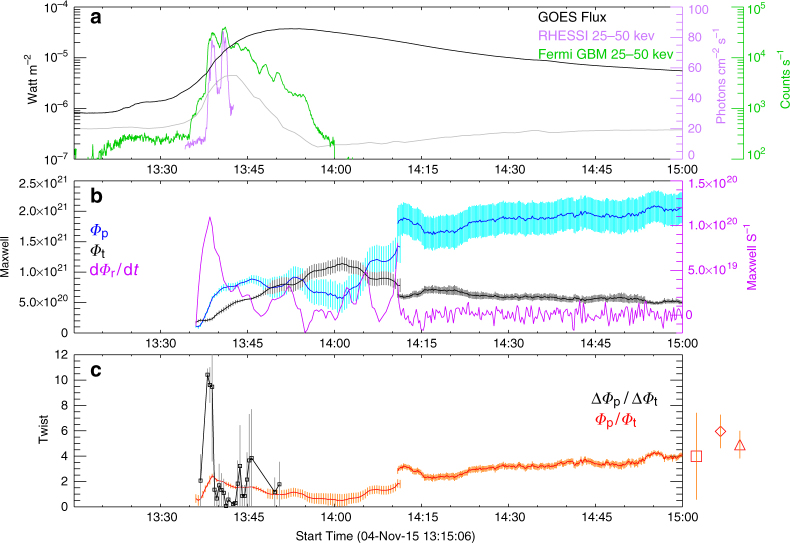
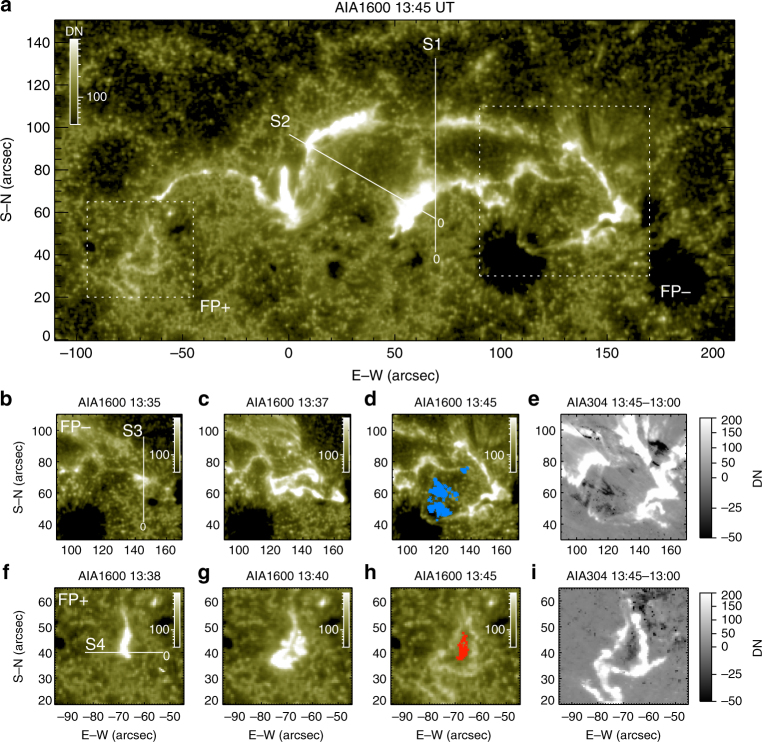
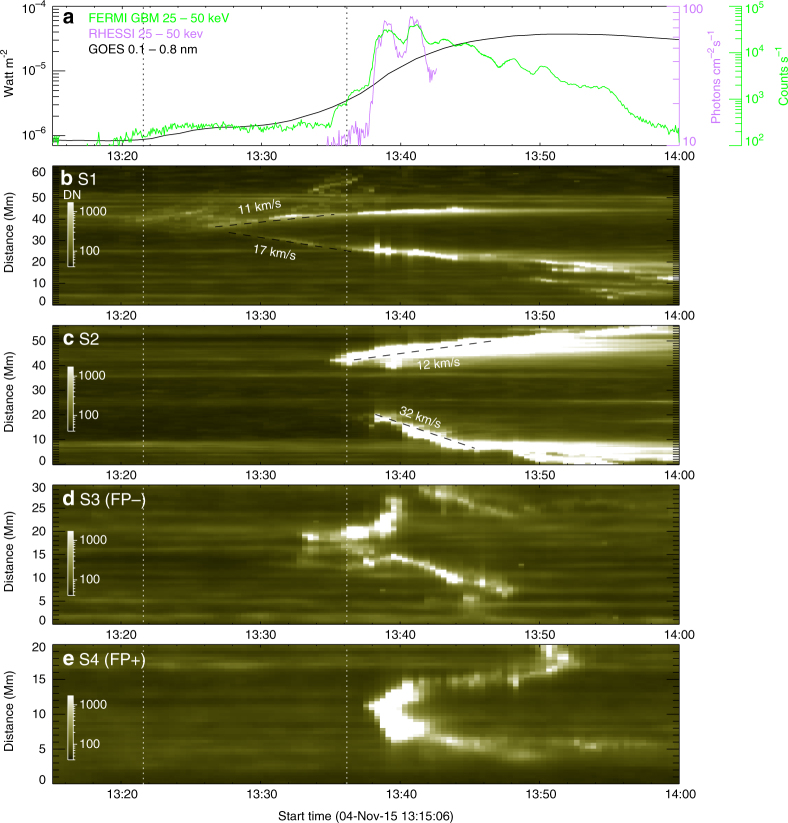
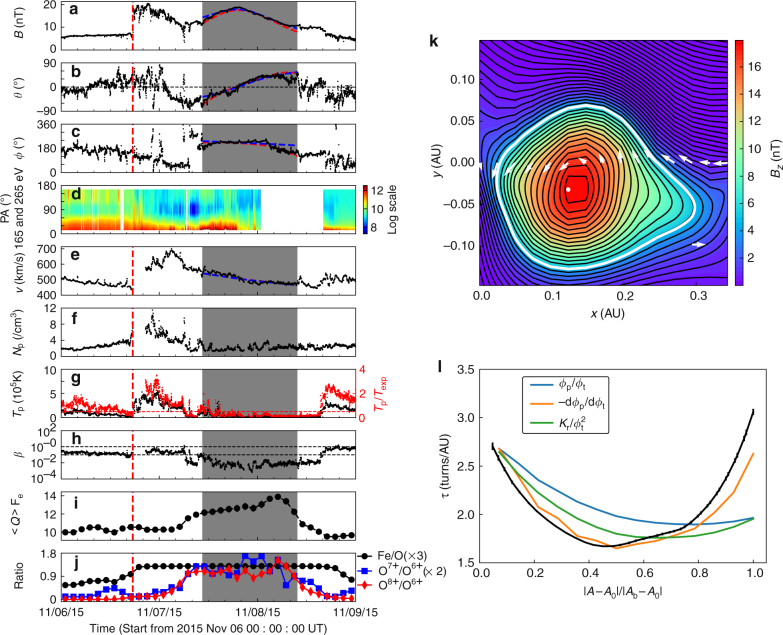
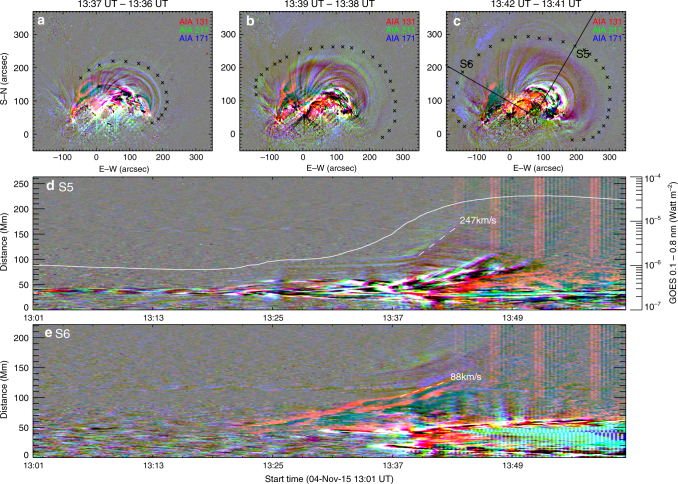
The magnetic flux rope is among the most fundamental magnetic configurations in plasma. Although its presence after solar eruptions has been verified by spacecraft measurements near Earth, its formation on the Sun remains elusive, yet is critical to understanding a broad spectrum of phenomena. Here we study the dynamic formation of a magnetic flux rope during a classic two-ribbon flare. Its feet are identified unambiguously with conjugate coronal dimmings completely enclosed by irregular bright rings, which originate and expand outward from the far ends of flare ribbons. The expansion is associated with the rapid ribbon separation during the flare main phase. Counting magnetic flux through the feet and the ribbon-swept area reveals that the rope's core is more twisted than its average of four turns. It propagates to the Earth as a typical magnetic cloud possessing a similar twist profile obtained by the Grad-Shafranov reconstruction of its three dimensional structure.
磁通量绳是等离子体中最基本的磁场结构之一。尽管它在太阳爆发后在地球附近的航天器测量中得到了证实,但它在太阳上的形成仍然难以捉摸,然而对于理解广泛的现象至关重要。在这里,我们研究了一个经典的双带耀斑中磁通量绳的动态形成。它的脚与共轭日冕暗化区域完全被不规则的亮环所包围,可以明确地识别出来,这些亮环起源于耀斑带的远端,并向外扩展。这种扩展与耀斑主相期间快速的带间分离有关。通过测量脚部和带扫过的区域的磁通量,发现绳的核心比其平均四匝的扭曲程度更大。它作为一个典型的磁云传播到地球,具有通过其三维结构的 Grad-Shafranov 重建获得的相似扭曲轮廓。