Villa Mara, Lässig Michael
Institute for Theoretical Physics, University of Cologne, Cologne, Germany.
PLoS Pathog. 2017 Nov 7;13(11):e1006685. doi: 10.1371/journal.ppat.1006685. eCollection 2017 Nov.
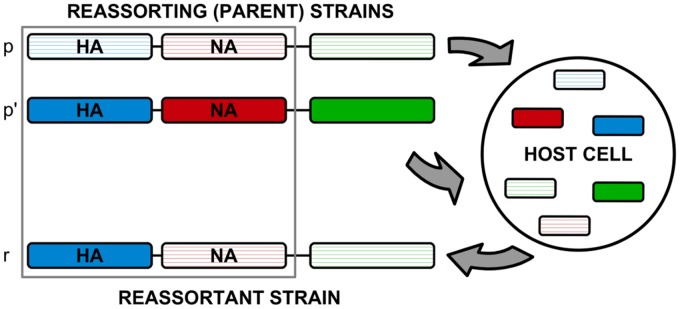
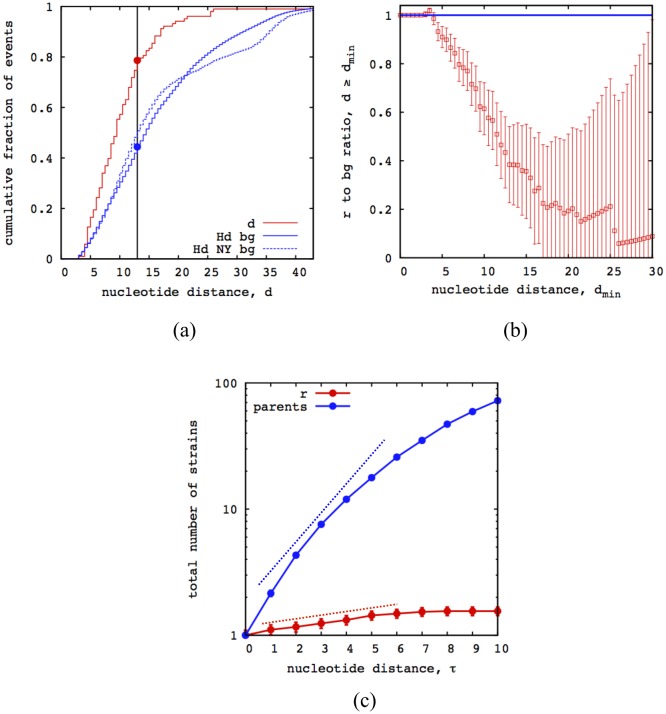
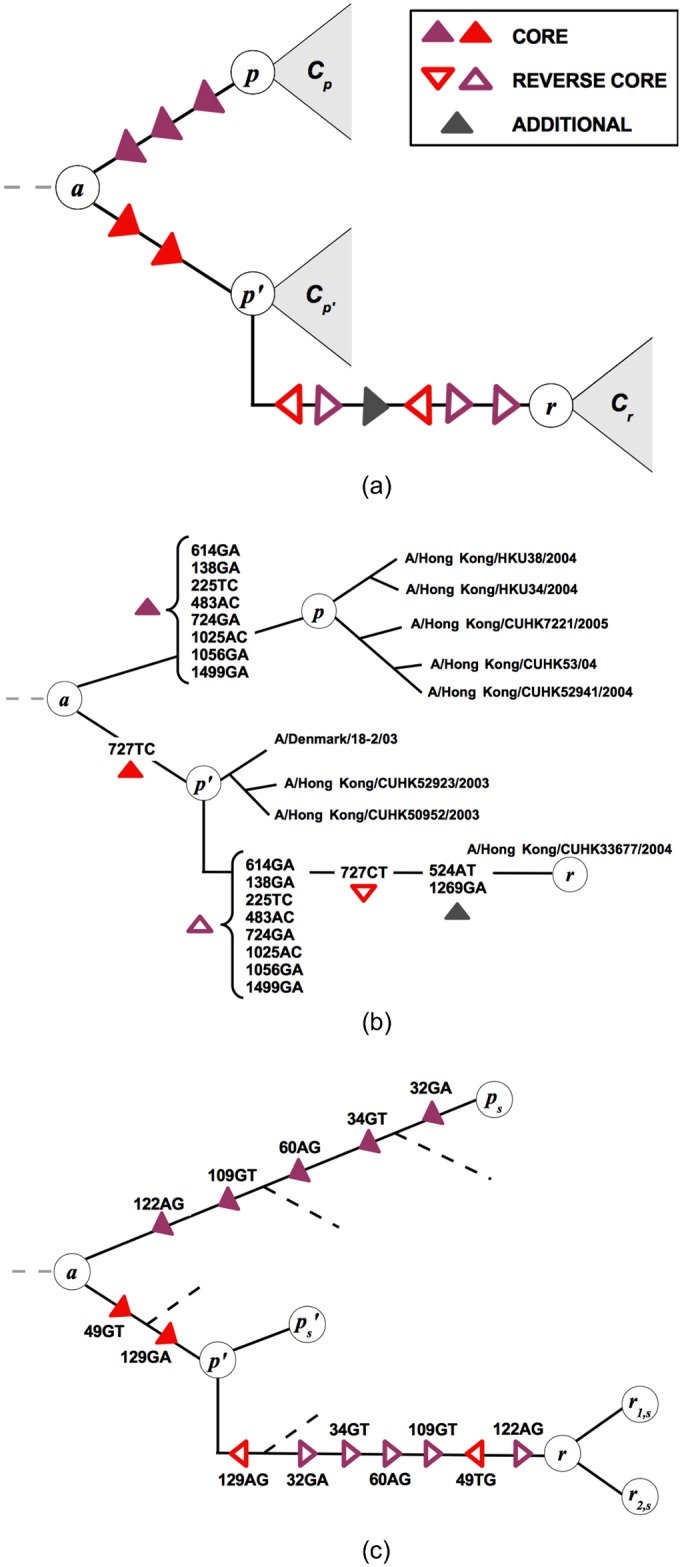
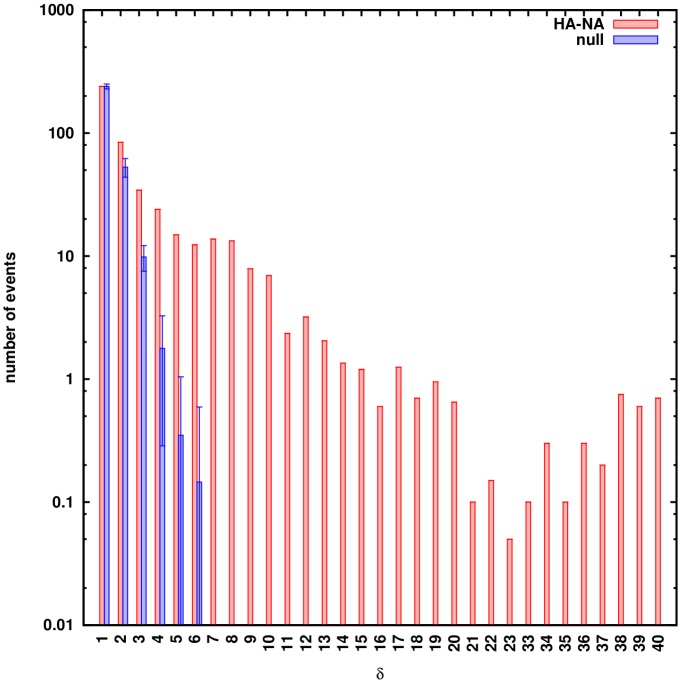
Reassortment, which is the exchange of genome sequence between viruses co-infecting a host cell, plays an important role in the evolution of segmented viruses. In the human influenza virus, reassortment happens most frequently between co-existing variants within the same lineage. This process breaks genetic linkage and fitness correlations between viral genome segments, but the resulting net effect on viral fitness has remained unclear. In this paper, we determine rate and average selective effect of reassortment processes in the human influenza lineage A/H3N2. For the surface proteins hemagglutinin and neuraminidase, reassortant variants with a mean distance of at least 3 nucleotides to their parent strains get established at a rate of about 10-2 in units of the neutral point mutation rate. Our inference is based on a new method to map reassortment events from joint genealogies of multiple genome segments, which is tested by extensive simulations. We show that intra-lineage reassortment processes are, on average, under substantial negative selection that increases in strength with increasing sequence distance between the parent strains. The deleterious effects of reassortment manifest themselves in two ways: there are fewer reassortment events than expected from a null model of neutral reassortment, and reassortant strains have fewer descendants than their non-reassortant counterparts. Our results suggest that influenza evolves under ubiquitous epistasis across proteins, which produces fitness barriers against reassortment even between co-circulating strains within one lineage.
重配是指共同感染宿主细胞的病毒之间基因组序列的交换,在分节段病毒的进化中起着重要作用。在人流感病毒中,重配最常发生在同一谱系中同时存在的变体之间。这个过程打破了病毒基因组片段之间的遗传连锁和适应性关联,但重配对病毒适应性产生的总体净效应仍不明确。在本文中,我们确定了甲型H3N2流感病毒谱系中重配过程的速率和平均选择效应。对于表面蛋白血凝素和神经氨酸酶,与亲本菌株平均距离至少为3个核苷酸的重配变体以约10-2的速率(以中性点突变率为单位)得以确立。我们的推断基于一种从多个基因组片段的联合系谱图中绘制重配事件的新方法,该方法经过了广泛的模拟测试。我们表明,谱系内重配过程平均受到显著的负选择,且随着亲本菌株之间序列距离的增加,负选择强度增大。重配的有害影响以两种方式表现出来:重配事件比中性重配的零模型预期的要少,并且重配菌株的后代比非重配菌株的少。我们的结果表明,流感病毒在跨蛋白的普遍上位性作用下进化,这对重配产生了适应性障碍,即使在同一谱系中共同传播的菌株之间也是如此。