Tainio Jenna, Paakinaho Kaarlo, Ahola Niina, Hannula Markus, Hyttinen Jari, Kellomäki Minna, Massera Jonathan
BioMediTech Institute and Faculty of Biomedical Sciences and Engineering, Korkeakoulunkatu 3, 33720 Tampere, Finland.
Materials (Basel). 2017 Nov 6;10(11):1274. doi: 10.3390/ma10111274.
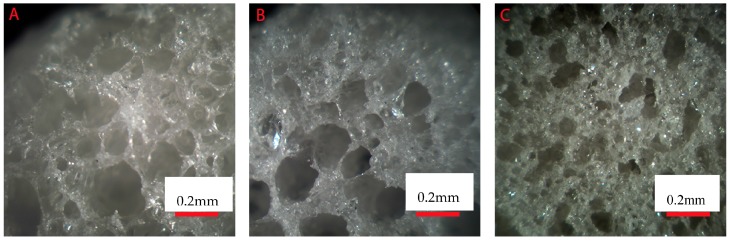
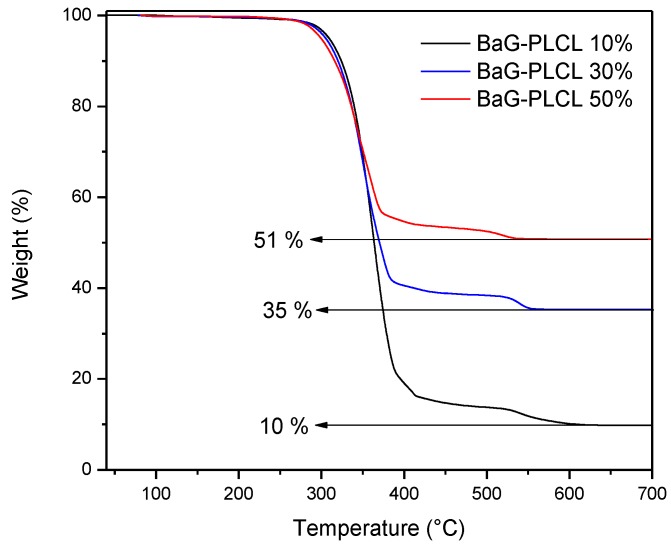
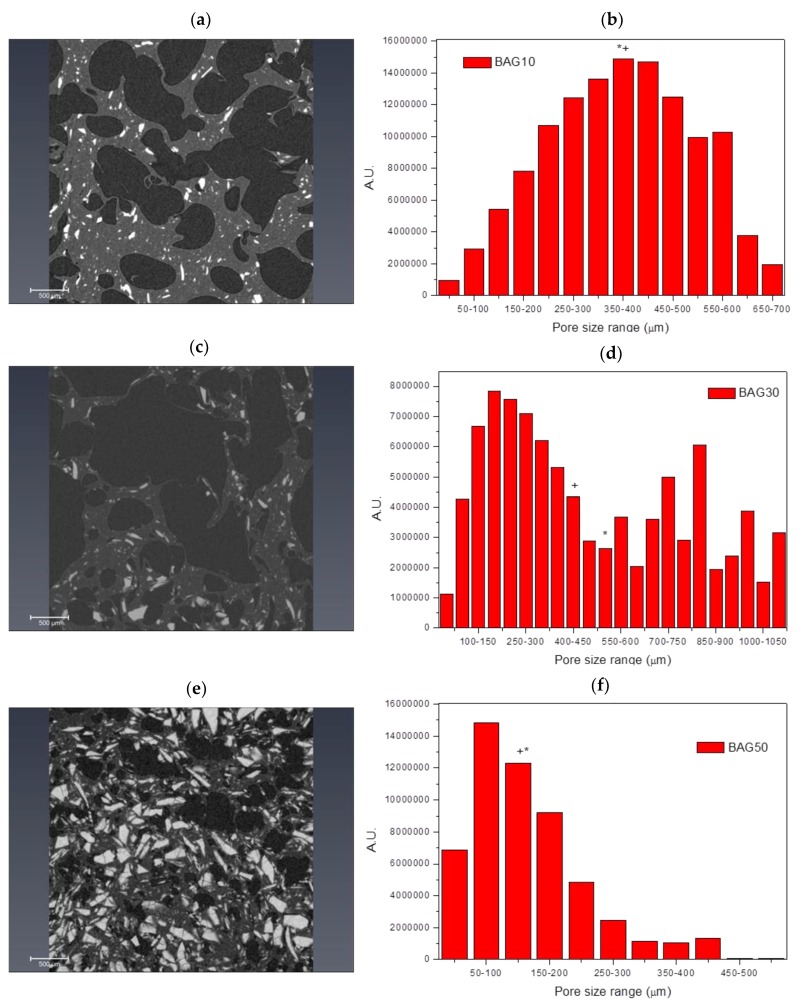
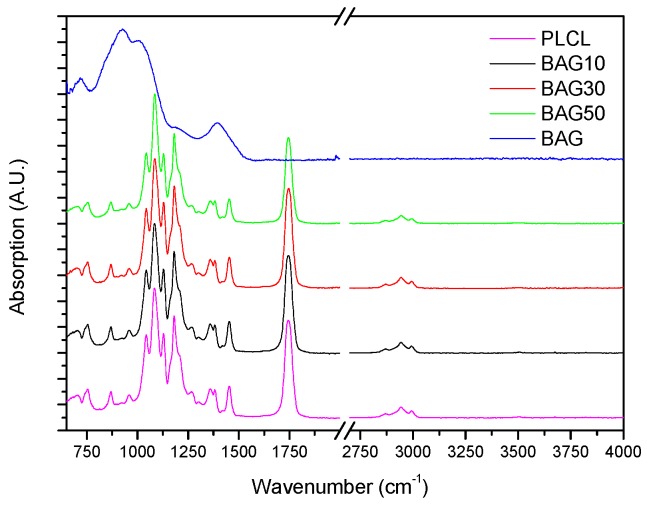
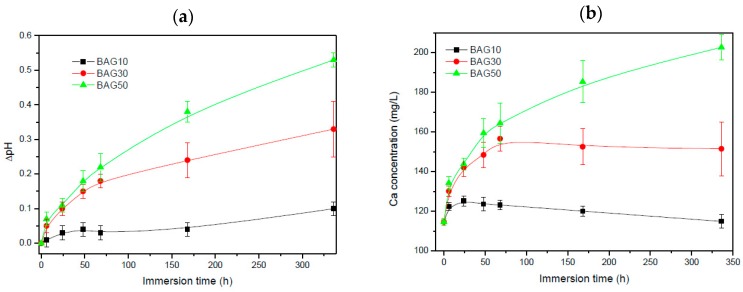
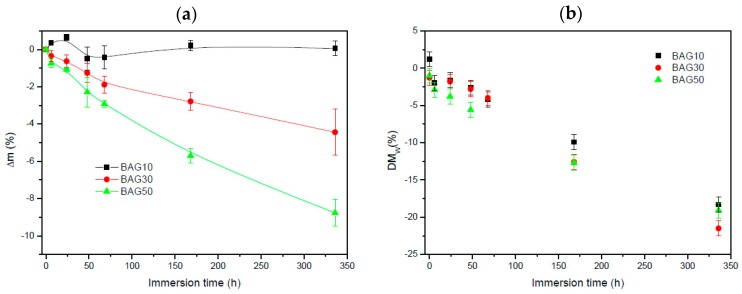
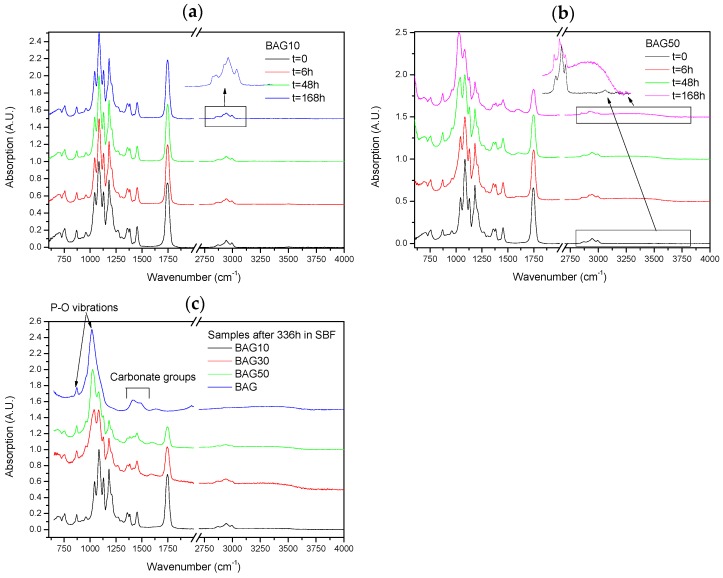
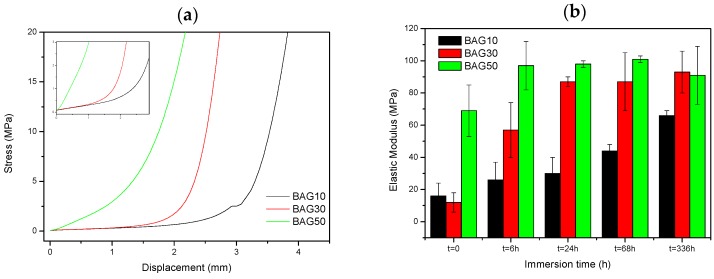
Composite scaffolds were obtained by mixing various amounts (10, 30 and 50 weight % [wt %]) of borosilicate bioactive glass and poly(l-lactide-co-ε-caprolactone) (PLCL) copolymer. The composites were foamed using supercritical CO₂. An increase in the glass content led to a decrease in the pore size and density. In vitro dissolution/reaction test was performed in simulated body fluid. As a function of immersion time, the solution pH increased due to the glass dissolution. This was further supported by the increasing amount of Ca in the immersing solution with increasing immersion time and glass content. Furthermore, the change in scaffold mass was significantly greater with increasing the glass content in the scaffold. However, only the scaffolds containing 30 and 50 wt % of glasses exhibited significant hydroxyapatite (HA) formation at 72 h of immersion. The compression strength of the samples was also measured. The Young's modulus was similar for the 10 and 30 wt % glass-containing scaffolds whereas it increased to 90 MPa for the 50 wt % glass containing scaffold. Upon immersion up to 72 h, the Young's modulus increased and then remained constant for longer immersion times. The scaffold prepared could have great potential for bone and cartilage regeneration.
通过混合不同含量(10%、30%和50%重量比[wt%])的硼硅酸盐生物活性玻璃和聚(L-丙交酯-共-ε-己内酯)(PLCL)共聚物获得复合支架。使用超临界CO₂对复合材料进行发泡。玻璃含量的增加导致孔径和密度降低。在模拟体液中进行体外溶解/反应测试。随着浸泡时间的延长,由于玻璃溶解,溶液pH值升高。浸泡溶液中钙含量随浸泡时间和玻璃含量的增加而增加,进一步证明了这一点。此外,支架中玻璃含量增加时,支架质量变化显著更大。然而,仅含30%和50%重量比玻璃的支架在浸泡72小时时表现出显著的羟基磷灰石(HA)形成。还测量了样品的压缩强度。含10%和30%重量比玻璃的支架的杨氏模量相似,而含50%重量比玻璃的支架的杨氏模量增加到90MPa。浸泡长达72小时后,杨氏模量增加,然后在更长的浸泡时间内保持恒定。所制备的支架在骨和软骨再生方面具有巨大潜力。