Onyekwelu Kenechukwu Chibuike, Ejezie Fidelis Ebele, Eze Anthonius Anayochukwu, Ikekpeazu Joy Ebele, Ezeh Richard Chukwunonye, Edeh Godknows Chizurumoke
Department of Medical Biochemistry, College of Medicine, University of Nigeria, Enugu Campus, Enugu State, Nigeria.
Department of Medical Biochemistry, Faculty of Basic Medical Sciences, Enugu State University of Science and Technology College of Medicine, Parklane, Enugu State, Nigeria.
Trop Parasitol. 2017 Jul-Dec;7(2):98-102. doi: 10.4103/tp.TP_14_17.
Trypanosomes are protozoan parasites of vertebrates transmitted by blood-sucking tsetse fly. Trypanosomes remain a constant threat to the lives of humans and animals throughout large regions of Africa.
This study investigated the presence, prevalence, and species of trypanosome parasite in tsetse flies caught in two areas of no previous documented history of trypanosome infection.
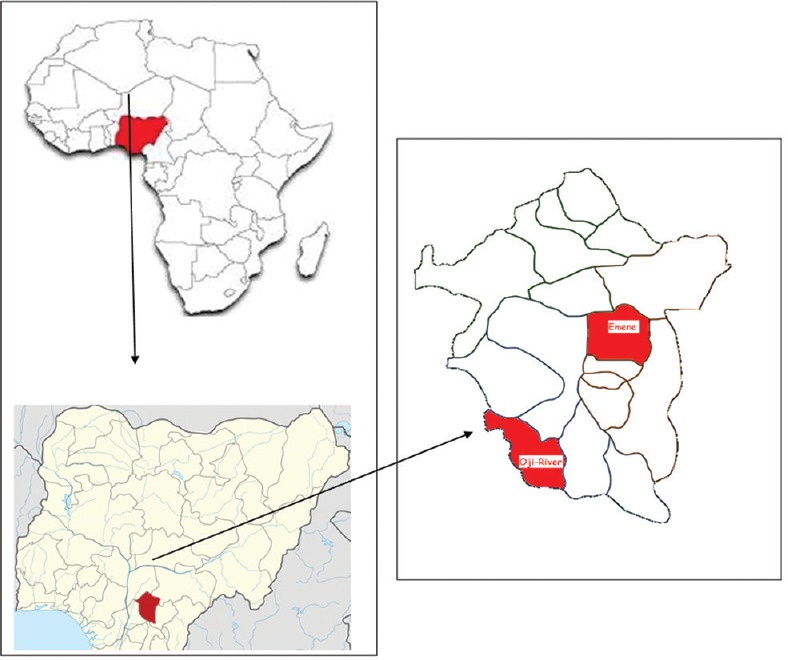
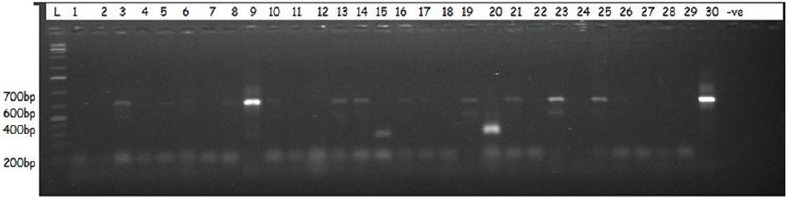
For this purpose, 63 and 77 nonterenal tsetse flies were collected from Oji River and Emene areas of Enugu State Nigeria, respectively. Genomic DNA was isolated from the whole tsetse fly using genomic DNA extraction kit. Identification and characterization of trypanosome were done using two approaches: the amplification of internal transcribed spacer 1 of ribosomal DNA and the use of primers specific to Trypanozoon.
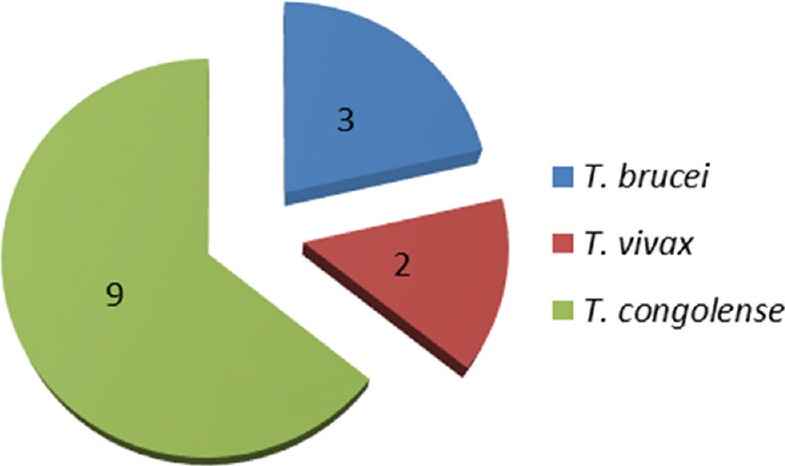
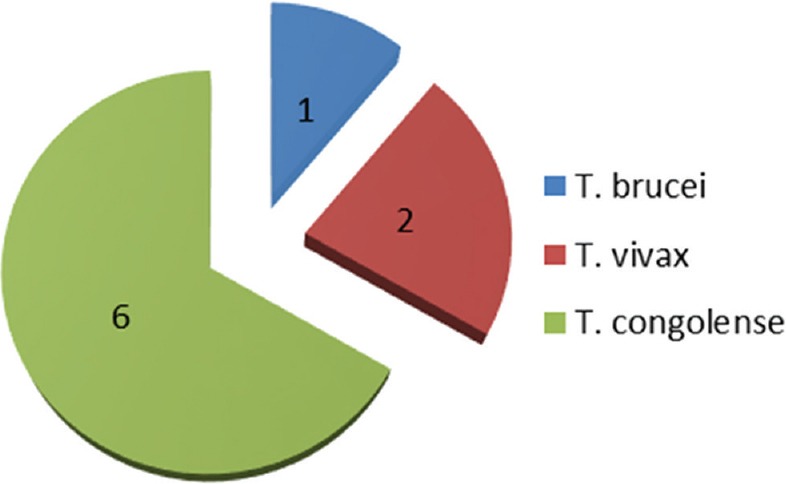
In Oji River, of 63 tsetse flies collected, the identification of trypanosome parasite was done on 57 flies and 6 (10.71%) tsetse flies were infected with trypanosome parasite. Six flies were infected with , 2 with , and 1 with . Two mixed infections of and and 1 mixed infection of and was also identified. In Emene, of 77 tsetse flies collected, the identification of trypanosome parasite was done on 66 flies and 11 (16.6%) tsetse flies were infected with trypanosome parasite. Nine flies were infected with , 2 with , and 3 with . Mixed infections identified include 2 mixed infections of and and 1 mixed infections of and . None of the subspecies of were detected using species specific primers.
This study shows the parasitological evidence on the occurrence of animal African trypanosomiasis and also demonstrated that there is likely no active transmission of human African trypanosomiasis in the study areas.
This study shows that there is likely no active transmission of human African trypanosomiasis going on in these localities since no human infective form of the parasite was detected.
锥虫是脊椎动物的原生动物寄生虫,由吸血采采蝇传播。在非洲的大片地区,锥虫仍然对人类和动物的生命构成持续威胁。
本研究调查了在两个以前没有锥虫感染记录的地区捕获的采采蝇中锥虫寄生虫的存在、流行情况和种类。
为此,分别从尼日利亚埃努古州的奥吉河地区和埃梅内地区收集了63只和77只未进食的采采蝇。使用基因组DNA提取试剂盒从整个采采蝇中分离基因组DNA。锥虫的鉴定和特征分析采用两种方法:核糖体DNA内部转录间隔区1的扩增和使用锥虫属特异性引物。
在奥吉河地区,收集的63只采采蝇中,对57只采采蝇进行了锥虫寄生虫鉴定,6只(10.71%)采采蝇感染了锥虫寄生虫。6只采采蝇感染了 ,2只感染了 ,1只感染了 。还鉴定出2例 和 的混合感染以及1例 和 的混合感染。在埃梅内地区,收集的77只采采蝇中,对66只采采蝇进行了锥虫寄生虫鉴定,11只(16.6%)采采蝇感染了锥虫寄生虫。9只采采蝇感染了 ,2只感染了 ,3只感染了 。鉴定出的混合感染包括2例 和 的混合感染以及1例 和 的混合感染。使用种特异性引物未检测到 的任何亚种。
本研究显示了关于动物非洲锥虫病发生的寄生虫学证据,也表明研究地区可能没有人类非洲锥虫病的活跃传播。
本研究表明,由于未检测到寄生虫的人类感染形式,这些地区可能没有人类非洲锥虫病的活跃传播。