Mu Yunxiang, Zelazowska Monika A, McBride Kevin M
Department of Epigenetics and Molecular Carcinogenesis, The University of Texas MD Anderson Cancer Center, Smithville, TX.
Department of Epigenetics and Molecular Carcinogenesis, The University of Texas MD Anderson Cancer Center, Smithville, TX
J Exp Med. 2017 Dec 4;214(12):3543-3552. doi: 10.1084/jem.20170468. Epub 2017 Nov 9.
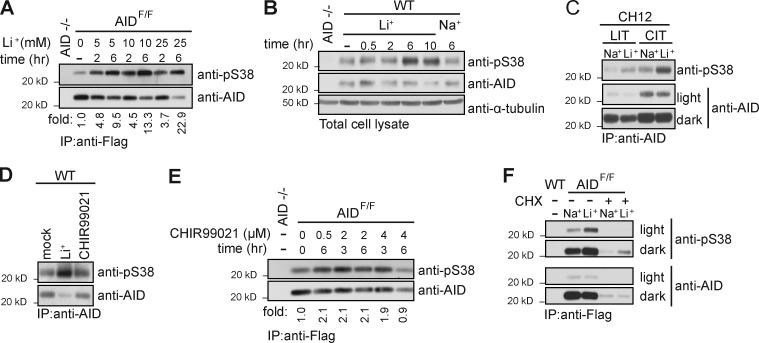
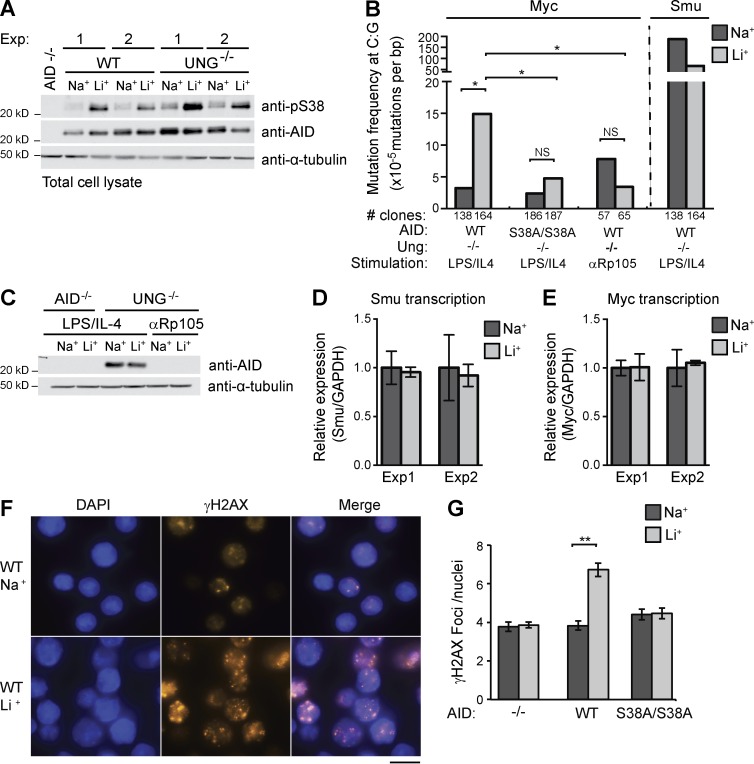
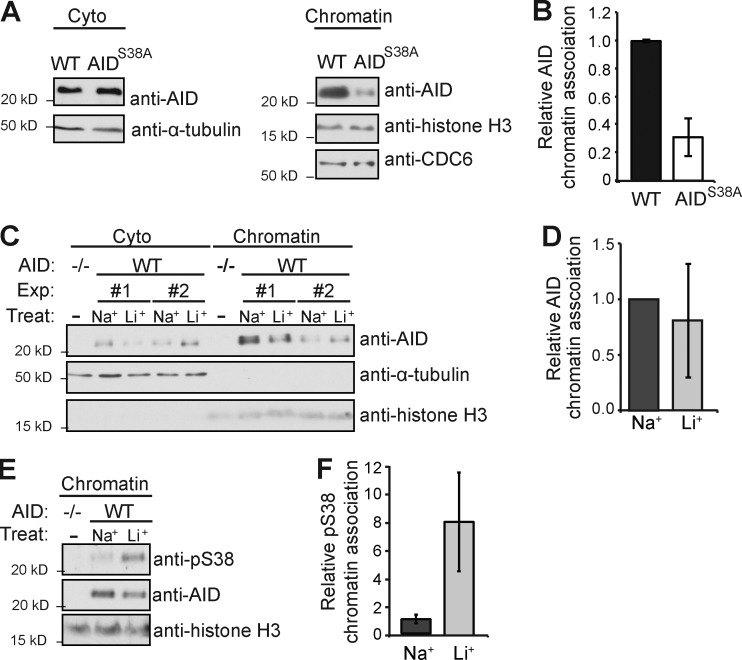
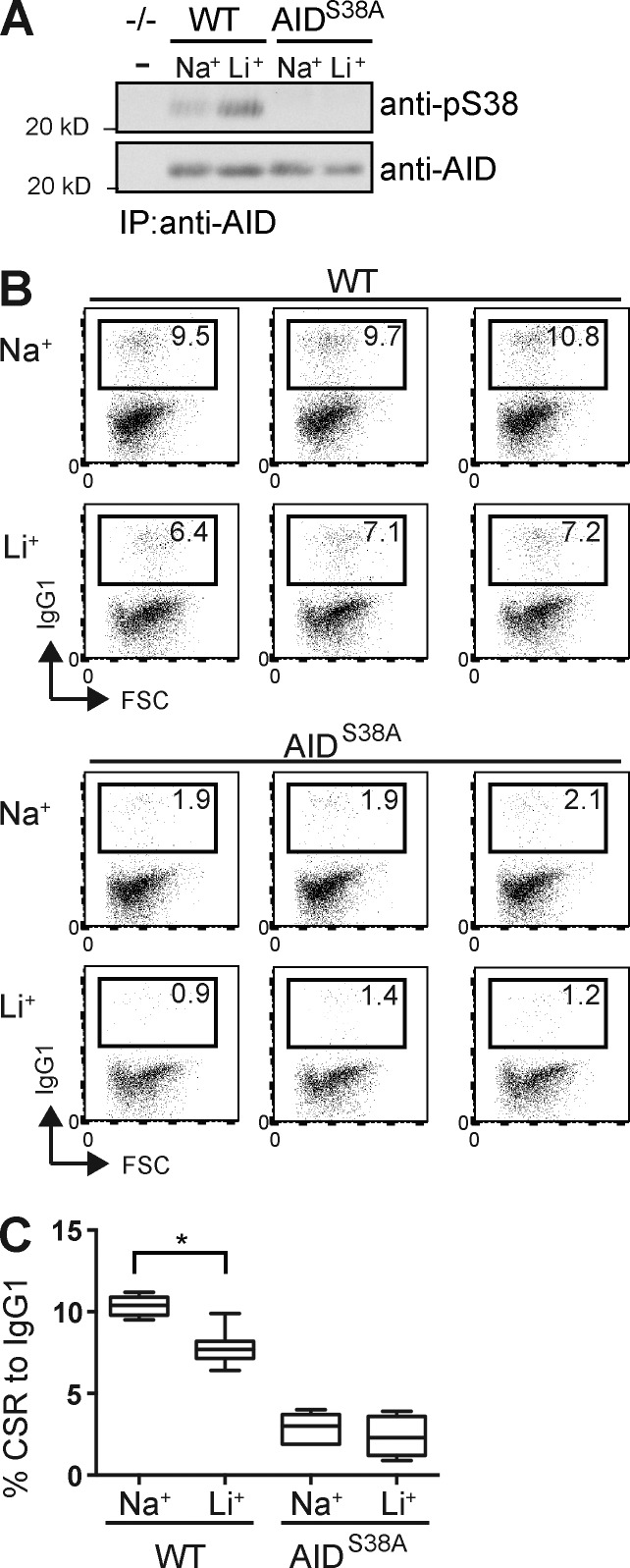
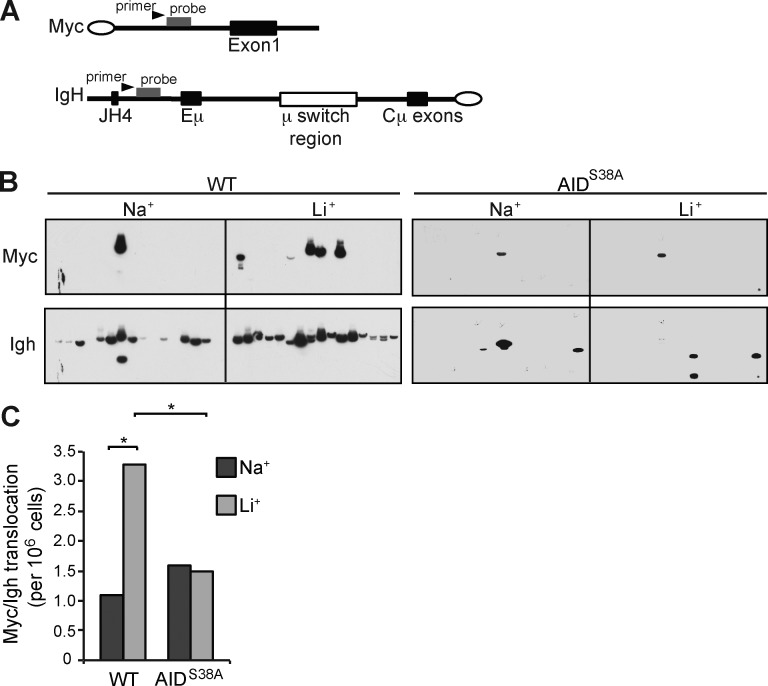
Activation-induced cytidine deaminase (AID) is a mutator enzyme that targets immunoglobulin (Ig) genes to initiate antibody somatic hypermutation (SHM) and class switch recombination (CSR). Off-target AID association also occurs, which causes oncogenic mutations and chromosome rearrangements. However, AID occupancy does not directly correlate with DNA damage, suggesting that factors beyond AID association contribute to mutation targeting. CSR and SHM are regulated by phosphorylation on AID serine38 (pS38), but the role of pS38 in off-target activity has not been evaluated. We determined that lithium, a clinically used therapeutic, induced high AID pS38 levels. Using lithium and an AID-S38 phospho mutant, we compared the role of pS38 in AID activity at the Ig switch region and off-target Myc gene. We found that deficient pS38 abated AID chromatin association and CSR but not mutation at Myc. Enhanced pS38 elevated Myc translocation and mutation frequency but not CSR or Ig switch region mutation. Thus, AID activity can be differentially targeted by phosphorylation to induce oncogenic lesions.
激活诱导的胞苷脱氨酶(AID)是一种诱变酶,它作用于免疫球蛋白(Ig)基因,引发抗体体细胞高频突变(SHM)和类别转换重组(CSR)。也会发生脱靶的AID结合,这会导致致癌突变和染色体重排。然而,AID的占据与DNA损伤并无直接关联,这表明除了AID结合之外的其他因素也有助于突变靶向。CSR和SHM受AID丝氨酸38(pS38)磷酸化的调控,但pS38在脱靶活性中的作用尚未得到评估。我们确定,临床上使用的治疗药物锂可诱导较高水平的AID pS38。利用锂和AID-S38磷酸化突变体,我们比较了pS38在Ig转换区和脱靶Myc基因处AID活性中的作用。我们发现,pS38缺陷会减弱AID与染色质的结合以及CSR,但不会减弱Myc基因的突变。增强的pS38会提高Myc易位和突变频率,但不会提高CSR或Ig转换区突变频率。因此,AID活性可通过磷酸化被差异性地靶向,从而诱导致癌性损伤。