Wang Qiao, Kieffer-Kwon Kyong-Rim, Oliveira Thiago Y, Mayer Christian T, Yao Kaihui, Pai Joy, Cao Zhen, Dose Marei, Casellas Rafael, Jankovic Mila, Nussenzweig Michel C, Robbiani Davide F
Laboratory of Molecular Immunology, The Rockefeller University, New York, NY 10065
Genomics and Immunity, National Institute of Arthritis and Musculoskeletal and Skin Diseases, National Institutes of Health, Bethesda, MD 20892.
J Exp Med. 2017 Jan;214(1):49-58. doi: 10.1084/jem.20161649. Epub 2016 Dec 20.
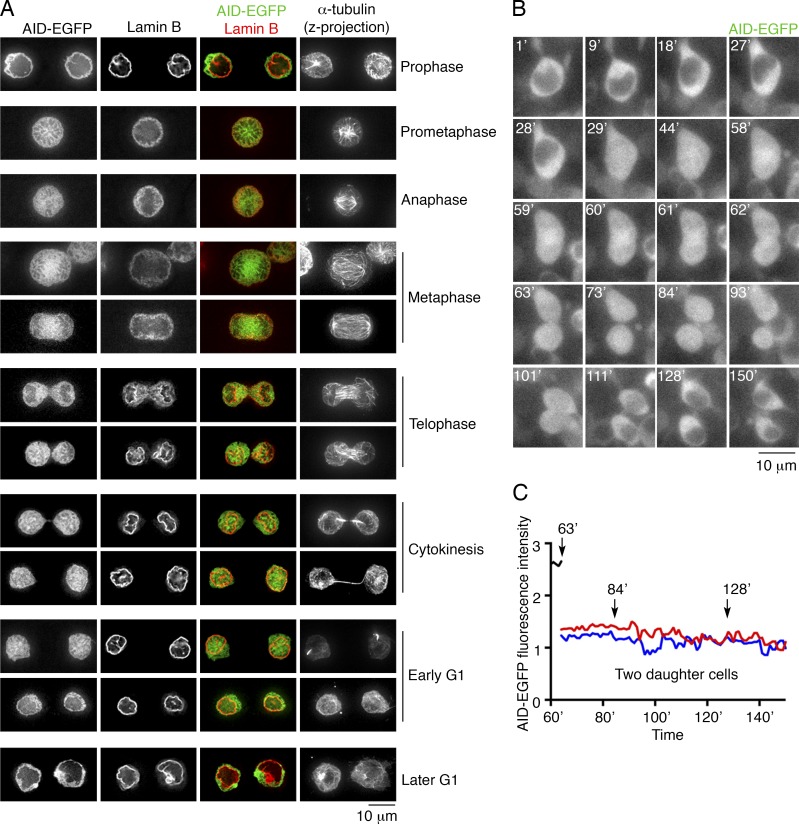
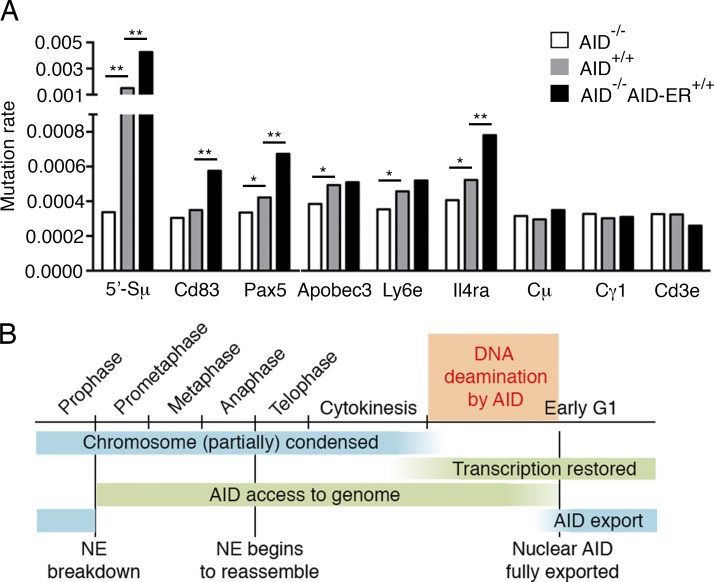
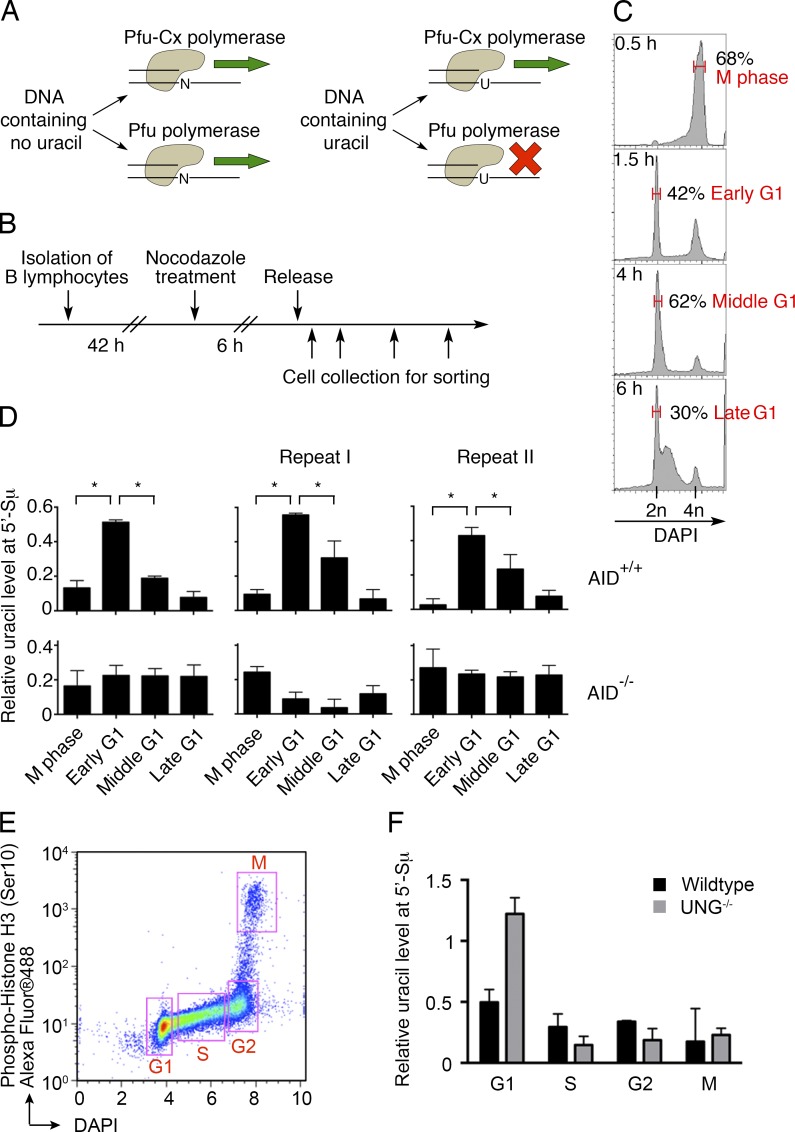
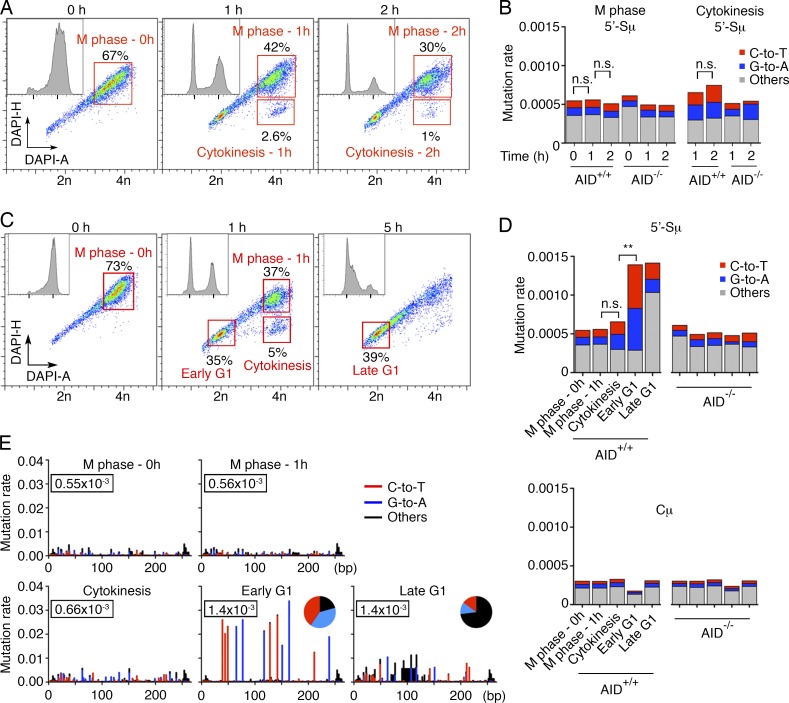
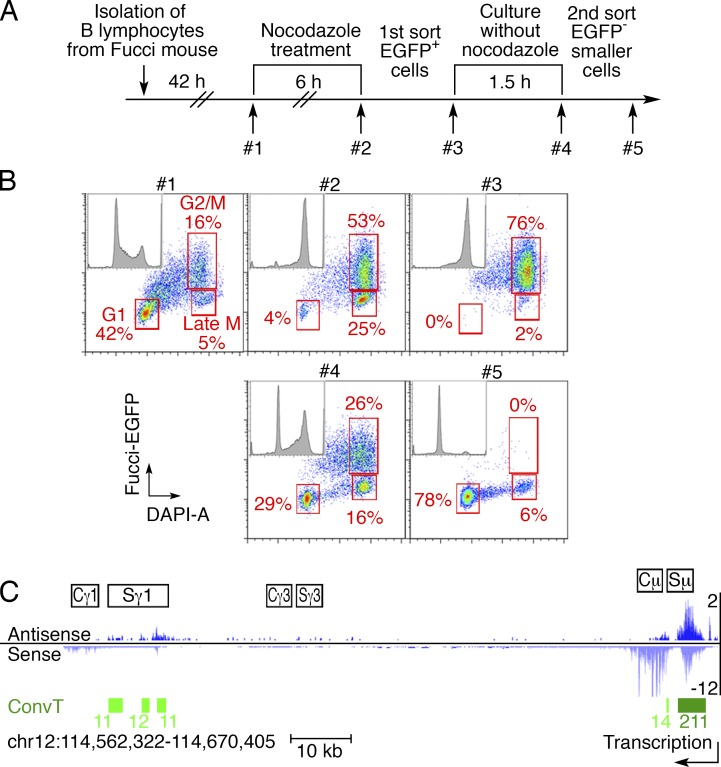
Activation-induced cytidine deaminase (AID) converts cytosine into uracil to initiate somatic hypermutation (SHM) and class switch recombination (CSR) of antibody genes. In addition, this enzyme produces DNA lesions at off-target sites that lead to mutations and chromosome translocations. However, AID is mostly cytoplasmic, and how and exactly when it accesses nuclear DNA remains enigmatic. Here, we show that AID is transiently in spatial contact with genomic DNA from the time the nuclear membrane breaks down in prometaphase until early G1, when it is actively exported into the cytoplasm. Consistent with this observation, the immunoglobulin (Igh) gene deamination as measured by uracil accumulation occurs primarily in early G1 after chromosomes decondense. Altering the timing of cell cycle-regulated AID nuclear residence increases DNA damage at off-target sites. Thus, the cell cycle-controlled breakdown and reassembly of the nuclear membrane and the restoration of transcription after mitosis constitute an essential time window for AID-induced deamination, and provide a novel DNA damage mechanism restricted to early G1.
活化诱导胞苷脱氨酶(AID)将胞嘧啶转化为尿嘧啶,从而启动抗体基因的体细胞高频突变(SHM)和类别转换重组(CSR)。此外,这种酶会在非靶位点产生DNA损伤,导致突变和染色体易位。然而,AID主要存在于细胞质中,它如何以及何时确切地进入核DNA仍然是个谜。在这里,我们表明,从前期核膜破裂到G1早期(此时它被主动输出到细胞质中),AID与基因组DNA存在短暂的空间接触。与这一观察结果一致,通过尿嘧啶积累测量的免疫球蛋白(Igh)基因脱氨主要发生在染色体解聚后的G1早期。改变细胞周期调控的AID核驻留时间会增加非靶位点的DNA损伤。因此,细胞周期控制的核膜破裂和重新组装以及有丝分裂后转录的恢复构成了AID诱导脱氨的关键时间窗口,并提供了一种仅限于G1早期的新型DNA损伤机制。