
脊椎动物适应性免疫——硬骨鱼模型的比较见解
Vertebrate Adaptive Immunity-Comparative Insights from a Teleost Model.
作者信息
Dickerson Harry W, Findly Robert Craig
机构信息
Department of Infectious Diseases, College of Veterinary Medicine, University of Georgia, Athens, GA, United States.
出版信息
Front Immunol. 2017 Oct 26;8:1379. doi: 10.3389/fimmu.2017.01379. eCollection 2017.
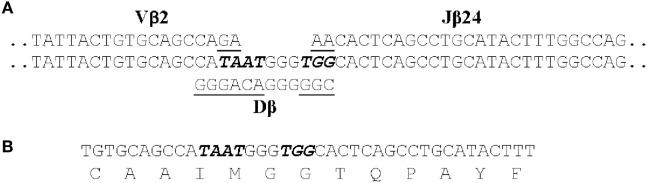
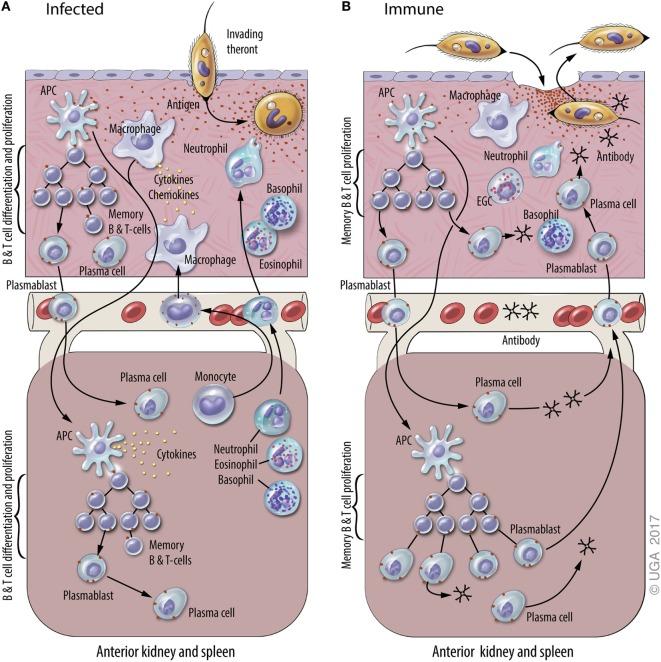
The channel catfish () and the ciliated protozoan parasite are used to study pathogen-specific protective immunity. In this review, we briefly describe this host-parasite system and discuss the comparative insights it provides on the adaptive immune response of vertebrates. We include studies related to cutaneous mucosal immunity, B cell memory responses, and analyses of αβ T cell receptor (TCR) repertoires. This host-parasite model has played an important role in elucidating host protective responses to parasite invasion and for comparative studies of vertebrate immunity. Recent findings from bioinformatics analyses of TCR β repertoires suggest that channel catfish preferentially expand specific clonotypes that are stably integrated in the genome. This finding could have broad implications related to diversity in lymphocyte receptors of early vertebrates.
斑点叉尾鮰(Ictalurus punctatus)和纤毛虫寄生虫用于研究病原体特异性保护性免疫。在本综述中,我们简要描述了这种宿主-寄生虫系统,并讨论了它在脊椎动物适应性免疫反应方面提供的比较性见解。我们纳入了与皮肤黏膜免疫、B细胞记忆反应以及αβT细胞受体(TCR)库分析相关的研究。这种宿主-寄生虫模型在阐明宿主对寄生虫入侵的保护性反应以及脊椎动物免疫的比较研究中发挥了重要作用。TCRβ库的生物信息学分析的最新发现表明,斑点叉尾鮰优先扩增稳定整合在基因组中的特定克隆型。这一发现可能对早期脊椎动物淋巴细胞受体的多样性具有广泛影响。
 Zotero 插件