Ono Yuichiro, Morifusa Makiko, Ikeda Satoru, Kunishige Chika, Tohma Yoshiki
Hyogo Prefectural Kakogawa Medical Center Kakogawa Hyogo Japan.
Acute Med Surg. 2017 Apr 24;4(3):349-352. doi: 10.1002/ams2.279. eCollection 2017 Jul.
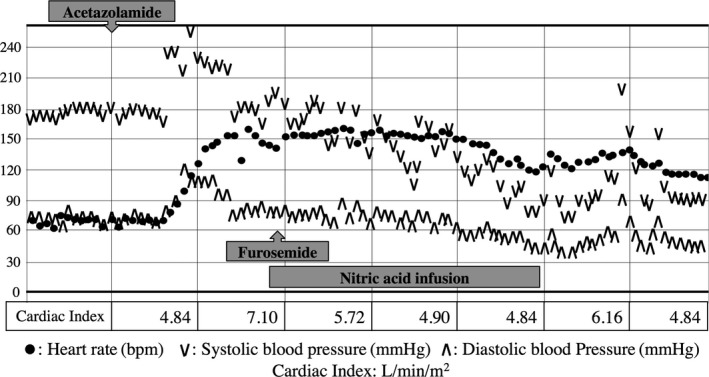
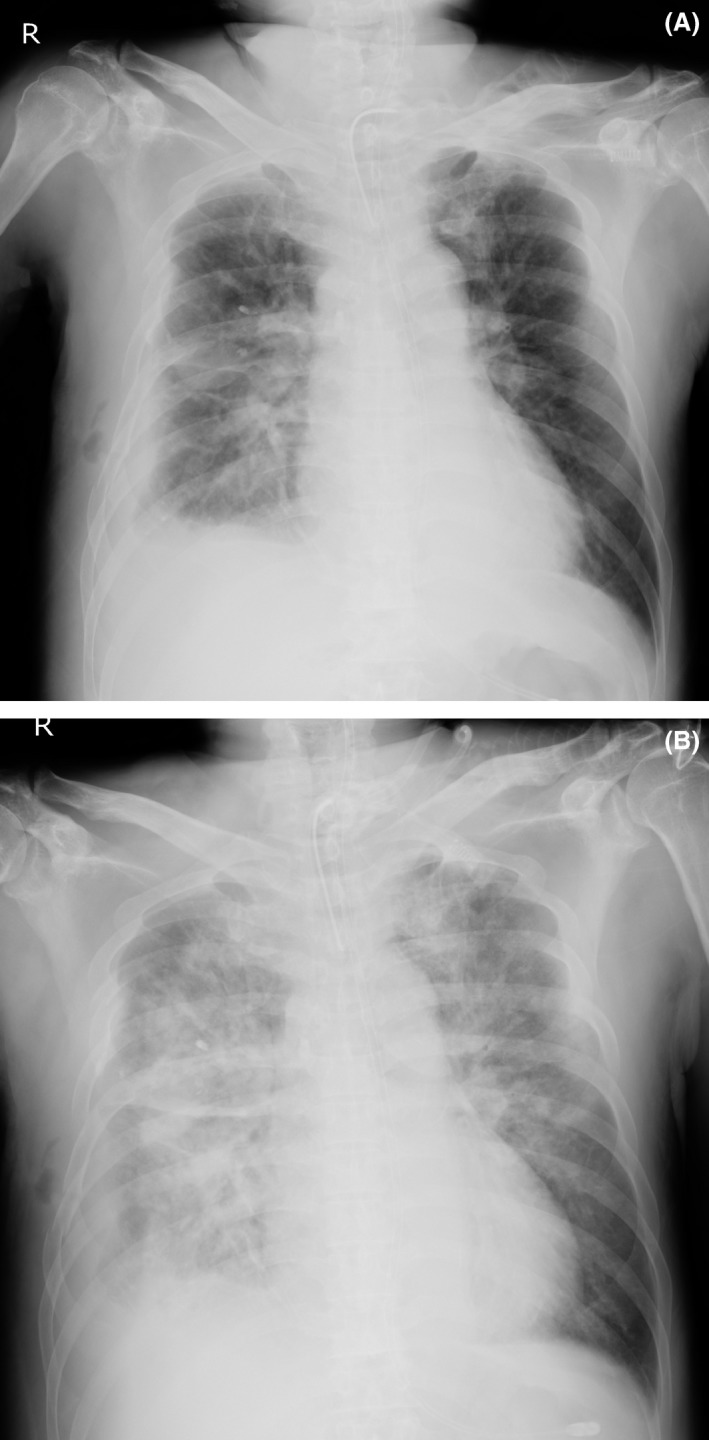
A 61-year-old man was diagnosed with severe chest trauma after a car accident and had had difficulty in weaning from a ventilator because of flail chest and dilated cardiomyopathy. On the 17th day in the intensive care unit, he received i.v. acetazolamide to increase urine output. One hour after the injection, he suddenly developed severe hypoxia. Chest radiography revealed a butterfly shadow. He received other diuretics and a vasodilator, which seemed slowly to resolve the respiratory failure. Five days later, acetazolamide was again given and he experienced the same deterioration.
We concluded that the episodes were attributed to pulmonary edema provoked by acetazolamide.
Acute non-cardiogenic pulmonary edema is an uncommon and lethal adverse effect of acetazolamide. Careful attention may be warranted when administering acetazolamide to critically ill patients.
一名61岁男性在车祸后被诊断为严重胸部创伤,由于连枷胸和扩张型心肌病,脱机困难。在重症监护病房的第17天,他接受了静脉注射乙酰唑胺以增加尿量。注射后一小时,他突然出现严重缺氧。胸部X线检查显示蝶形阴影。他接受了其他利尿剂和血管扩张剂治疗,呼吸衰竭似乎逐渐得到缓解。五天后,再次给予乙酰唑胺,他再次出现同样的病情恶化。
我们得出结论,这些发作归因于乙酰唑胺诱发的肺水肿。
急性非心源性肺水肿是乙酰唑胺一种罕见且致命的不良反应。在对重症患者使用乙酰唑胺时可能需要密切关注。