Institute of Experimental Immunology and Hepatology, University Medical Center Hamburg Eppendorf, Martinistrasse 52, Hamburg 20246, Germany.
Department of Obstetrics and Fetal Medicine, University Medical Center Hamburg Eppendorf, Martinistrasse 52, Hamburg 20246, Germany.
EBioMedicine. 2017 Dec;26:146-151. doi: 10.1016/j.ebiom.2017.10.023. Epub 2017 Nov 9.
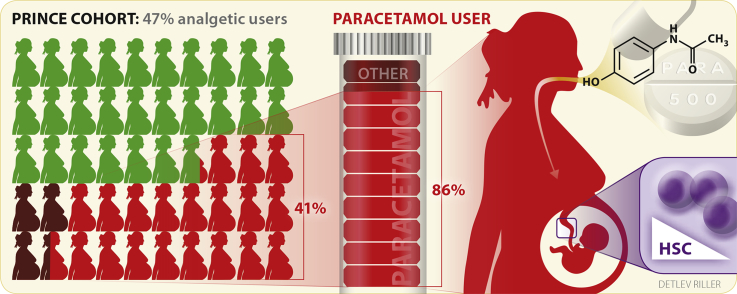
Paracetamol is the first choice for antipyretic or analgesic treatment throughout pregnancy. Products with Paracetamol are readily available over the counter and therefore easily accessible for self-medication. Epidemiological data on Paracetamol intake pattern during pregnancy and its potential immunological effects are sparse. We aimed to analyze a possible association between Paracetamol medication and numbers of hematopoietic stem cells (HSC) in cord blood.
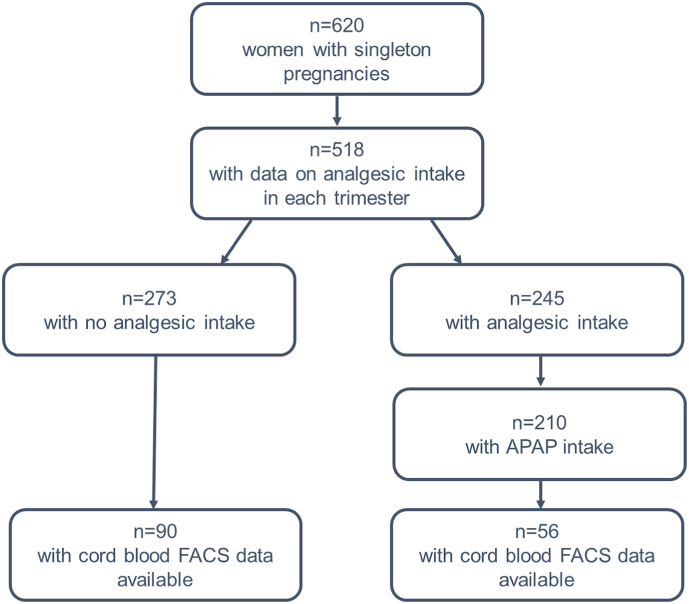
The objective was addressed in the PRINCE (PRENATAL DETERMINANTS OF CHILDREN'S HEALTH) study, a population-based prospective pregnancy cohort study initiated in 2011 at the University Medical Center in Hamburg, Germany. 518 healthy pregnant women with singleton pregnancies were recruited during the first trimester. Three examinations were scheduled at the end of the 1st (gestational week 12-14), the 2nd (gestational week 22-24) and the 3rd trimester (gestational week 34-36). For 146 of these women, cord blood flow cytometry data were available. Paracetamol intake was assessed for each trimester of pregnancy.
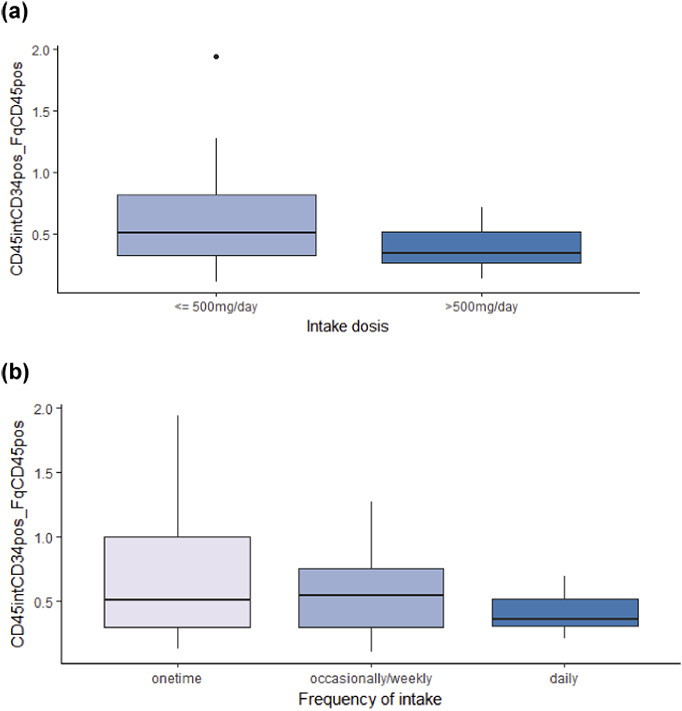
Among the 518 enrolled women, 40% took Paracetamol as main analgesic treatment during pregnancy. The intake frequency and dosage of Paracetamol varied between the women and was overall low with a tendency towards higher frequencies and higher dosages in the third trimester. Paracetamol intake, particularly during the third trimester, resulted in decreased relative numbers of HSCs in cord blood, independent of maternal age, first-trimester BMI, parity, gestational age and birth weight (-0.286 (95% CI -0.592, 0.021), p=0.068).
Prenatal Paracetamol intake, especially during the third trimester, may be causally involved in decreasing HSCs in cord blood.
在整个孕期,扑热息痛都是退热或镇痛治疗的首选药物。含有扑热息痛的产品在柜台上随处可见,因此很容易自行用药。关于孕期扑热息痛摄入模式及其潜在免疫效应的流行病学数据很少。我们旨在分析扑热息痛药物治疗与脐血中造血干细胞 (HSC) 数量之间可能存在的关联。
该研究在 PRINCE(儿童健康的产前决定因素)研究中进行,这是一项基于人群的前瞻性妊娠队列研究,于 2011 年在德国汉堡大学医学中心启动。518 名健康的单胎妊娠孕妇在孕早期被招募。在第 1 期末(孕 12-14 周)、第 2 期末(孕 22-24 周)和第 3 期末(孕 34-36 周)分别安排了 3 次检查。其中 146 名孕妇的脐血流细胞术数据可用。评估了每个孕期扑热息痛的摄入量。
在 518 名入组的女性中,40%的人在孕期将扑热息痛作为主要的镇痛治疗药物。扑热息痛的摄入频率和剂量因女性而异,总体上较低,且在第 3 孕期的频率和剂量较高。扑热息痛的摄入,特别是在第 3 孕期,导致脐血中 HSC 的相对数量减少,这与母亲的年龄、孕早期 BMI、产次、孕龄和出生体重无关(-0.286(95%CI -0.592,0.021),p=0.068)。
产前扑热息痛摄入,尤其是在第 3 孕期,可能与脐血中 HSC 减少有关。