Iwadate Yasuo
Department of Neurological Surgery, Chiba University Graduate School of Medicine.
Neurol Med Chir (Tokyo). 2018 Feb 15;58(2):61-70. doi: 10.2176/nmc.ra.2017-0089. Epub 2017 Nov 13.
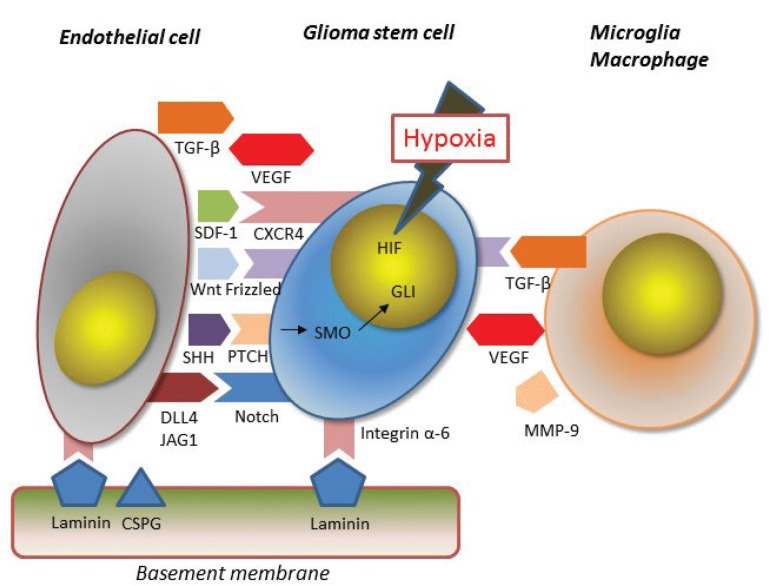
The marked heterogeneity in glioblastoma (GBM) may be induced through dynamic differentiation and dedifferentiation process of glioma cells. The hypothesis that environmental stimuli induce these phenotypic changes, including dedifferentiation into the stem cell phenotype which contributes to the high invasiveness and resultant poor outcome in GBM patients, is recently being proven. In the process of cancer invasion and metastasis, the phenotypic change has also been described as epithelial-mesenchymal transition (EMT). This biological process is mainly dependent on hypoxic stimuli and also on transforming growth factor-β (TGF-β) released from glioma stem cells, mesenchymal stem cells, and myeloid cells recruited by hypoxia. The tumor microenvironment, especially hypoxia, inducing such dynamic phenotypic changes can be a good therapeutic target in the treatment of GBM.
胶质母细胞瘤(GBM)中显著的异质性可能是通过胶质瘤细胞的动态分化和去分化过程诱导产生的。环境刺激诱导这些表型变化的假说,包括去分化为干细胞表型,这导致了GBM患者的高侵袭性和不良预后,最近得到了证实。在癌症侵袭和转移过程中,表型变化也被描述为上皮-间质转化(EMT)。这个生物学过程主要依赖于缺氧刺激,也依赖于由缺氧募集的胶质瘤干细胞、间充质干细胞和髓样细胞释放的转化生长因子-β(TGF-β)。诱导这种动态表型变化的肿瘤微环境,尤其是缺氧,可能是GBM治疗的一个良好治疗靶点。