Ofori-Asenso Richard, Agyeman Akosua Adom, Laar Amos
Research Unit, Health Policy Consult, Weija, Accra, Ghana.
Department of Population, Family and Reproductive Health, School of Public Health, University of Ghana, Legon, Accra, Ghana.
Int J Chronic Dis. 2017;2017:2562374. doi: 10.1155/2017/2562374. Epub 2017 Oct 9.
Metabolic syndrome (MetS) is a major public health problem in Sub-Saharan Africa. We systematically reviewed the literature towards estimating the prevalence of MetS among apparently "healthy" Ghanaian adults.
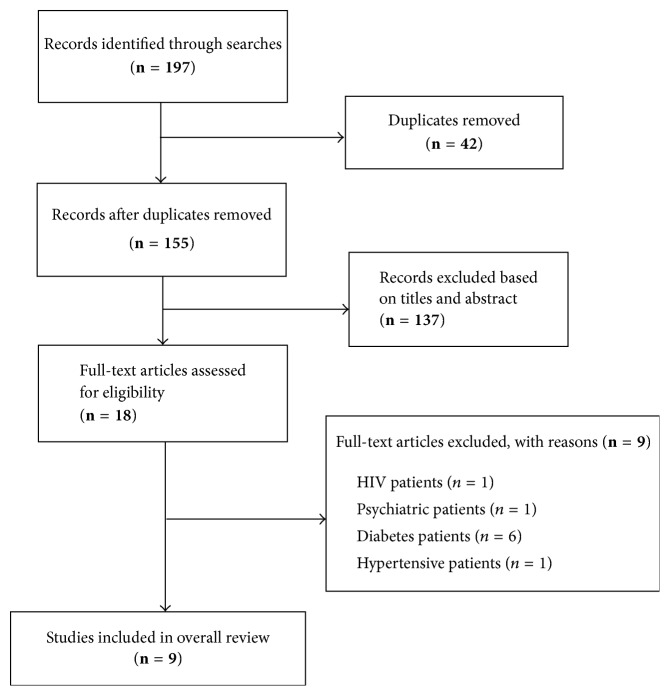
We searched PubMed, Web of Science, Scopus, Africa Journals Online, African Index Medicus, and Google scholar as well as the websites of the Ministry of Health and Ghana Health service through September 2016. Only studies conducted among apparently "healthy" (no established disease, e.g., diabetes and hypertension) adults aged ≥ 18 years were considered. Only studies that utilised the National Cholesterol Education Program Adult Treatment Panel (NCEP-ATP), World Health Organization (WHO), or International Diabetes Federation (IDF) classifications for MetS were included.
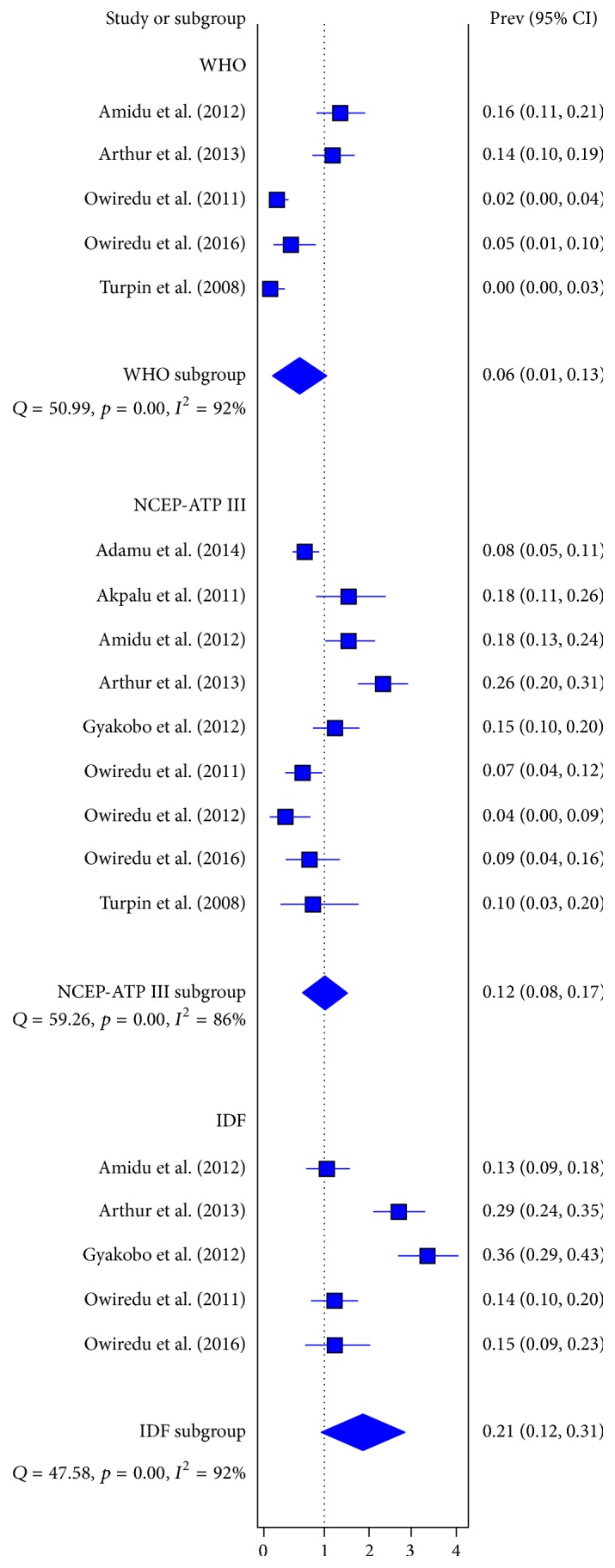
Data from nine studies involving 1,559 individuals were pooled. The prevalence of MetS based on NCEP-ATP, WHO, and IDF classifications was 12.4% (95% confidence interval [CI] = 8.3-17.4%), 6.0% (95% CI = 1.4-13.1%), and 21.2% (95% CI = 12.4-30.9), respectively. Prevalence of MetS was higher among women than men.
Among a population of adult Ghanaians deemed "healthy," there is a high prevalence of MetS. Preventive measures are required to address the risk components of MetS such as obesity and hypertension which are rapidly rising in Ghana.
代谢综合征(MetS)是撒哈拉以南非洲地区的一个主要公共卫生问题。我们系统地回顾了文献,以估计在看似“健康”的加纳成年人中代谢综合征的患病率。
我们检索了截至2016年9月的PubMed、科学网、Scopus、非洲在线期刊、非洲医学索引、谷歌学术,以及加纳卫生部和加纳卫生服务局的网站。仅纳入在年龄≥18岁的看似“健康”(无确诊疾病,如糖尿病和高血压)成年人中开展的研究。仅纳入采用美国国家胆固醇教育计划成人治疗小组(NCEP-ATP)、世界卫生组织(WHO)或国际糖尿病联盟(IDF)代谢综合征分类标准的研究。
汇总了来自9项研究的1559名个体的数据。基于NCEP-ATP、WHO和IDF分类标准的代谢综合征患病率分别为12.4%(95%置信区间[CI]=8.3-17.4%)、6.0%(95%CI=1.4-13.1%)和21.2%(95%CI=12.4-30.9)。女性的代谢综合征患病率高于男性。
在被视为“健康”的加纳成年人群体中,代谢综合征的患病率很高。需要采取预防措施来应对代谢综合征的风险因素,如加纳肥胖和高血压发病率迅速上升的情况。