State Key Laboratory of Rice Biology, Institute of Crop Science, Zhejiang University, Hangzhou, 310058, China.
Molecular Genetics Key Laboratory of China Tobacco, Guizhou Academy of Tobacco Science, Guiyang, 550081, China.
BMC Genomics. 2017 Nov 13;18(1):869. doi: 10.1186/s12864-017-4244-y.
The cyclic nucleotide-gated ion channel (CNGC) family affects the uptake of cations, growth, pathogen defence, and thermotolerance in plants. However, the systematic identification, origin and function of this gene family has not been performed in Brassica oleracea, an important vegetable crop and genomic model organism.
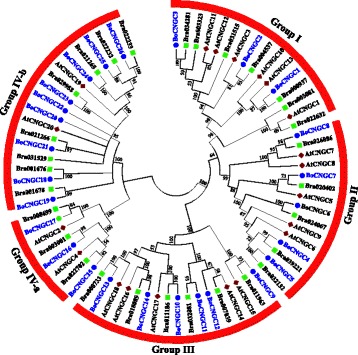
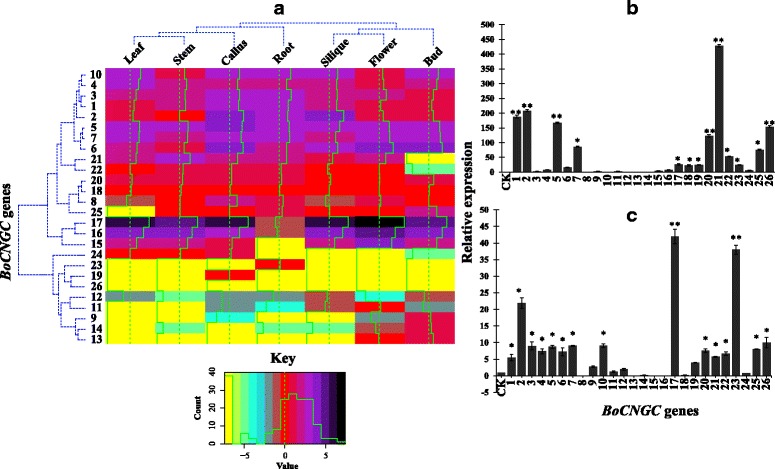
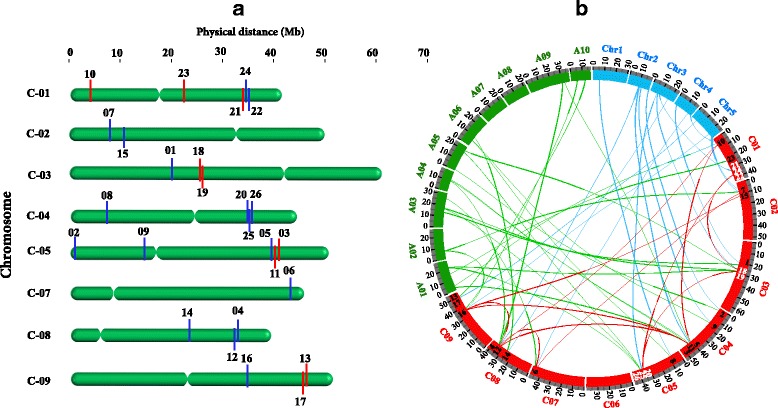
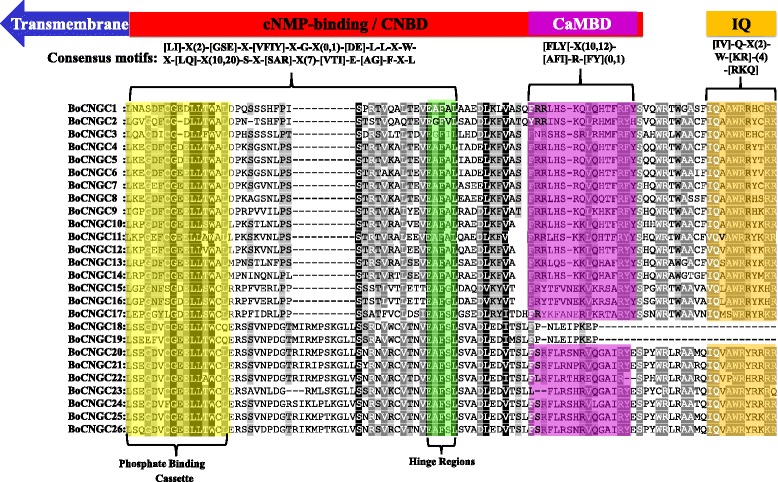
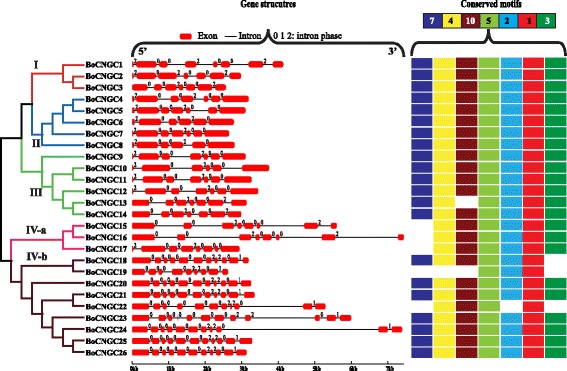
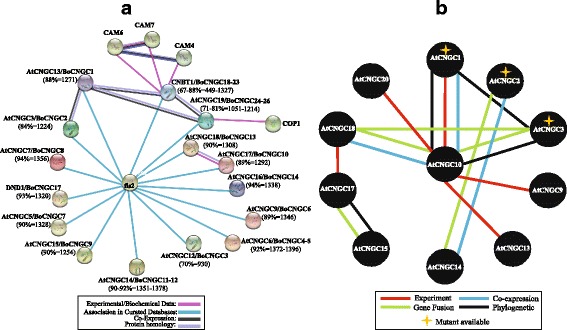
In present study, we identified 26 CNGC genes in B. oleracea genome, which are non-randomly localized on eight chromosomes, and classified into four major (I-IV) and two sub-groups (i.e., IV-a and IV-b). The BoCNGC family is asymmetrically fractioned into the following three sub-genomes: least fractionated (14 genes), most fractionated-I (10), and most fractionated-II (2). The syntenic map of BoCNGC genes exhibited strong relationships with the model Arabidopsis thaliana and B. rapa CNGC genes and provided markers for defining the regions of conserved synteny among the three genomes. Both whole-genome triplication along with segmental and tandem duplications contributed to the expansion of this gene family. We predicted the characteristics of BoCNGCs regarding exon-intron organisations, motif compositions and post-translational modifications, which diversified their structures and functions. Using orthologous Arabidopsis CNGCs as a reference, we found that most CNGCs were associated with various protein-protein interaction networks involving CNGCs and other signalling and stress related proteins. We revealed that five microRNAs (i.e., bol-miR5021, bol-miR838d, bol-miR414b, bol-miR4234, and bol-miR_new2) have target sites in nine BoCNGC genes. The BoCNGC genes were differentially expressed in seven B. oleracea tissues including leaf, stem, callus, silique, bud, root and flower. The transcript abundance levels quantified by qRT-PCR assays revealed that BoCNGC genes from phylogenetic Groups I and IV were particularly sensitive to cold stress and infections with bacterial pathogen Xanthomonas campestris pv. campestris, suggesting their importance in abiotic and biotic stress responses.
Our comprehensive genome-wide analysis represents a rich data resource for studying new plant gene families. Our data may also be useful for breeding new B. oleracea cultivars with improved productivity, quality, and stress resistance.
环核苷酸门控离子通道(CNGC)家族影响阳离子的摄取、生长、病原体防御和植物的耐热性。然而,在重要的蔬菜作物和基因组模式生物甘蓝型油菜中,尚未对该基因家族进行系统的鉴定、起源和功能研究。
本研究在甘蓝型油菜基因组中鉴定出 26 个 CNGC 基因,它们不均匀地定位于 8 条染色体上,并分为 4 个主要(I-IV)和 2 个亚组(即 IV-a 和 IV-b)。BoCNGC 家族在以下三个亚基因组中呈不对称分裂:最少分裂(14 个基因)、最分裂 I(10 个)和最分裂 II(2 个)。BoCNGC 基因的共线性图谱与拟南芥和甘蓝型油菜的模型基因具有很强的关系,并提供了标记来定义三个基因组之间保守共线性区域。全基因组三倍体以及片段和串联重复共同导致了该基因家族的扩张。我们预测了 BoCNGC 基因的特征,包括外显子-内含子组织、基序组成和翻译后修饰,这些特征使它们的结构和功能多样化。利用同源的拟南芥 CNGCs 作为参考,我们发现大多数 CNGCs 与各种涉及 CNGCs 和其他信号转导和应激相关蛋白的蛋白质-蛋白质相互作用网络有关。我们发现,有 5 个 microRNAs(即 bol-miR5021、bol-miR838d、bol-miR414b、bol-miR4234 和 bol-miR_new2)在 9 个 BoCNGC 基因中具有靶位点。在包括叶、茎、愈伤组织、角果、芽、根和花在内的甘蓝型油菜的 7 种组织中,BoCNGC 基因的表达存在差异。通过 qRT-PCR 检测定量分析发现,来自系统发育组 I 和 IV 的 BoCNGC 基因对冷胁迫和细菌病原体丁香假单胞菌 pv. campestris 的感染特别敏感,这表明它们在非生物和生物胁迫反应中很重要。
我们的全基因组分析代表了一个研究新植物基因家族的丰富数据资源。我们的数据也可能对培育具有提高生产力、品质和抗逆性的新型甘蓝型油菜品种有用。