Institut Jacques Monod, CNRS, UMR 7592, University Paris Diderot, Sorbonne Paris Cité, 75205, Paris, France.
Department of Pathology and Cell Biology, Columbia University Medical Center, New York, NY, 10032, USA.
Nat Commun. 2017 Nov 14;8(1):1499. doi: 10.1038/s41467-017-01539-8.
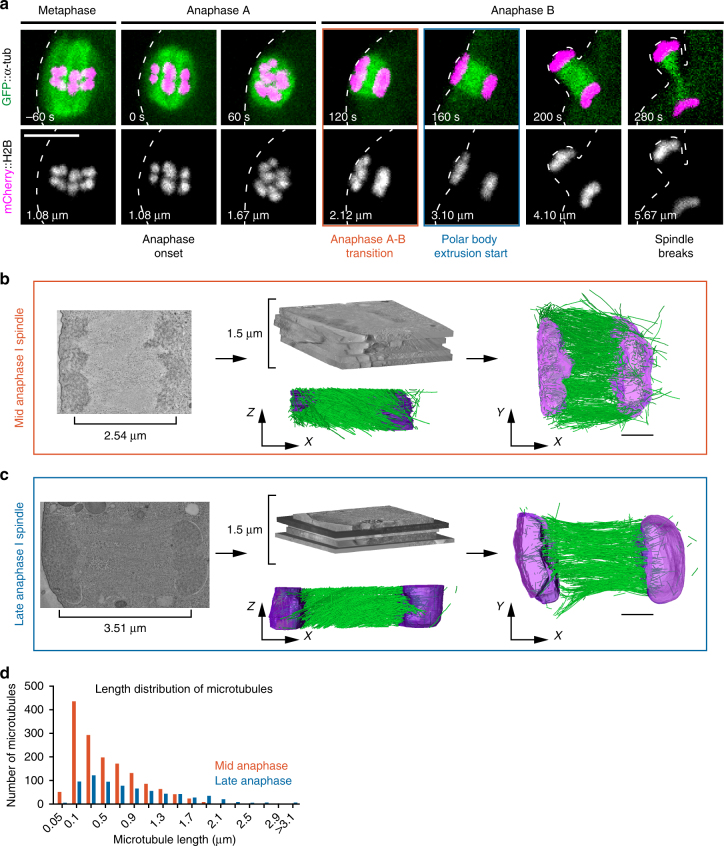
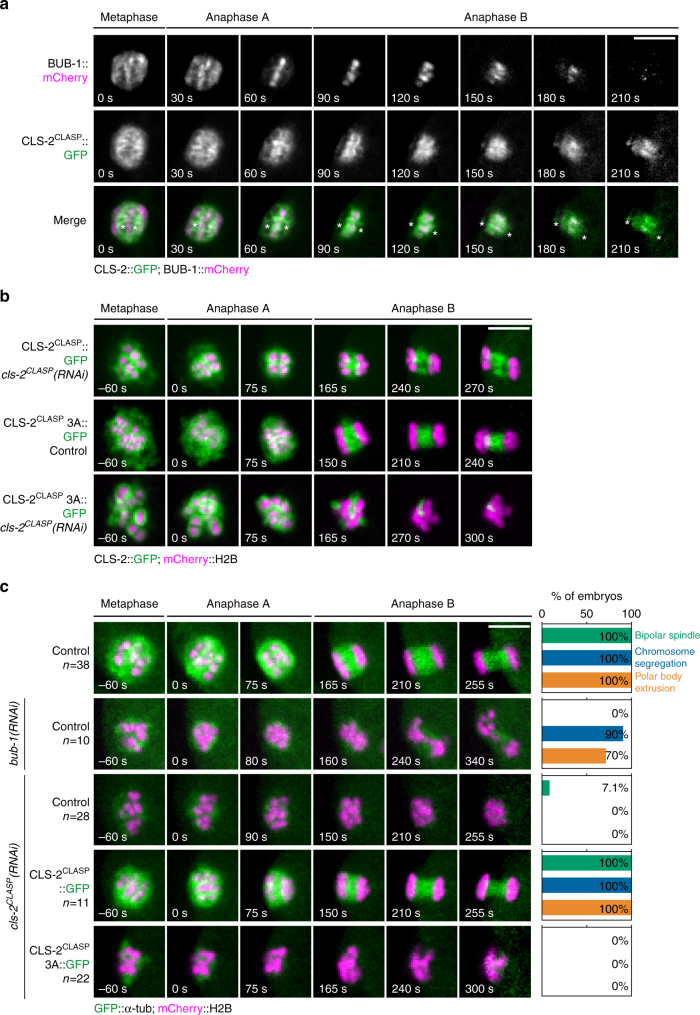
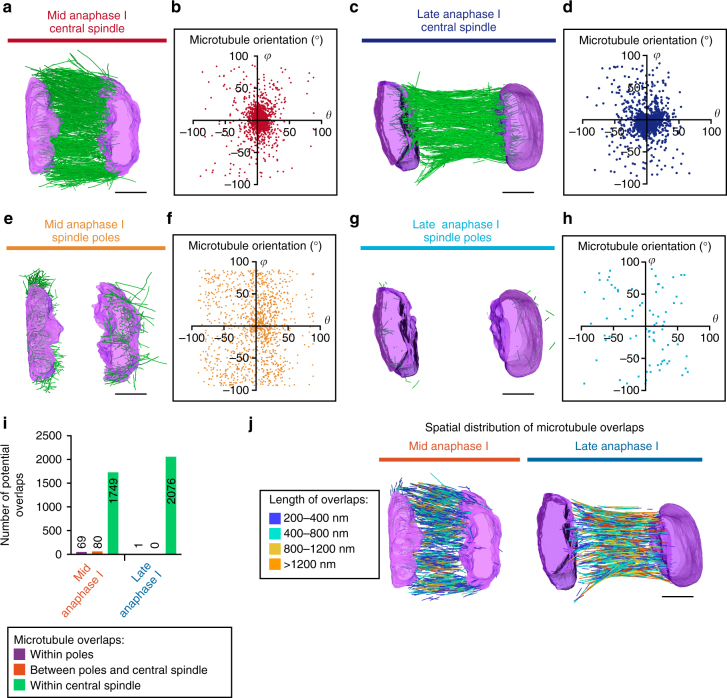
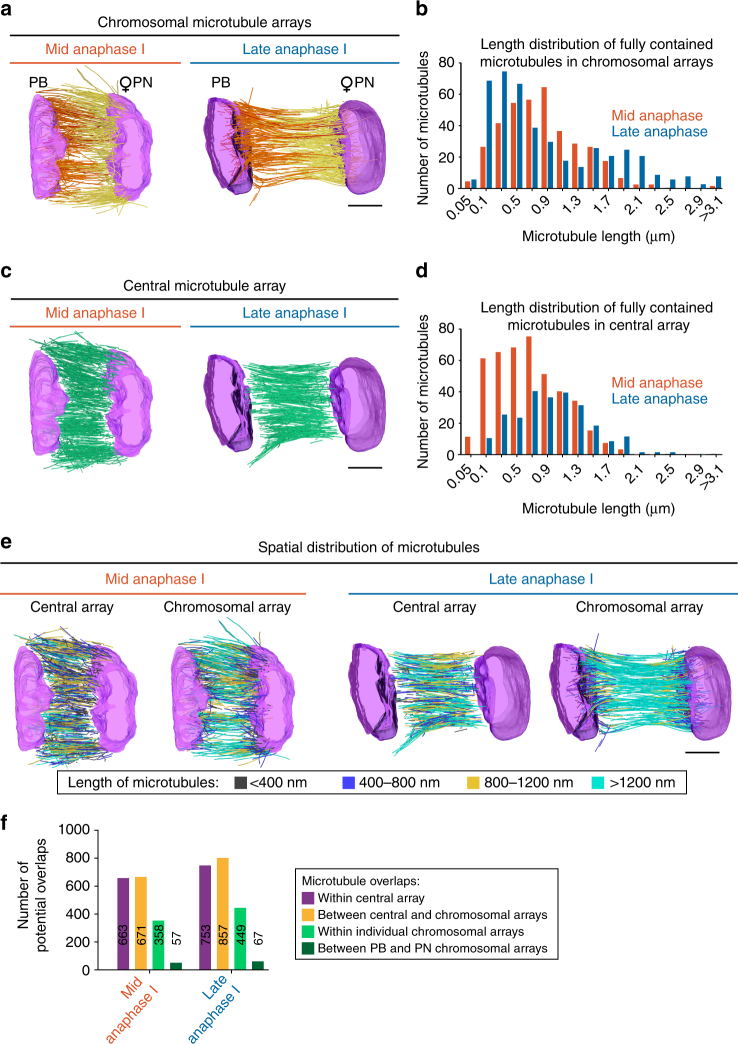
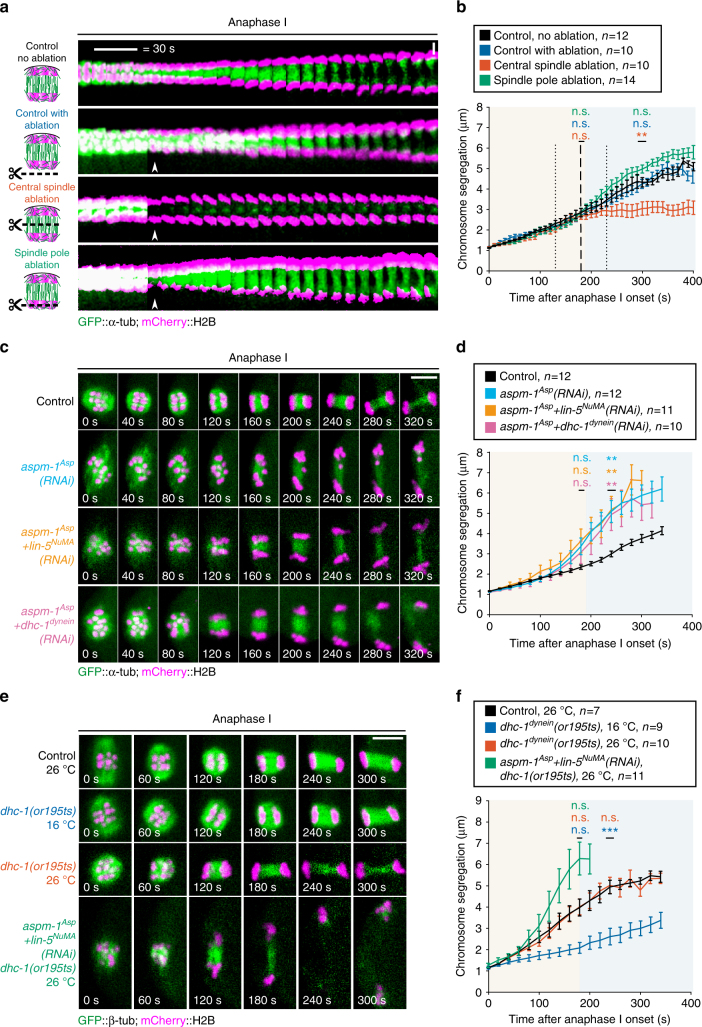
During cell division, spindle microtubules ensure an equal repartition of chromosomes between the two daughter cells. While the kinetochore-dependent mechanisms that drive mitotic chromosome segregation are well understood, in oocytes of most species atypical spindles assembled in absence of centrosomes entail poorly understood mechanisms of chromosome segregation. In particular, the structure(s) responsible for force generation during meiotic chromosome separation in oocytes is unclear. Using quantitative light microscopy, electron tomography, laser-mediated ablation, and genetic perturbations in the Caenorhabditis elegans oocyte, we studied the mechanism of chromosome segregation in meiosis. We find spindle poles are largely dispensable, and in fact act as brakes for chromosome segregation. Instead, our results suggest that CLS-2-dependent microtubules of the meiotic central spindle, located between the segregating chromosomes and aligned along the axis of segregation, are essential. Our results support a model in which inter-chromosomal microtubules of the central spindle push chromosomes apart during meiotic anaphase in oocytes.
在细胞分裂过程中,纺锤体微管确保染色体在两个子细胞之间均等分配。虽然驱动有丝分裂染色体分离的着丝粒依赖性机制已被很好地理解,但在大多数物种的卵母细胞中,在没有中心体的情况下组装的非典型纺锤体涉及到染色体分离的机制尚不清楚。特别是,在卵母细胞中进行减数分裂染色体分离过程中产生力的结构尚不清楚。使用定量光显微镜、电子断层扫描、激光介导的消融以及在秀丽隐杆线虫卵母细胞中的遗传干扰,我们研究了减数分裂中的染色体分离机制。我们发现纺锤体极大部分是可有可无的,实际上它们充当了染色体分离的制动器。相反,我们的结果表明,位于分离染色体之间并沿着分离轴排列的减数分裂中心纺锤体上的 CLS-2 依赖性微管是必不可少的。我们的结果支持这样一种模型,即中心纺锤体的染色体间微管在卵母细胞的减数分裂后期将染色体推开。