Sepa-Kishi Diane M, Sotoudeh-Nia Yass, Iqbal Ayesha, Bikopoulos George, Ceddia Rolando B
Muscle Health Research Center, School of Kinesiology and Health Science, York University, Toronto, Ontario, Canada.
Sci Rep. 2017 Nov 13;7(1):15430. doi: 10.1038/s41598-017-15842-3.
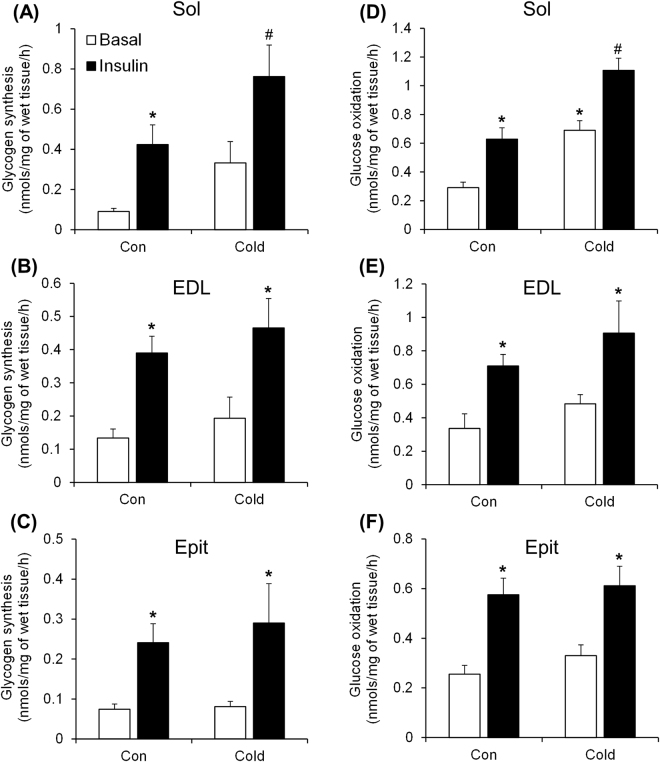
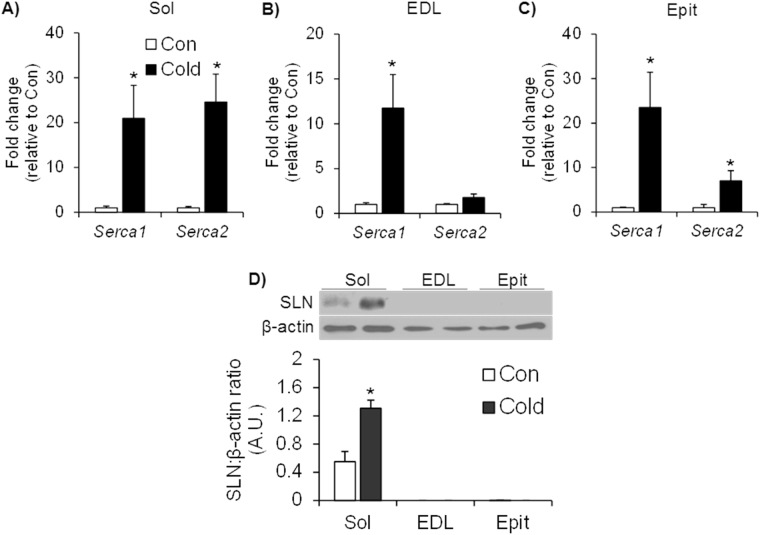
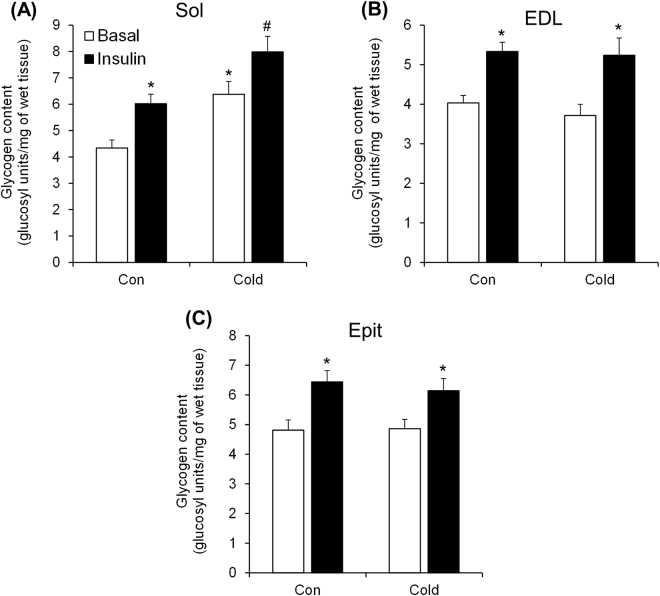
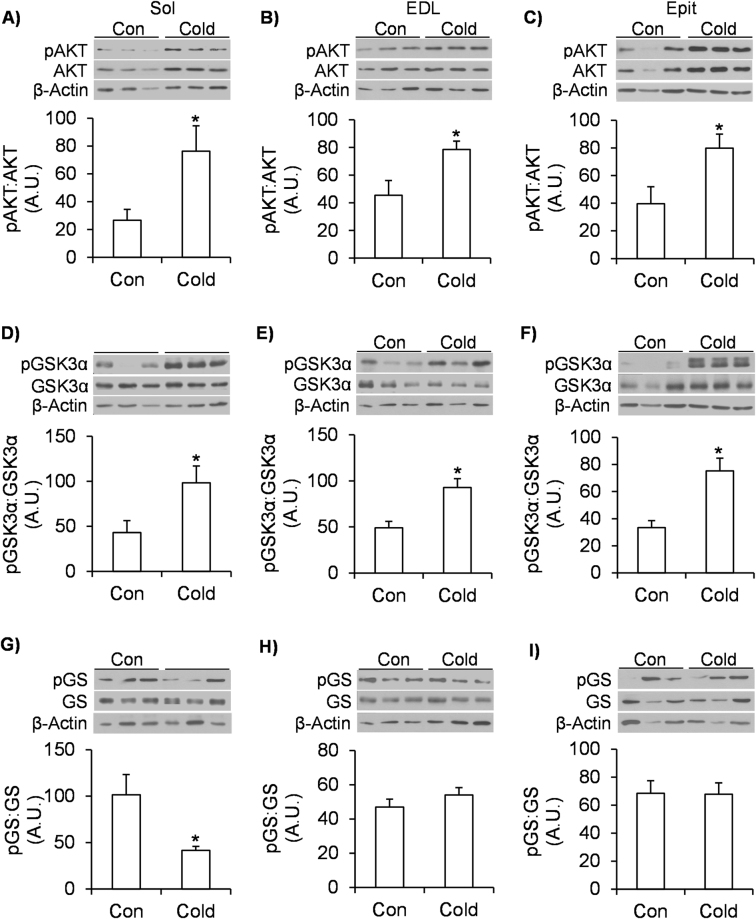
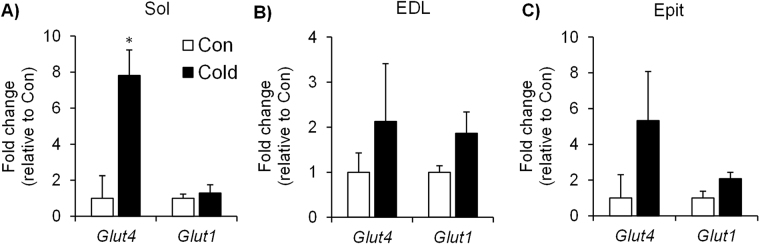
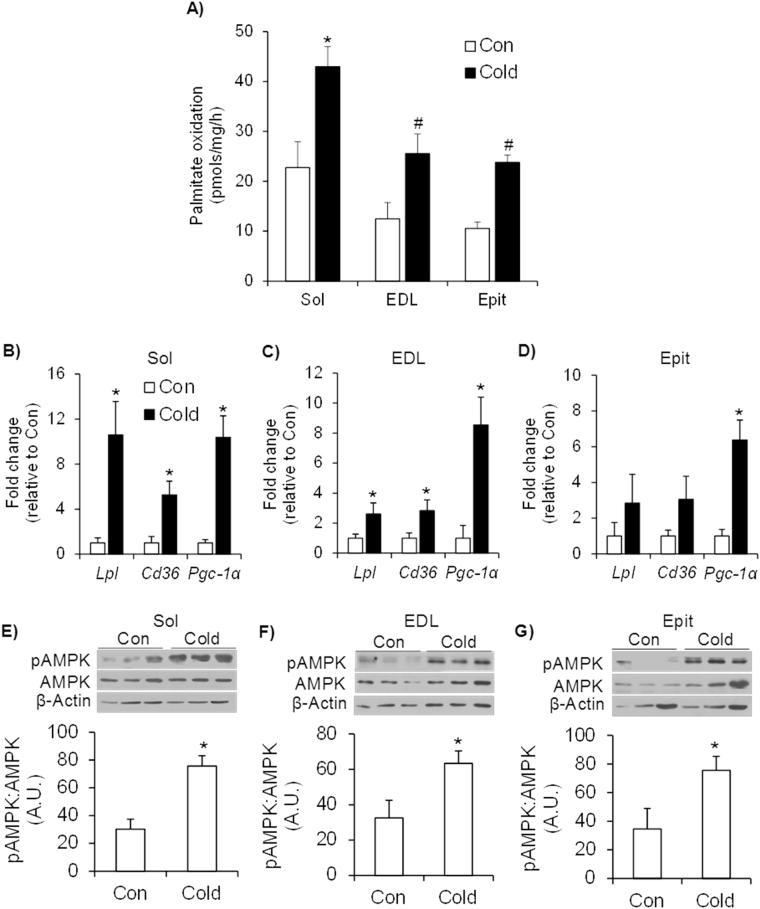
This study investigated fiber type-specific metabolic responses and the molecular mechanisms that regulate glucose and fat metabolism in oxidative and glycolytic muscles upon cold acclimation. Male Wistar rats were exposed to cold (4 °C) for 7 days, and then glycogen synthesis and content, glucose and palmitate oxidation, and the molecular mechanisms underlying these metabolic pathways were assessed in soleus (Sol), extensor digitorum longus (EDL), and epitrochlearis (Epit) muscles. Cold acclimation increased glycogen synthesis, glycogen content, glucose oxidation, and reduced glycogen synthase (GS) phosphorylation only in Sol muscles. Protein kinase B (AKT), glycogen synthase kinase 3 (GSK3), and AMP-activated protein kinase (AMPK) phosphorylation increased in all three muscles upon cold acclimation. Cold acclimation increased palmitate oxidation, gene expression of the transcriptional co-activator Pgc-1α, lipoprotein lipase (Lpl), fatty acid transporter (Cd36), and Sarco/endoplasmic reticulum Ca-ATPase (Serca) in Sol, EDL, and Epit muscles. Sarcolipin was only detected and had its content increased in Sol muscles. In conclusion, cold-induced thermogenesis activated similar signaling pathways in oxidative and glycolytic muscles, but the metabolic fate of glucose differed in skeletal muscles with distinct fiber type composition. Furthermore, only muscles rich in type I fibers appeared to have the capacity for sarcolipin-mediated SERCA uncoupling.
本研究调查了冷适应后氧化型和糖酵解型肌肉中特定纤维类型的代谢反应以及调节葡萄糖和脂肪代谢的分子机制。将雄性Wistar大鼠暴露于4°C的寒冷环境中7天,然后评估比目鱼肌(Sol)、趾长伸肌(EDL)和肱三头肌(Epit)中糖原合成与含量、葡萄糖和棕榈酸氧化以及这些代谢途径的分子机制。冷适应仅增加了Sol肌肉中的糖原合成、糖原含量、葡萄糖氧化,并降低了糖原合酶(GS)的磷酸化水平。冷适应后,所有三种肌肉中的蛋白激酶B(AKT)、糖原合酶激酶3(GSK3)和AMP激活的蛋白激酶(AMPK)的磷酸化水平均升高。冷适应增加了Sol、EDL和Epit肌肉中的棕榈酸氧化、转录共激活因子Pgc-1α、脂蛋白脂肪酶(Lpl)、脂肪酸转运蛋白(Cd36)和肌浆/内质网Ca-ATP酶(Serca)的基因表达。肌脂蛋白仅在Sol肌肉中被检测到且其含量增加。总之,冷诱导的产热在氧化型和糖酵解型肌肉中激活了相似的信号通路,但在具有不同纤维类型组成的骨骼肌中,葡萄糖的代谢命运有所不同。此外,只有富含I型纤维的肌肉似乎具有肌脂蛋白介导的SERCA解偶联能力。