Igarashi Tsutomu, Kobayashi Maika, Yaguchi Chiemi, Fujimoto Chiaki, Suzuki Hisaharu, Takahashi Hiroshi
Department of Ophthalmology (T.I., M.K., C.Y., C.F., H.T.), Nippon Medical School, Tokyo, Japan; and Department of Ophthalmology (H.S.), Nippon Medical School Musashikosugi Hospital, Kawasaki City, Japan.
Eye Contact Lens. 2018 Nov;44 Suppl 2(2):S137-S142. doi: 10.1097/ICL.0000000000000438.
To examine the effects of rebamipide ophthalmic solution on the symptoms, signs, and cytokine concentrations in tear fluid among soft contact lens (SCL) wearers with Dry eye disease (DED).
From November 2015 to June 2017, this open-label, single-arm study examined 40 eyes of 20 SCL wearers with DED who had been using daily disposable SCLs for >3 months (mean age, 30.0±8.33 years; range, 20-47 years). Signs, symptoms, and cytokine concentrations were assessed before and 4 weeks after starting 2% rebamipide ophthalmic solution 4 times/day. Dry eye disease was diagnosed according to: compromised tear dynamics (Schirmer test ≤5 mm or tear break-up time (TBUT) ≤5 sec); ocular surface abnormalities (positive vital staining with fluorescein or lissamine green); and presence of symptoms. Touch thresholds using a Cochet-Bonnet anesthesiometer were also determined for the cornea and conjunctivae. Symptoms were assessed using the 12-item Ocular Surface Disease Index questionnaire. Concentrations of cytokines in tear fluid were measured.
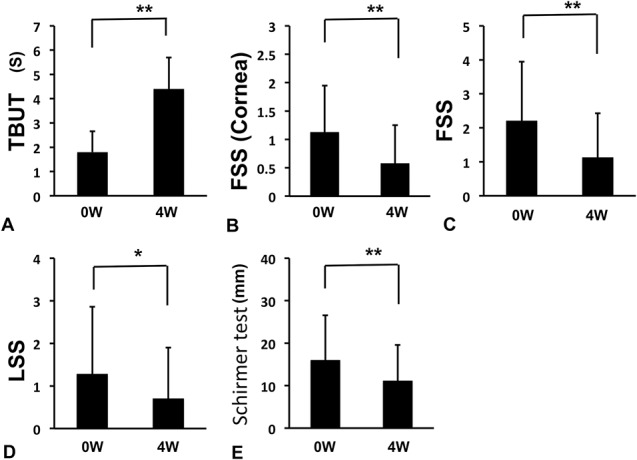
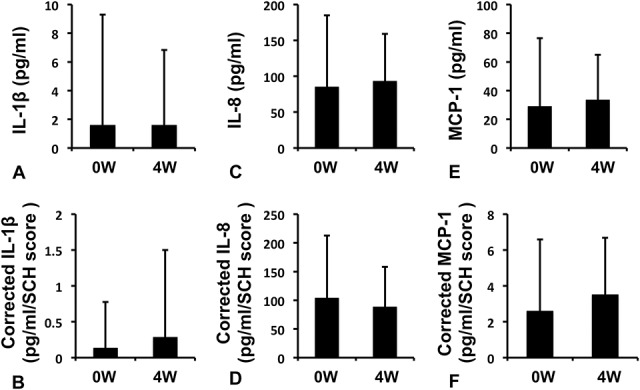
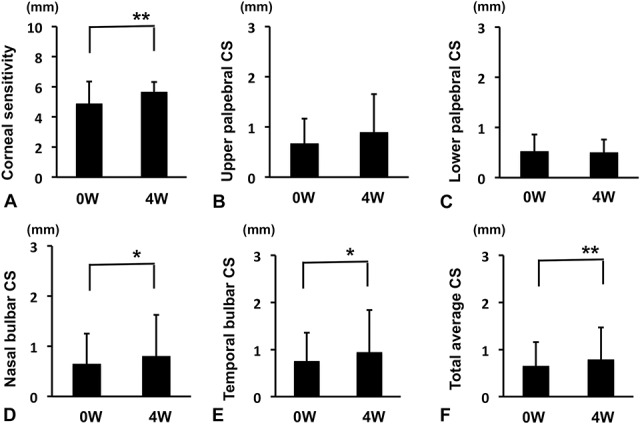
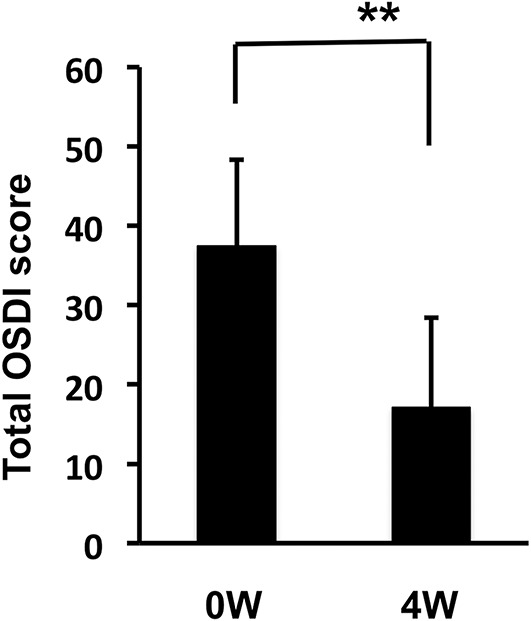
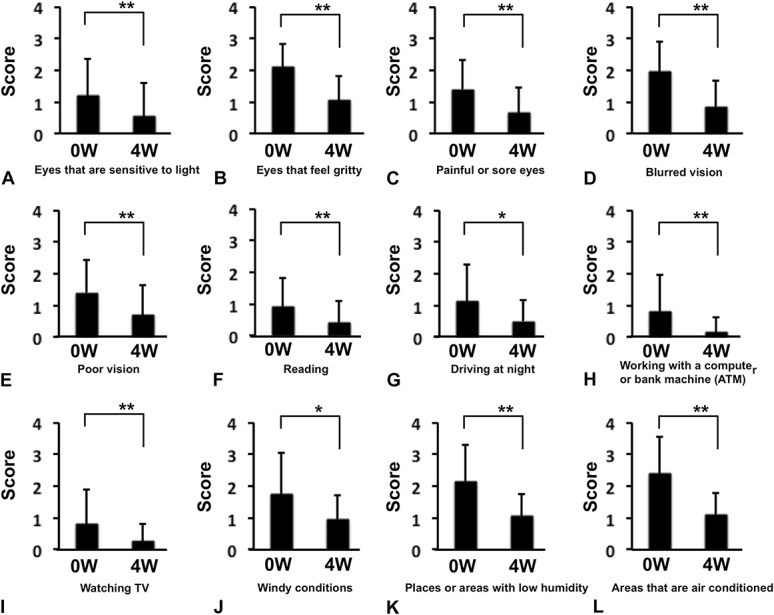
Significant improvements in signs were seen for TBUT, surface abnormalities, and touch thresholds. Ocular Surface Disease Index scores likewise improved significantly in all the 12 items. Of the cytokines measured, only interleukin-1β, interleukin-8, and monocyte chemotactic protein-1 were found in ≥60% of tear samples, with no significant differences in concentrations before and after rebamipide use.
Rebamipide significantly improved all signs and symptoms in patients with DED who wore daily disposable SCLs. Rebamipide is effective for DED treatment with SCL wear.
探讨瑞巴派特滴眼液对患有干眼症(DED)的软性隐形眼镜(SCL)佩戴者泪液中的症状、体征及细胞因子浓度的影响。
2015年11月至2017年6月,这项开放标签、单臂研究纳入了20名佩戴SCL且患有DED的患者的40只眼,这些患者每日使用一次性SCL超过3个月(平均年龄30.0±8.33岁;范围20 - 47岁)。在开始每天4次使用2%瑞巴派特滴眼液之前及之后4周,对体征、症状及细胞因子浓度进行评估。干眼症的诊断依据为:泪液动力学受损(泪液分泌试验≤5 mm或泪膜破裂时间(TBUT)≤5秒);眼表异常(荧光素或丽丝胺绿活体染色阳性);以及存在相关症状。还使用Cochet - Bonnet麻醉计测定角膜和结膜的触觉阈值。使用12项眼表疾病指数问卷评估症状。测量泪液中细胞因子的浓度。
TBUT、表面异常及触觉阈值等体征有显著改善。眼表疾病指数问卷的所有12项得分同样有显著改善。在所测量的细胞因子中,仅在≥60%的泪液样本中检测到白细胞介素 - 1β、白细胞介素 - 8和单核细胞趋化蛋白 - 1,使用瑞巴派特前后其浓度无显著差异。
瑞巴派特显著改善了每日佩戴一次性SCL的DED患者的所有体征和症状。瑞巴派特对佩戴SCL的DED患者治疗有效。