Département de Biologie Structurale et Chimie, Institut Pasteur, Unité de Biochimie des Interactions Macromoléculaires, CNRS UMR 3528, 28 Rue du Dr Roux, 75724 Paris, CEDEX 15, France.
Université Paris Diderot Paris VII, 75013 Paris, France.
Toxins (Basel). 2017 Nov 14;9(11):369. doi: 10.3390/toxins9110369.
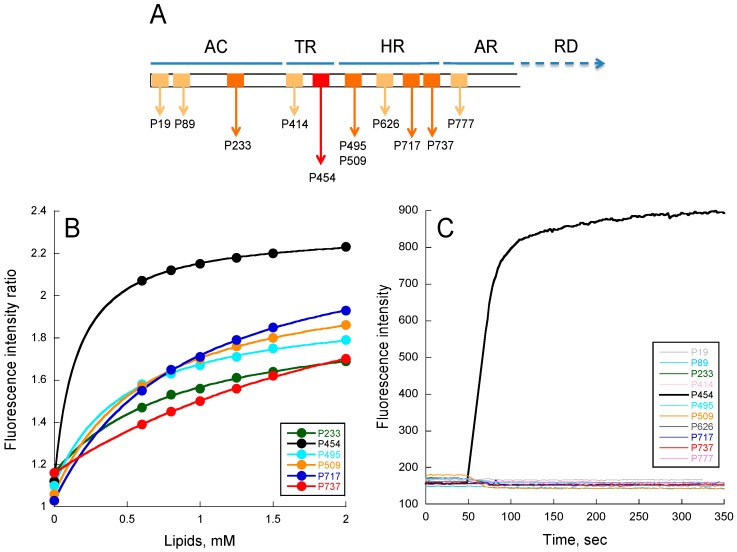
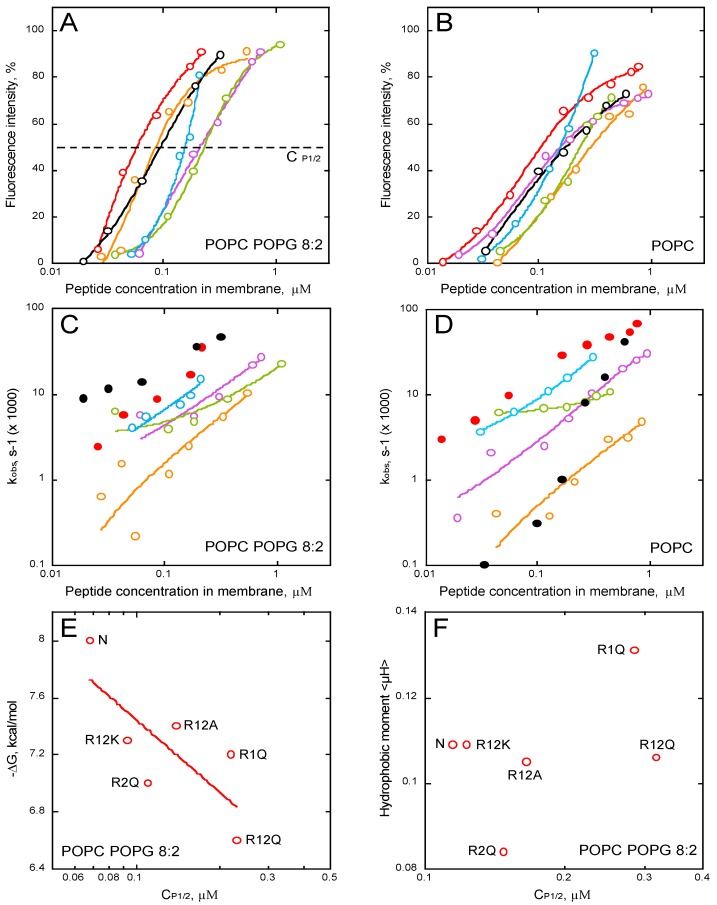
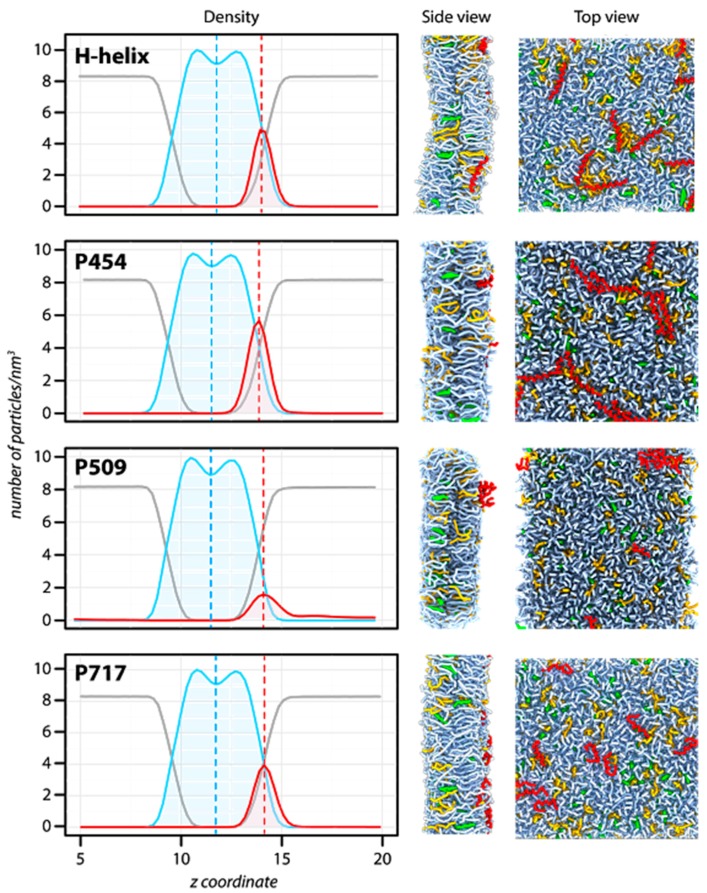
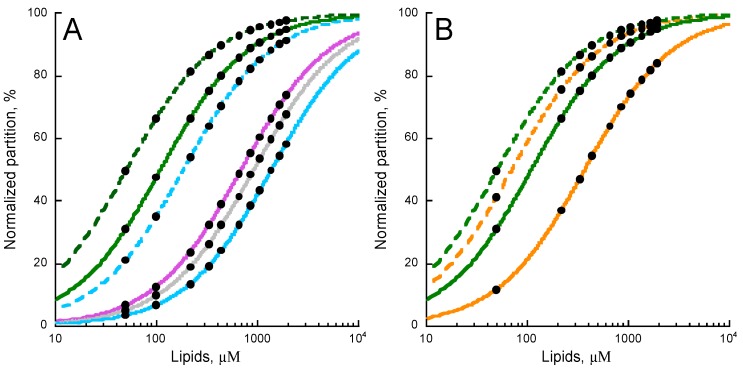
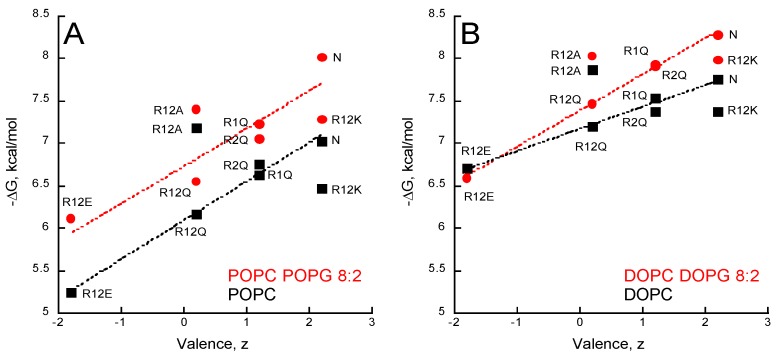
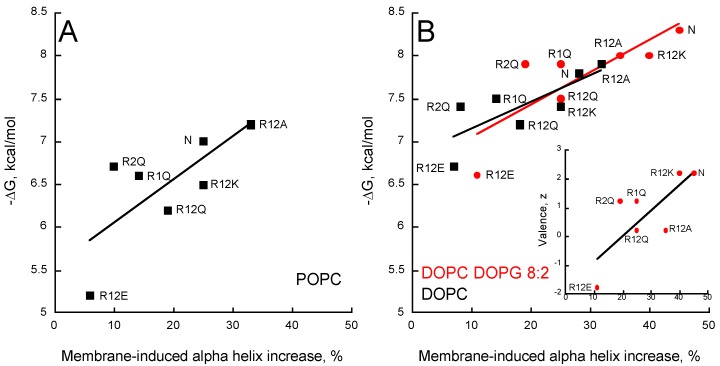
The adenylate cyclase toxin CyaA is involved in the early stages of infection by , the causative agent of whooping cough. CyaA intoxicates target cells by a direct translocation of its catalytic domain (AC) across the plasma membrane and produces supraphysiological levels of cAMP, leading to cell death. The molecular process of AC translocation remains largely unknown, however. We have previously shown that deletion of residues 375-485 of CyaA selectively abrogates AC translocation into eukaryotic cells. We further identified within this "translocation region" (TR), P454 (residues 454-484), a peptide that exhibits membrane-active properties, i.e., is able to bind and permeabilize lipid vesicles. Here, we analyze various sequences from CyaA predicted to be amphipatic and show that although several of these peptides can bind membranes and adopt a helical conformation, only the P454 peptide is able to permeabilize membranes. We further characterize the contributions of the two arginine residues of P454 to membrane partitioning and permeabilization by analyzing the peptide variants in which these residues are substituted by different amino acids (e.g., A, K, Q, and E). Our data shows that both arginine residues significantly contribute, although diversely, to the membrane-active properties of P454, i.e., interactions with both neutral and anionic lipids, helix formation in membranes, and disruption of lipid bilayer integrity. These results are discussed in the context of the translocation process of the full-length CyaA toxin.
腺苷酸环化酶毒素 CyaA 参与百日咳杆菌感染的早期阶段,百日咳杆菌是百日咳的病原体。CyaA 通过其催化结构域(AC)的直接跨膜转位使靶细胞中毒,并产生超生理水平的 cAMP,导致细胞死亡。然而,AC 转位的分子过程在很大程度上仍不清楚。我们之前已经表明,CyaA 残基 375-485 的缺失选择性地阻断了 AC 向真核细胞的转位。我们进一步在这个“转位区”(TR)中鉴定出 P454(残基 454-484),这是一种具有膜活性的肽,即能够结合并通透脂质体。在这里,我们分析了 CyaA 中预测的各种具有两亲性的序列,并表明尽管这些肽中的一些可以结合膜并采用螺旋构象,但只有 P454 肽能够通透膜。我们通过分析这些残基被不同氨基酸(例如 A、K、Q 和 E)取代的肽变体,进一步表征了 P454 中两个精氨酸残基对膜分配和通透化的贡献。我们的数据表明,这两个精氨酸残基都对 P454 的膜活性特性有显著贡献,即与中性和阴离子脂质的相互作用、在膜中形成螺旋以及破坏脂质双层的完整性。这些结果在全长 CyaA 毒素转位过程的背景下进行了讨论。