Fong Louise Y, Jing Ruiyan, Smalley Karl J, Taccioli Cristian, Fahrmann Johannes, Barupal Dinesh K, Alder Hansjuerg, Farber John L, Fiehn Oliver, Croce Carlo M
Department of Pathology, Anatomy & Cell Biology, Thomas Jefferson University, Philadelphia, PA, USA.
Sidney Kimmel Cancer Center, Thomas Jefferson University, Philadelphia, PA, USA.
Oncotarget. 2017 Jun 9;8(47):81910-81925. doi: 10.18632/oncotarget.18434. eCollection 2017 Oct 10.
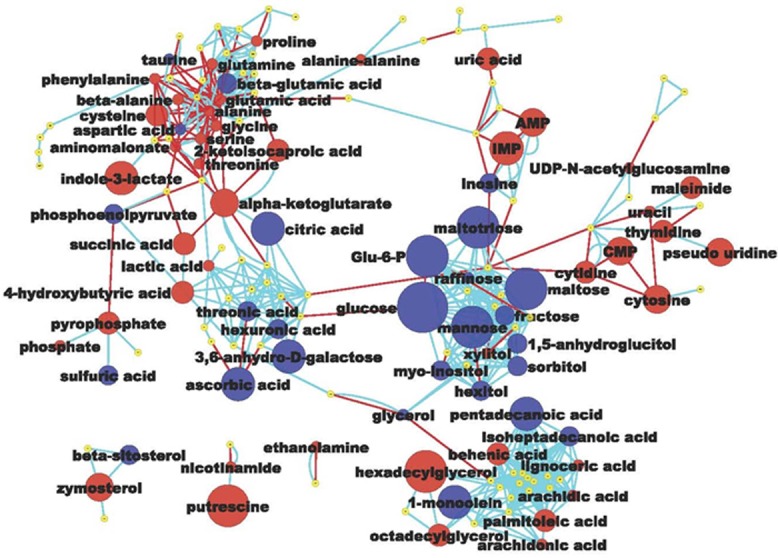
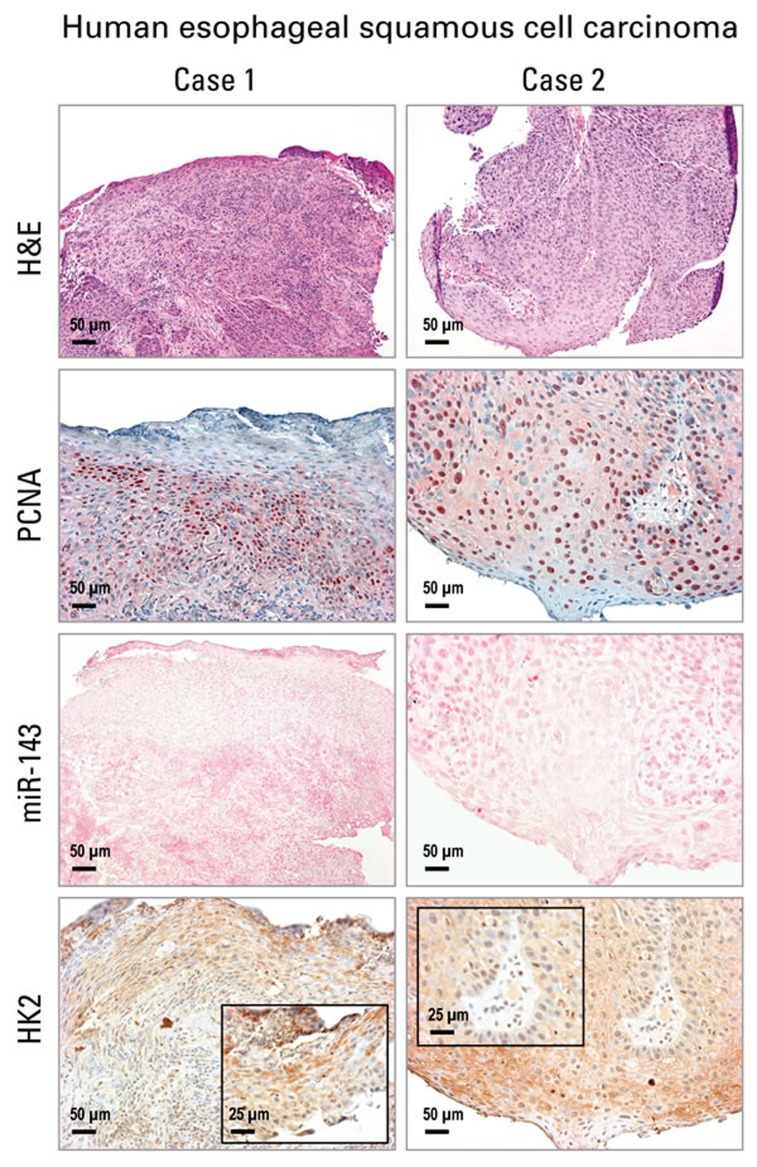
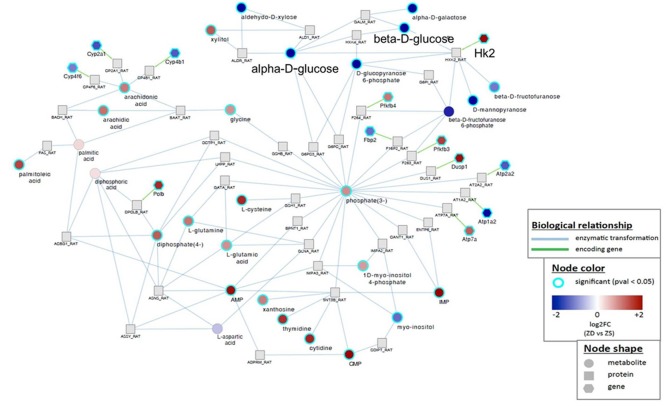
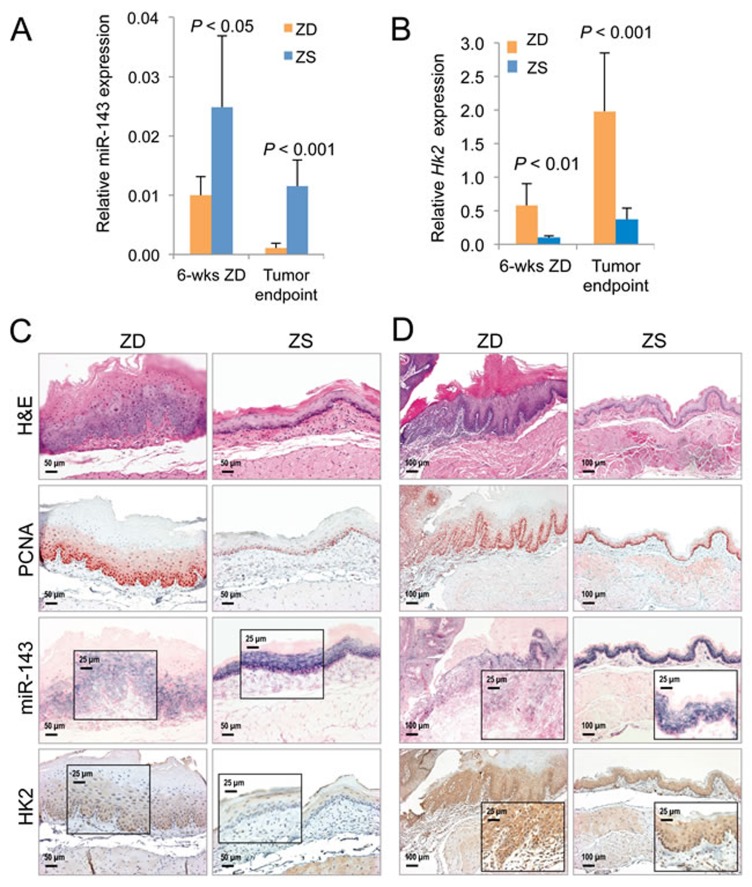
Esophageal squamous cell carcinoma (ESCC) in humans is a deadly disease associated with dietary zinc (Zn)-deficiency. In the rat esophagus, Zn-deficiency induces cell proliferation, alters mRNA and microRNA gene expression, and promotes ESCC. We investigated whether Zn-deficiency alters cell metabolism by evaluating metabolomic profiles of esophageal epithelia from Zn-deficient and replenished rats sufficient rats, using untargeted gas chromatography time-of-flight mass spectrometry ( = 8/group). The Zn-deficient proliferative esophagus exhibits a distinct metabolic profile with glucose down 153-fold and lactic acid up 1.7-fold ( < 0.0001), indicating aerobic glycolysis (the "Warburg effect"), a hallmark of cancer cells. Zn-replenishment rapidly increases glucose content, restores deregulated metabolites to control levels, and reverses the hyperplastic phenotype. Integration of metabolomics and our reported transcriptomic data for this tissue unveils a link between glucose down-regulation and overexpression of HK2, an enzyme that catalyzes the first step of glycolysis and is overexpressed in cancer cells. Searching our published microRNA profile, we find that the tumor-suppressor miR-143, a negative regulator of HK2, is down-regulated in Zn-deficient esophagus. Using hybridization and immunohistochemical analysis, the inverse correlation between miR-143 down-regulation and HK2 overexpression is documented in hyperplastic Zn-deficient esophagus, archived ESCC-bearing Zn-deficient esophagus, and human ESCC tissues. Thus, to sustain uncontrolled cell proliferation, Zn-deficiency reprograms glucose metabolism by modulating expression of miR-143 and its target HK2. Our work provides new insight into critical roles of Zn in ESCC development and prevention.
人类食管鳞状细胞癌(ESCC)是一种与膳食锌(Zn)缺乏相关的致命疾病。在大鼠食管中,锌缺乏会诱导细胞增殖,改变mRNA和微小RNA基因表达,并促进ESCC的发生。我们通过评估缺锌和补锌大鼠(充足大鼠,每组n = 8)食管上皮的代谢组学图谱,研究了锌缺乏是否会改变细胞代谢。缺锌的增殖性食管表现出独特的代谢特征,葡萄糖含量下降153倍,乳酸含量上升1.7倍(P < 0.0001),表明存在有氧糖酵解(“Warburg效应”),这是癌细胞的一个标志。补锌能迅速增加葡萄糖含量,将失调的代谢物恢复到对照水平,并逆转增生表型。将代谢组学与我们报道的该组织转录组数据相结合,揭示了葡萄糖下调与HK2过表达之间的联系,HK2是一种催化糖酵解第一步的酶,在癌细胞中过表达。在我们已发表的微小RNA图谱中搜索,我们发现肿瘤抑制因子miR-143,即HK2的负调节因子,在缺锌食管中下调。通过原位杂交和免疫组化分析,在增生性缺锌食管、存档的缺锌ESCC-bearing食管和人类ESCC组织中记录了miR-143下调与HK2过表达之间的负相关。因此,为了维持不受控制的细胞增殖,锌缺乏通过调节miR-143及其靶标HK2的表达来重新编程葡萄糖代谢。我们的工作为锌在ESCC发生和预防中的关键作用提供了新的见解。