Department of Pathology, Anatomy, and Cell Biology, Thomas Jefferson University, Philadelphia, PA 19107;
Sidney Kimmel Cancer Center, Thomas Jefferson University, Philadelphia, PA 19107.
Proc Natl Acad Sci U S A. 2018 Nov 20;115(47):E11091-E11100. doi: 10.1073/pnas.1813956115. Epub 2018 Nov 5.
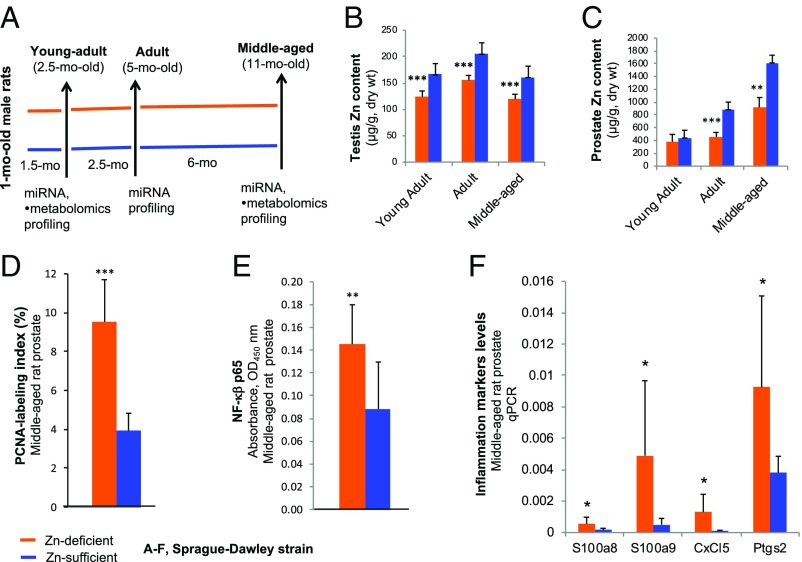
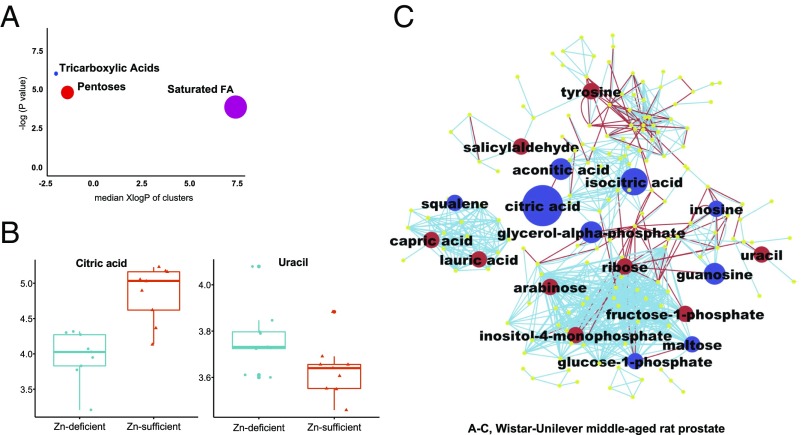
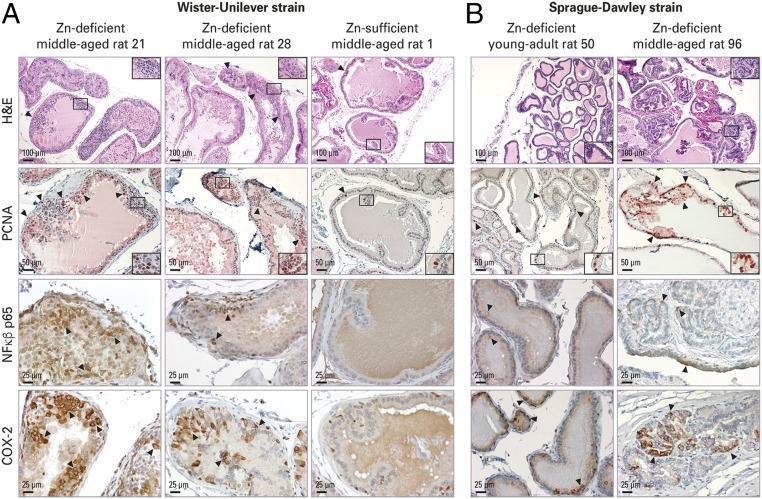
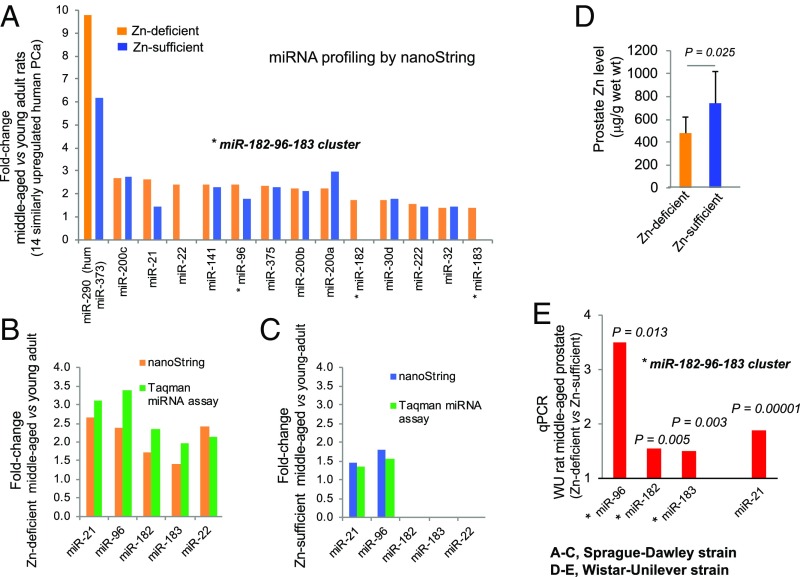
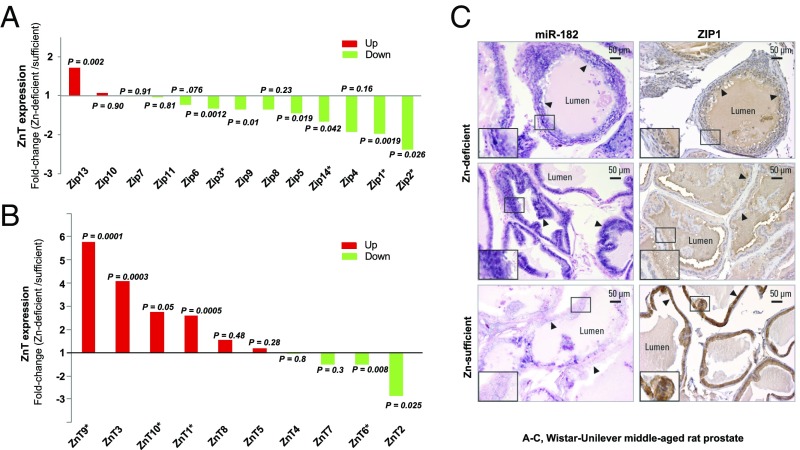
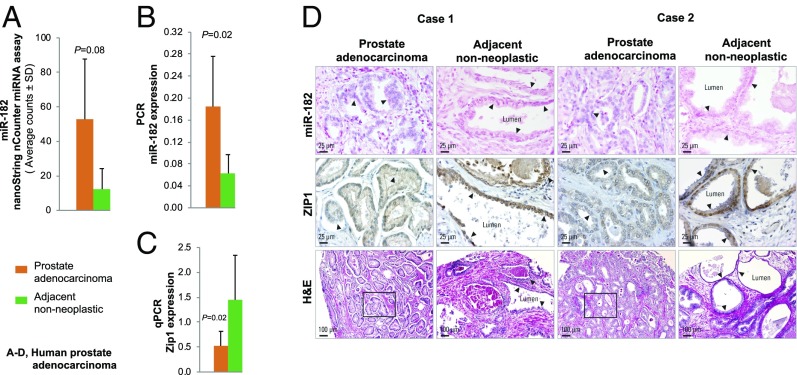
Prostate cancer is a leading cause of cancer death in men over 50 years of age, and there is a characteristic marked decrease in Zn content in the malignant prostate cells. The cause and consequences of this loss have thus far been unknown. We found that in middle-aged rats a Zn-deficient diet reduces prostatic Zn levels ( = 0.025), increases cellular proliferation, and induces an inflammatory phenotype with COX-2 overexpression. This hyperplastic/inflammatory prostate has a human prostate cancer-like microRNA profile, with up-regulation of the Zn-homeostasis-regulating miR-183-96-182 cluster (fold change = 1.41-2.38; = 0.029-0.0003) and down-regulation of the Zn importer ZIP1 (target of miR-182), leading to a reduction of prostatic Zn. This inverse relationship between miR-182 and ZIP1 also occurs in human prostate cancer tissue, which is known for Zn loss. The discovery that the Zn-depleted middle-aged rat prostate has a metabolic phenotype resembling that of human prostate cancer, with a 10-fold down-regulation of citric acid ( = 0.0003), links citrate reduction directly to prostatic Zn loss, providing the underlying mechanism linking dietary Zn deficiency with miR-183-96-182 overexpression, ZIP1 down-regulation, prostatic Zn loss, and the resultant citrate down-regulation, changes mimicking features of human prostate cancer. Thus, dietary Zn deficiency during rat middle age produces changes that mimic those of human prostate carcinoma and may increase the risk for prostate cancer, supporting the need for assessment of Zn supplementation in its prevention.
前列腺癌是导致 50 岁以上男性癌症死亡的主要原因,恶性前列腺细胞中的锌含量明显下降。到目前为止,这种损失的原因和后果还不得而知。我们发现,中年大鼠缺锌饮食会降低前列腺中的锌水平( = 0.025),增加细胞增殖,并诱导 COX-2 过表达的炎症表型。这种增生/炎症性前列腺具有类似于人类前列腺癌的 microRNA 特征,Zn 稳态调节的 miR-183-96-182 簇上调(倍数变化 = 1.41-2.38; = 0.029-0.0003),Zn 转运蛋白 ZIP1 下调(miR-182 的靶标),导致前列腺中锌的减少。miR-182 和 ZIP1 之间的这种反向关系也发生在人类前列腺癌组织中,已知该组织缺锌。发现缺锌的中年大鼠前列腺具有类似于人类前列腺癌的代谢表型,柠檬酸减少 10 倍( = 0.0003),直接将柠檬酸减少与前列腺锌丢失联系起来,为饮食锌缺乏与 miR-183-96-182 过表达、ZIP1 下调、前列腺锌丢失和柠檬酸丢失之间的潜在机制提供了依据,这些变化模拟了人类前列腺癌的特征。因此,中年大鼠的饮食锌缺乏会产生类似于人类前列腺癌的变化,可能会增加前列腺癌的风险,这支持了评估锌补充剂在预防前列腺癌中的作用的必要性。