Prebet Thomas, Cluzeau Thomas, Park Sophie, Sekeres Mikkael A, Germing Ulrich, Ades Lionel, Platzbecker Uwe, Gotze Katharina, Vey Norbert, Oliva Esther, Sugrue Mary M, Bally Cecile, Kelaidi Charikleia, Al Ali Najla, Fenaux Pierre, Gore Steven D, Komrokji Rami
Moffit Cancer Center, Tampa, Florida, USA.
Cote d'Azur University, Nice Sophia Antipolis University, Centre Hospitalier Universitaire de Nice, Nice, France.
Oncotarget. 2017 Jun 14;8(47):81926-81935. doi: 10.18632/oncotarget.18477. eCollection 2017 Oct 10.
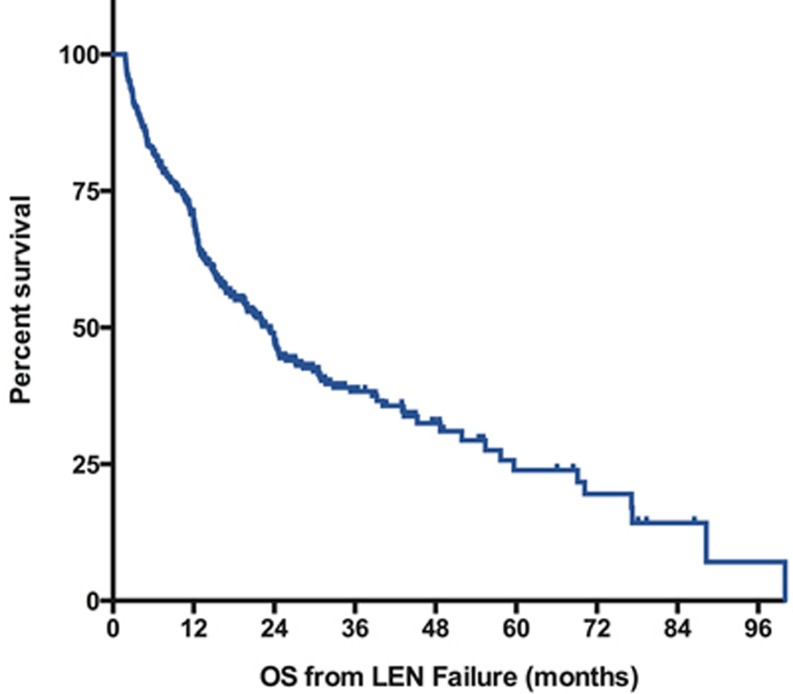
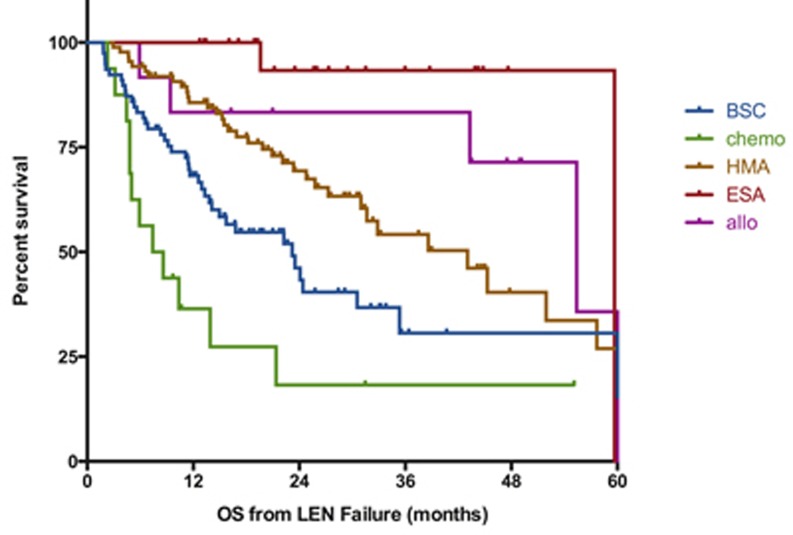
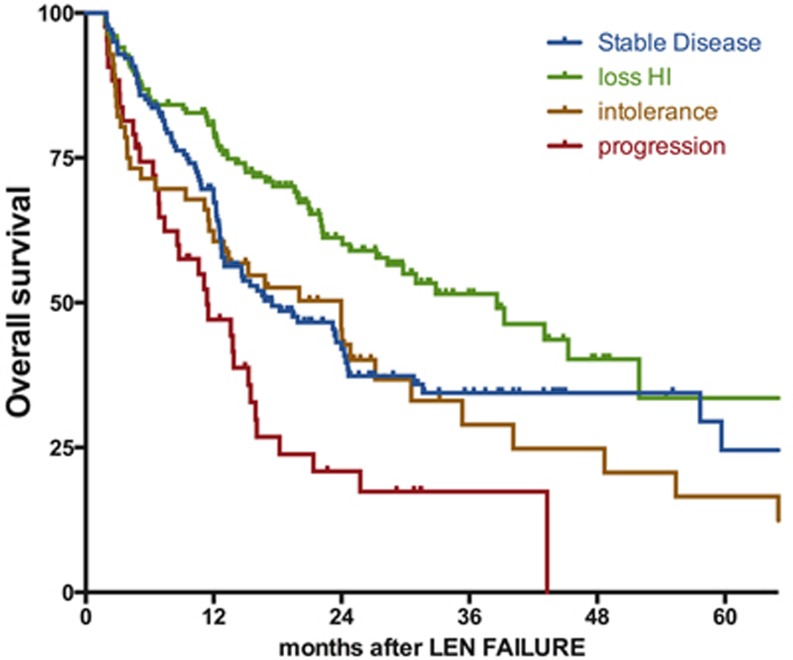
While lenalidomide (LEN) is the standard of care for the lower-risk myelodysplastic syndromes (MDS) patients with deletion 5q, 35% will not respond to or do not tolerate the drug. Moreover, most of the patients will lose their response after a few years. Defining the outcome of patients with LEN failure and determining the impact of subsequent therapies is therefore important to develop alternative strategies. Based on an international collaboration, we were able to compile a total of 392 patient cases of lower-risk MDS patients with 5q deletion and to analyze their outcome after failure of lenalidomide. The median survival following LEN failure was 23 months. We observed a negative impact on survival of advanced age, higher bone marrow blast count at LEN initiation, progression after LEN failure, and unfavorable cytogenetics. Among the treatment strategies, we observed a relatively prolonged survival of patients treated subsequently with hypomethylating agents and only a limited impact on survival of allogeneic transplantation. In conclusion, our work stresses the relatively short survival of this group of patient and defines the expected baseline for the needed future investigations in this group of patients.
虽然来那度胺(LEN)是具有5q缺失的低危骨髓增生异常综合征(MDS)患者的标准治疗药物,但35%的患者对该药物无反应或不耐受。此外,大多数患者在几年后会失去反应。因此,明确来那度胺治疗失败患者的预后并确定后续治疗的影响对于制定替代策略很重要。基于一项国际合作,我们总共收集了392例具有5q缺失的低危MDS患者病例,并分析了他们来那度胺治疗失败后的预后。来那度胺治疗失败后的中位生存期为23个月。我们观察到高龄、来那度胺起始治疗时较高的骨髓原始细胞计数、来那度胺治疗失败后的病情进展以及不良细胞遗传学对生存有负面影响。在治疗策略方面,我们观察到来那度胺治疗失败后接受去甲基化药物治疗的患者生存期相对延长,而异基因移植对生存的影响有限。总之,我们的研究强调了这组患者相对较短的生存期,并为该组患者未来所需的研究确定了预期基线。