Ding Xiao-Qing, Zhao Shuang, Yang Lei, Zhao Xin, Zhao Gui-Feng, Zhao Shu-Peng, Li Zhi-Jie, Zheng Hua-Chuan
Department of Experimental Oncology and Animal Center, Shengjing Hospital of China Medical University, Shenyang 110004, China.
Department of Surgery, The First Affiliated Hospital of Jinzhou Medical University, Jinzhou 121001, China.
Oncotarget. 2017 May 17;8(47):81953-81966. doi: 10.18632/oncotarget.17918. eCollection 2017 Oct 10.
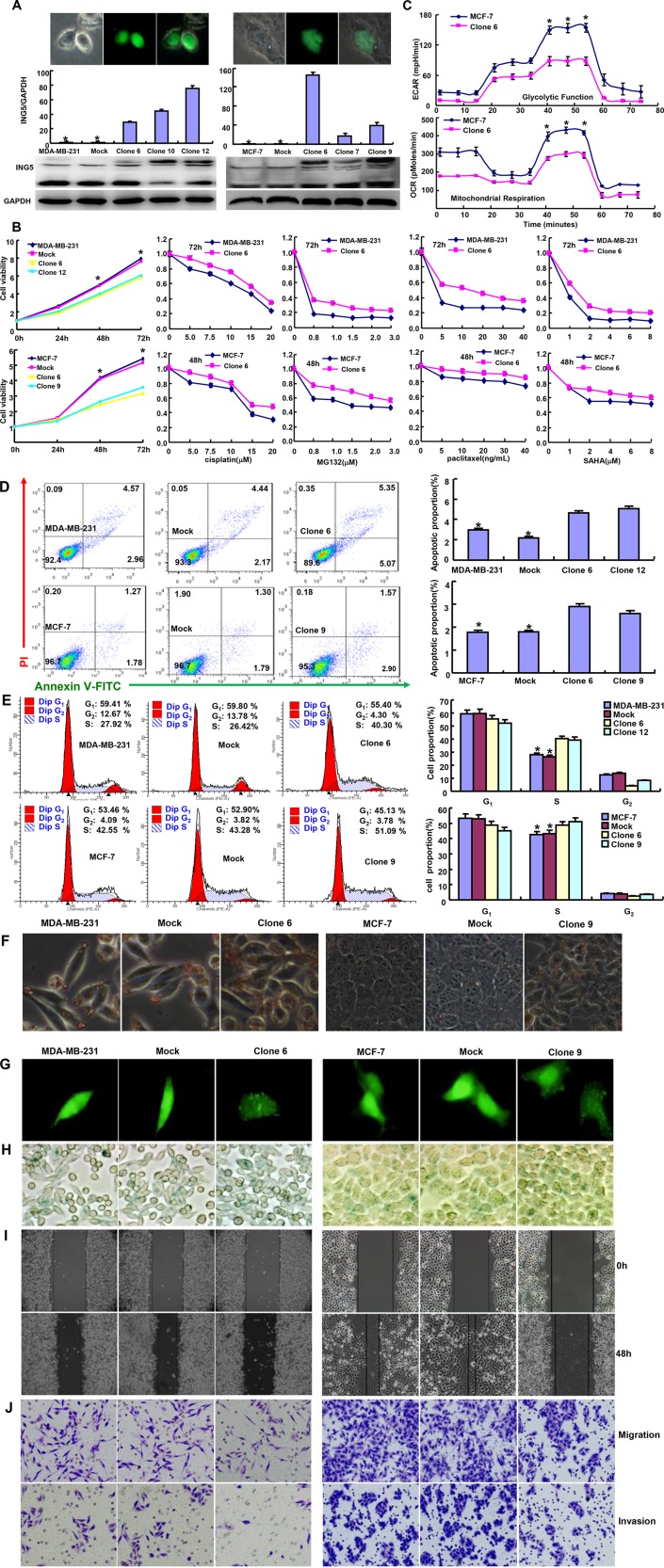
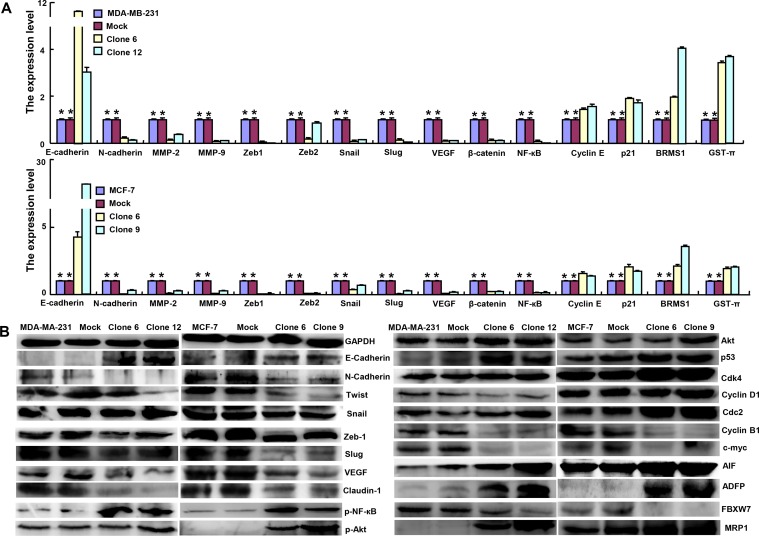
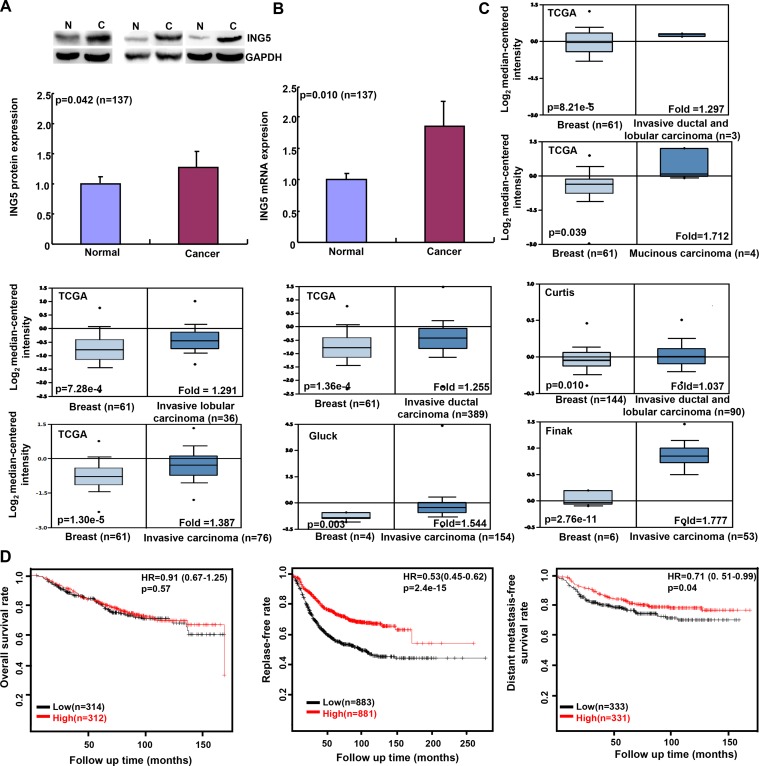
Here, we found that ING5 overexpression resulted in a lower proliferation, reduced glucose metabolism, S arrest, decreased migration and invasion, apoptotic induction, fat accumulation, autophagy, senescence and mesenchymal-epithelial-transition of breast cancer cells. It also suppressed the tumor growth of breast cancer cells by inhibiting proliferation, inducing apoptosis and autophagy. ING5-mediated chemoresistance was positively linked to Akt and NF-κB activation, MRP1 and GST-π overexpression, and FBXW7 hypoexpression. expression was higher in breast cancer than normal tissue at both mRNA and protein levels. mRNA expression was positively correlated with relapse- and distant metastasis-free survival rates. Nuclear ING5 expression showed gradual decrease from breast normal tissue, fibroadenoma, adenomatosis, primary to metastatic cancers, while versa for cytoplasmic ING5. Nuclear ING5 expression was negatively correlated with distant metastasis and p53 hypoexpression, while cytoplasmic ING5 expression was positively correlated with tumor size and ER expression. These data suggested that up-regulated expression and nucleocytoplasmic translocation of ING5 protein were observed in breast cancer. The higher expression of nuclear ING5 was inversely linked to worse clinicopathological behaviors of breast cancer by and vitro reversing aggressive phenotypes. Therefore, it should be employed as a biomarker to indicate the tumorigenesis and aggressiveness of breast cancer, and as a potential target for gene therapy.
在此,我们发现ING5过表达导致乳腺癌细胞增殖降低、葡萄糖代谢减少、S期阻滞、迁移和侵袭能力下降、凋亡诱导、脂肪堆积、自噬、衰老以及间质-上皮转化。它还通过抑制增殖、诱导凋亡和自噬来抑制乳腺癌细胞的肿瘤生长。ING5介导的化疗耐药与Akt和NF-κB激活、MRP1和GST-π过表达以及FBXW7低表达呈正相关。ING5在乳腺癌中的mRNA和蛋白水平均高于正常组织。其mRNA表达与无复发和无远处转移生存率呈正相关。从乳腺正常组织、纤维腺瘤、腺瘤病、原发性癌到转移性癌,ING5的核表达逐渐降低,而细胞质ING5的表达则相反。核ING5表达与远处转移和p53低表达呈负相关,而细胞质ING5表达与肿瘤大小和ER表达呈正相关。这些数据表明,在乳腺癌中观察到ING5蛋白表达上调和核质易位。核ING5的高表达通过体内和体外逆转侵袭性表型与乳腺癌较差的临床病理行为呈负相关。因此,它应作为一种生物标志物来指示乳腺癌的发生和侵袭性,并作为基因治疗的潜在靶点。