Ohaegbulam Kim C, Liu Weifeng, Jeon Hyungjun, Almo Steven C, Zang Xingxing
Department of Microbiology and Immunology, Albert Einstein College of Medicine, Bronx, NY, USA.
Department of Biochemistry, Albert Einstein College of Medicine, Bronx, NY, USA.
Oncotarget. 2017 Sep 20;8(47):82740-82753. doi: 10.18632/oncotarget.21098. eCollection 2017 Oct 10.
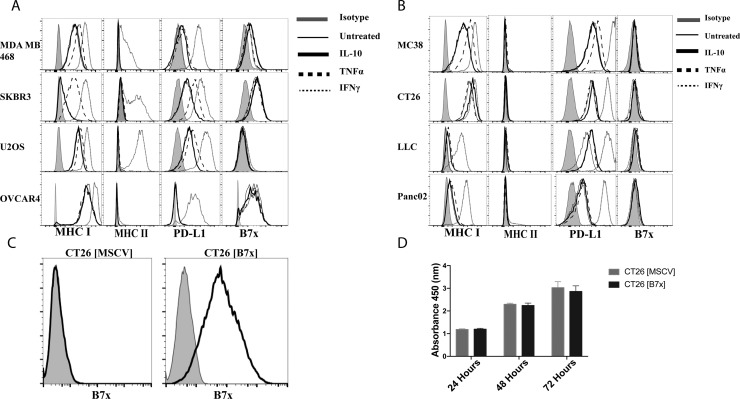
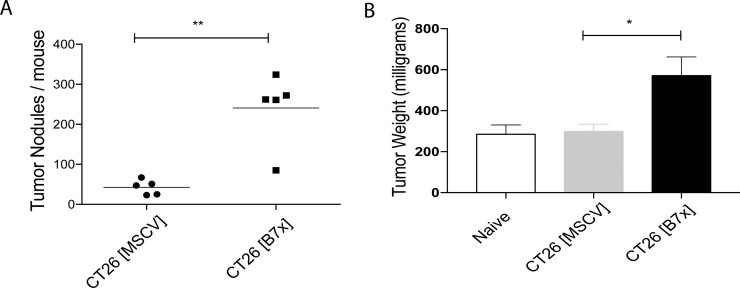
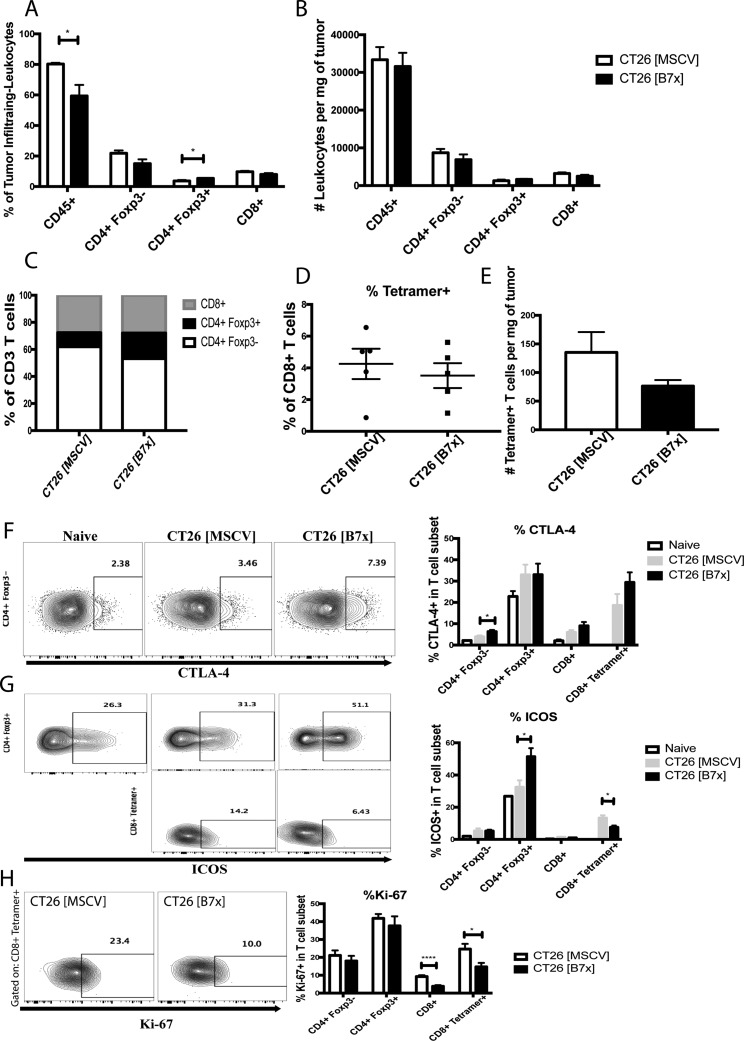
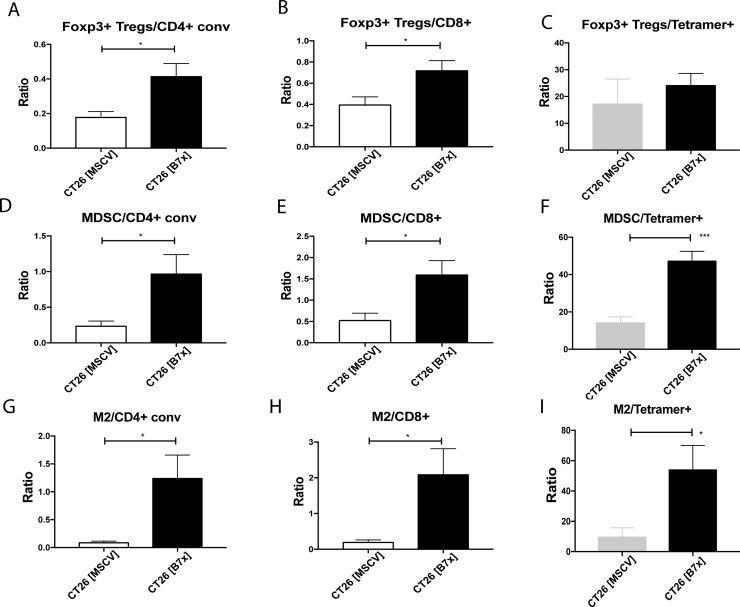
B7x (B7-H4 or B7S1) is a coinhibitory member of the B7 immune checkpoint ligand family that regulates immune function following ligation with its unknown cognate receptors. B7x has limited expression on normal tissues, but is up-regulated on solid human tumors to inhibit anti-tumor immunity and associates with poor clinical prognosis. We assessed the contribution of cytokine stimuli to induce surface B7x expression on cancer cells and the role of tumor-expressed B7x in a murine pulmonary metastasis model, and finally evaluated the potential interaction between B7x and Neuropilin-1, a suggested potential cognate receptor. We showed that pro-inflammatory and anti-inflammatory cytokines IFNγ, TNFα, and IL-10 did not induce expression of B7x on human or murine cancer cells. Following i.v. injection of CT26, a murine colon cancer cell line in the BALB/c background, we observed a significant increase in tumor burden in the lung of B7x-expressing CT26 mice compared to B7x-negative parental CT26 control mice. This was marked by a significant increase in M2 tumor associated macrophages and antigen-specific CD8 T cell exhaustion. Finally, we found through multiple systems that there was no evidence for B7x and Neuropilin-1 direct interaction. Thus, the B7x pathway has an essential role in modulating the innate and adaptive immune cell infiltrate in the tumor microenvironment with its currently unknown cognate receptor(s).
B7x(B7-H4或B7S1)是B7免疫检查点配体家族的共抑制成员,与其未知的同源受体结合后可调节免疫功能。B7x在正常组织中表达有限,但在人类实体瘤中上调,以抑制抗肿瘤免疫,并与不良临床预后相关。我们评估了细胞因子刺激对癌细胞表面B7x表达的诱导作用,以及肿瘤表达的B7x在小鼠肺转移模型中的作用,最后评估了B7x与神经纤毛蛋白-1(一种潜在的同源受体)之间的潜在相互作用。我们发现促炎和抗炎细胞因子IFNγ、TNFα和IL-10不会诱导人或小鼠癌细胞上B7x的表达。在静脉注射BALB/c背景的小鼠结肠癌细胞系CT26后,我们观察到与B7x阴性的亲本CT26对照小鼠相比,表达B7x的CT26小鼠肺中的肿瘤负担显著增加。这表现为M2肿瘤相关巨噬细胞显著增加和抗原特异性CD8 T细胞耗竭。最后,我们通过多个系统发现没有证据表明B7x与神经纤毛蛋白-1直接相互作用。因此,B7x通路通过其目前未知的同源受体在调节肿瘤微环境中的先天性和适应性免疫细胞浸润方面具有重要作用。