Cai Xin-Jun, Wang Zeng, Cao Jia-Wei, Ni Jian-Jun, Xu Ying-Ying, Yao Jun, Xu Hong, Liu Fang, Yang Gao-Yi
Department of Pharmacy, Zhe Jiang Chinese Medicine and Western Medicine Integrated Hospital, Hangzhou 310003, People's Republic of China.
Department of Pharmacy, Zhejiang Cancer Hospital, Hangzhou 310022, People's Republic of China.
Oncotarget. 2017 Aug 24;8(48):84248-84257. doi: 10.18632/oncotarget.20539. eCollection 2017 Oct 13.
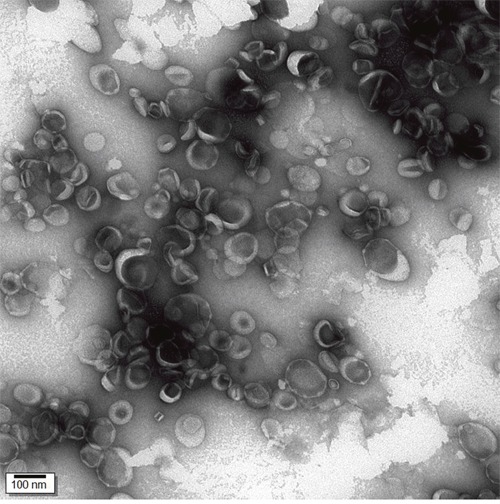
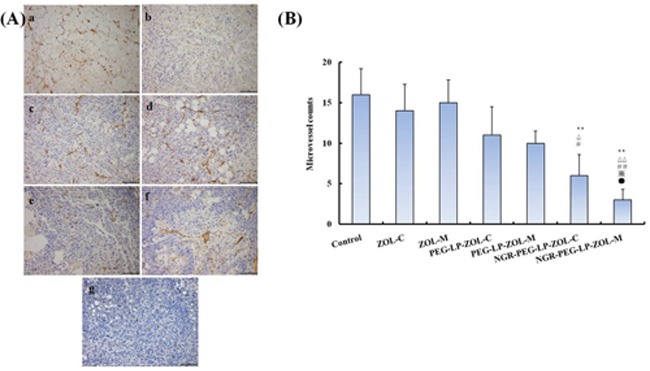
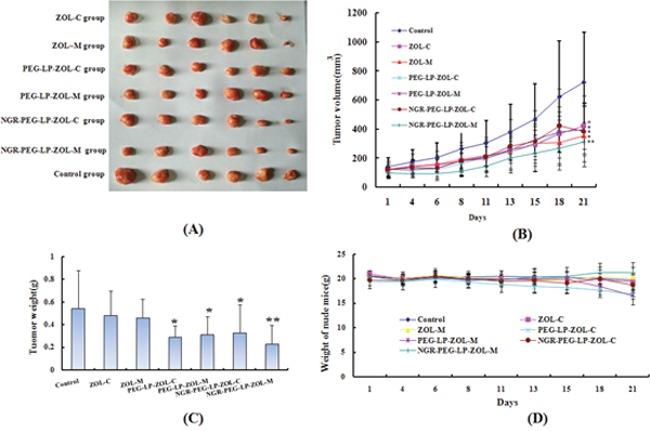
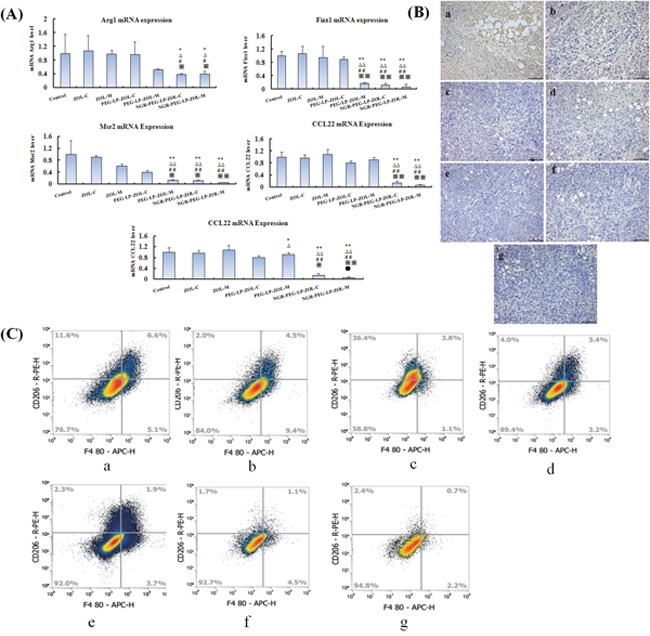
Zoledronic acid (ZOL) has been used as an adjuvant therapy for breast cancer. It is suggested that ZOL might be associated with inhibition of macrophages, which in turn reduces tumor growth, metastasis and tumor angiogenesis. Moreover, metronomic therapy can inhibit tumor angiogenesis and tumor immune cells. Previously we developed ZOL based cationic liposomes that allowed a higher intratumor delivery of drug compared with free ZOL . Therefore, in this study, Asn-Gly-Arg (NGR) and PEG2000 were used as ligands to modify the surface of liposomes (NGR-PEG-LP-ZOL) in metronomic therapy to clear the tumor-associated macrophages (TAMs) and inhibit the formation of tumor angiogenesis, achieving the purpose of anti-tumor growth. Our data showed that NGR-PEG-LP-ZOL metronomic therapy has the strongest inhibitory effect on tumor growth. Further, NGR-PEG-LP-ZOL metronomic therapy could significantly impair TAMs by inhibiting the expression of CD206 antibody in tumor tissues, decreasing the expression of cytokine related gene expression of TAMs, as well as reducing the percentage of TAMs in tumor tissues. In addition, NGR-PEG-LP-ZOL metronomic therapy could significantly inhibit the expression of tumor neovascular specific antibody CD31 and reduce the microvessel density. In conclusion, our study demonstrated that NGR-PEG-LP-ZOL metronomic therapy could impair TAMs by inhibiting tumor angiogenesis and enhance the antitumor effect of ZOL.
唑来膦酸(ZOL)已被用作乳腺癌的辅助治疗药物。有研究表明,ZOL可能与抑制巨噬细胞有关,进而减少肿瘤生长、转移及肿瘤血管生成。此外,节拍化疗可抑制肿瘤血管生成和肿瘤免疫细胞。此前我们研发了基于ZOL的阳离子脂质体,与游离ZOL相比,其可实现更高的肿瘤内药物递送。因此,在本研究中,将天冬酰胺-甘氨酸-精氨酸(NGR)和聚乙二醇2000(PEG2000)用作配体,对脂质体表面进行修饰(NGR-PEG-LP-ZOL),用于节拍化疗以清除肿瘤相关巨噬细胞(TAM)并抑制肿瘤血管生成的形成,从而达到抗肿瘤生长的目的。我们的数据表明,NGR-PEG-LP-ZOL节拍化疗对肿瘤生长的抑制作用最强。此外,NGR-PEG-LP-ZOL节拍化疗可通过抑制肿瘤组织中CD206抗体的表达、降低TAM细胞因子相关基因表达水平以及减少肿瘤组织中TAM的百分比,显著损害TAM。另外,NGR-PEG-LP-ZOL节拍化疗可显著抑制肿瘤新生血管特异性抗体CD31的表达并降低微血管密度。总之,我们的研究表明,NGR-PEG-LP-ZOL节拍化疗可通过抑制肿瘤血管生成来损害TAM,并增强ZOL的抗肿瘤作用。