Department of Breast and Thyroid Surgery, Union Hospital, Tongji Medical College, Huazhong University of Science and Technology, Wuhan 430030, China.
Int J Mol Sci. 2024 Jun 29;25(13):7208. doi: 10.3390/ijms25137208.
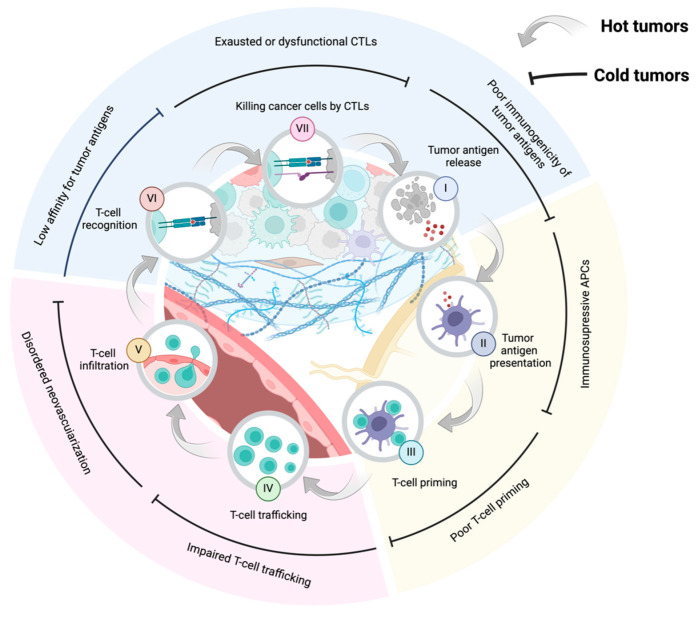
Breast cancer characterized as "cold tumors" exhibit low levels of immune cell infiltration, which limits the efficacy of conventional immunotherapy. Recent studies have focused on strategies using nanotechnology combined with tumor microenvironment modulation to transform "cold tumors" into "hot tumors". This approach involves the use of functionalized nanoparticles that target and modify the tumor microenvironment to promote the infiltration and activation of antitumor immune cells. By delivering immune activators or blocking immunosuppressive signals, these nanoparticles activate otherwise dormant immune responses, enhancing tumor immunogenicity and the therapeutic response. These strategies not only promise to increase the response rate of breast cancer patients to existing immunotherapies but also may pave new therapeutic avenues, providing a new direction for the immunotherapy of breast cancer.
乳腺癌被称为“冷肿瘤”,其特征是免疫细胞浸润水平低,这限制了常规免疫疗法的疗效。最近的研究集中在利用纳米技术结合肿瘤微环境调节的策略,将“冷肿瘤”转化为“热肿瘤”。这种方法涉及使用靶向和修饰肿瘤微环境的功能化纳米粒子,以促进抗肿瘤免疫细胞的浸润和激活。通过递送免疫激活剂或阻断免疫抑制信号,这些纳米粒子激活原本休眠的免疫反应,增强肿瘤免疫原性和治疗反应。这些策略不仅有望提高乳腺癌患者对现有免疫疗法的反应率,而且可能开辟新的治疗途径,为乳腺癌的免疫治疗提供新的方向。