Health Sciences Research Centre (CICS-UBI), University of Beira Interior, Rua Marquês d'Ávila e Bolama, 6201-001 Covilhã, Portugal.
Center for Neuroscience and Cell Biology (CNC), University of Coimbra, Coimbra, Portugal.
Mediators Inflamm. 2017;2017:6742427. doi: 10.1155/2017/6742427. Epub 2017 Aug 23.
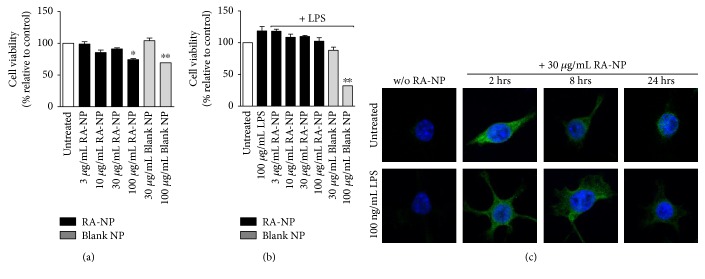
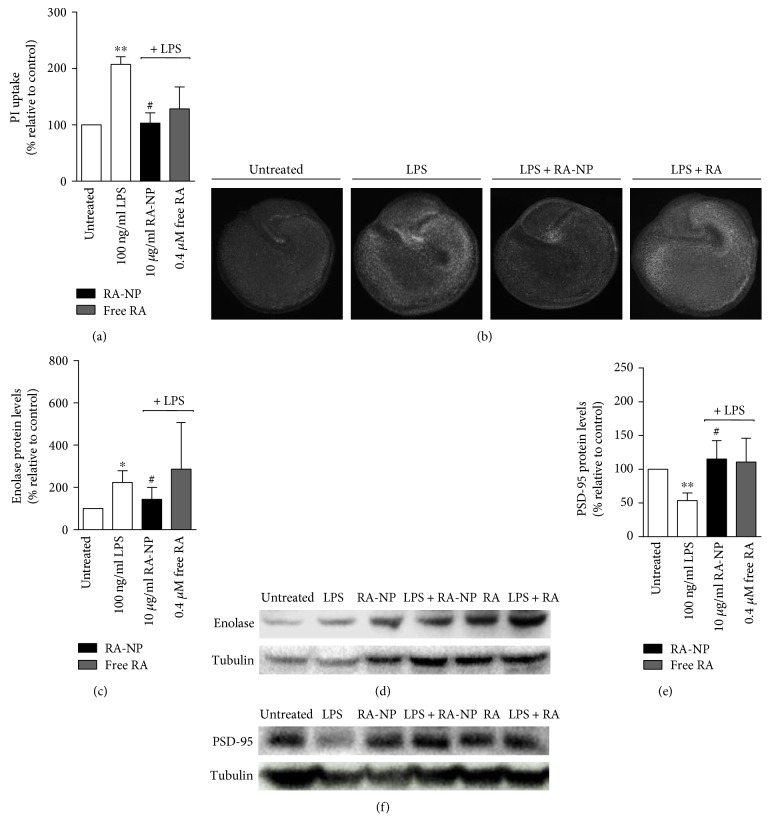
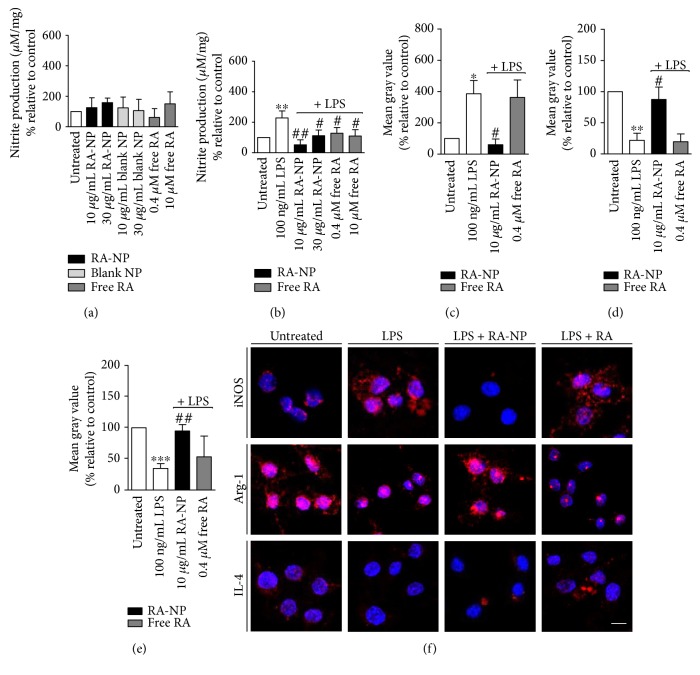
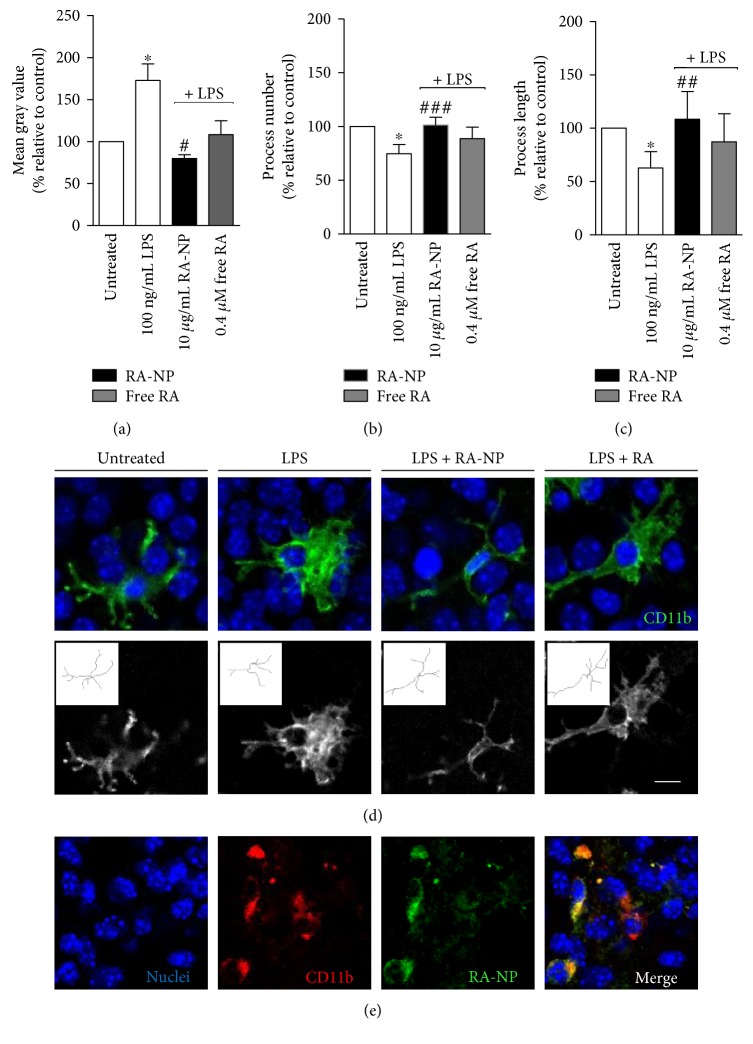
Inflammatory mechanisms triggered by microglial cells are involved in the pathophysiology of several brain disorders, hindering repair. Herein, we propose the use of retinoic acid-loaded polymeric nanoparticles (RA-NP) as a means to modulate microglia response towards an anti-inflammatory and neuroprotective phenotype (M2). RA-NP were first confirmed to be internalized by N9 microglial cells; nanoparticles did not affect cell survival at concentrations below 100 g/mL. Then, immunocytochemical studies were performed to assess the expression of pro- and anti-inflammatory mediators. Our results show that RA-NP inhibited LPS-induced release of nitric oxide and the expression of inducible nitric oxide synthase and promoted arginase-1 and interleukin-4 production. Additionally, RA-NP induced a ramified microglia morphology (indicative of M2 state), promoting tissue viability, particularly neuronal survival, and restored the expression of postsynaptic protein-95 in organotypic hippocampal slice cultures exposed to an inflammatory challenge. RA-NP also proved to be more efficient than the free equivalent RA concentration. Altogether, our data indicate that RA-NP may be envisioned as a promising therapeutic agent for brain inflammatory diseases.
小胶质细胞引发的炎症机制参与了几种脑部疾病的病理生理学过程,阻碍了修复。在此,我们提出使用载有视黄酸的聚合物纳米颗粒(RA-NP)来调节小胶质细胞向抗炎和神经保护表型(M2)的反应。首先,我们证实 RA-NP 被 N9 小胶质细胞内化;在低于 100μg/mL 的浓度下,纳米颗粒不会影响细胞存活。然后,进行免疫细胞化学研究以评估促炎和抗炎介质的表达。我们的结果表明,RA-NP 抑制 LPS 诱导的一氧化氮释放和诱导型一氧化氮合酶的表达,并促进精氨酸酶-1 和白细胞介素-4 的产生。此外,RA-NP 诱导分枝状小胶质细胞形态(表明处于 M2 状态),促进组织存活,特别是神经元存活,并恢复在炎症挑战下暴露的器官型海马切片培养物中突触后蛋白-95 的表达。RA-NP 也比游离等效 RA 浓度更有效。总的来说,我们的数据表明,RA-NP 可被视为治疗脑部炎症性疾病的有前途的治疗剂。