Pang Ling-Pin, Li Yan, Zou Qing-Yun, Zhou Chi, Lei Wei, Zheng Jing, Huang Shi-An
a Cardiovascular Medicine Center , Affiliated Hospital of Guangdong Medical University , Zhanjiang , Guangdong , P.R. China.
b Department of Obstetrics and Gynecology , University of Wisconsin-Madison , Madison , WI , USA.
Exp Lung Res. 2017 Oct;43(8):283-292. doi: 10.1080/01902148.2017.1367868.
Pulmonary arterial hypertension (PAH), a deadly disorder is associated with excessive growth of human pulmonary artery endothelial (HPAECs) and smooth muscle (HPASMCs) cells. Current therapies primarily aim at promoting vasodilation, which only ameliorates clinical symptoms without a cure. 2-(1'H-indole-3'-carbonyl)-thiazole-4-carboxylic acid methyl ester (ITE) is an endogenous aryl hydrocarbon receptor (AhR) ligand, and mediates many cellular function including cell growth. However, the roles of ITE in human lung endothelial cells remain elusive. Herein, we tested a hypothesis that ITE inhibits growth of human pulmonary artery endothelial cells via AhR.
Immunohistochemistry was performed to localize AhR expression in human lung tissues. The crystal violet method and MTT assay were used to determine ITE's effects on growth of HPAECs. The AhR activation in HPAECs was confirmed using Western blotting and RT-qPCR. The role of AhR in ITE-affected proliferation of HPAECs was assessed using siRNA knockdown method followed by the crystal violet method.
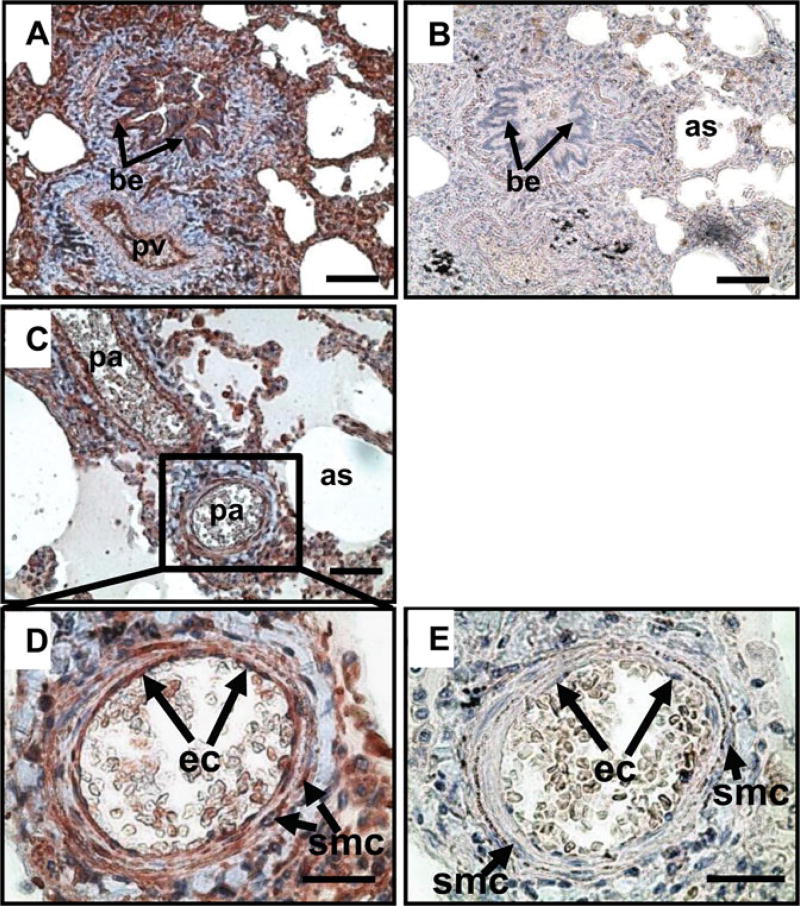
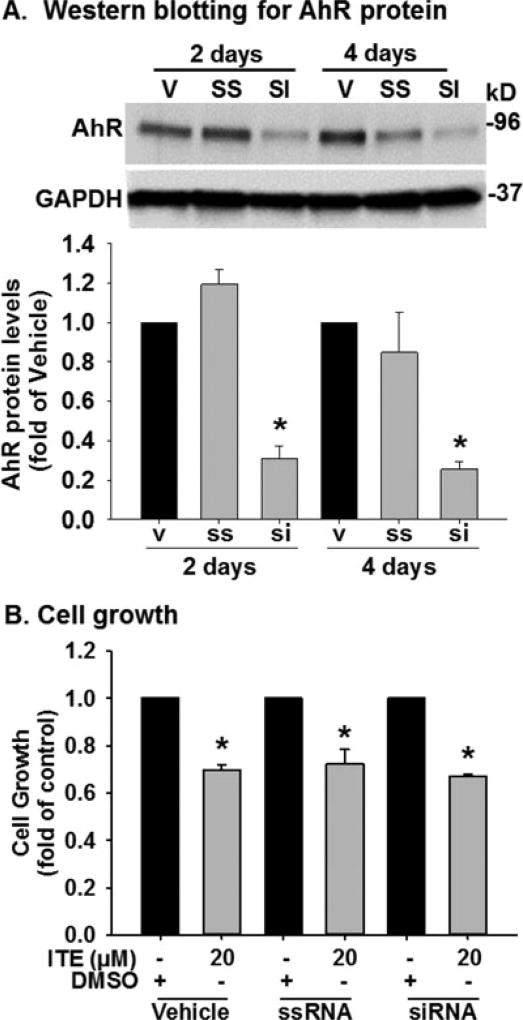
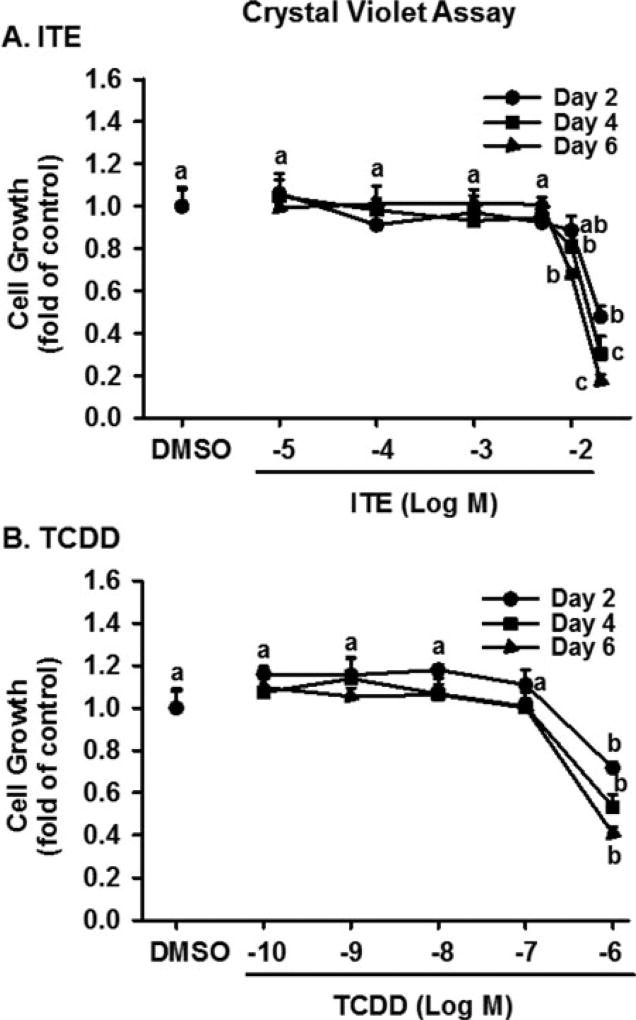
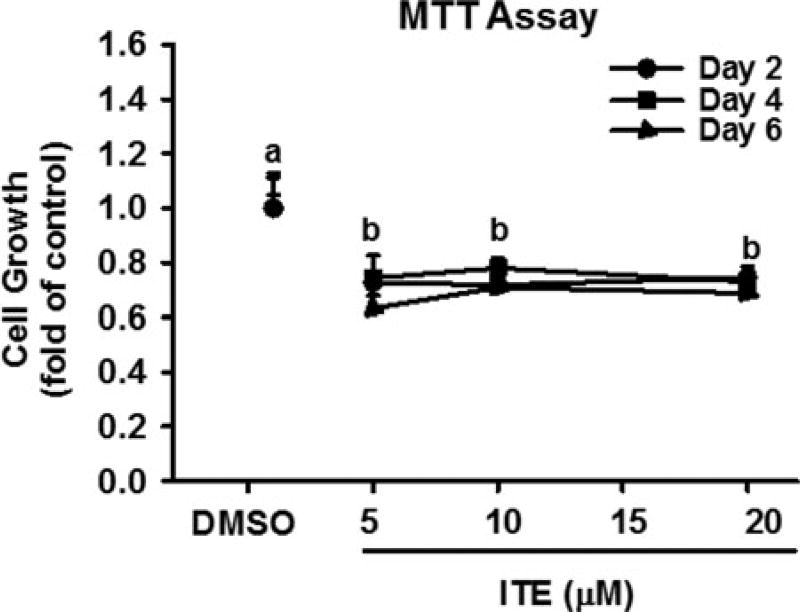
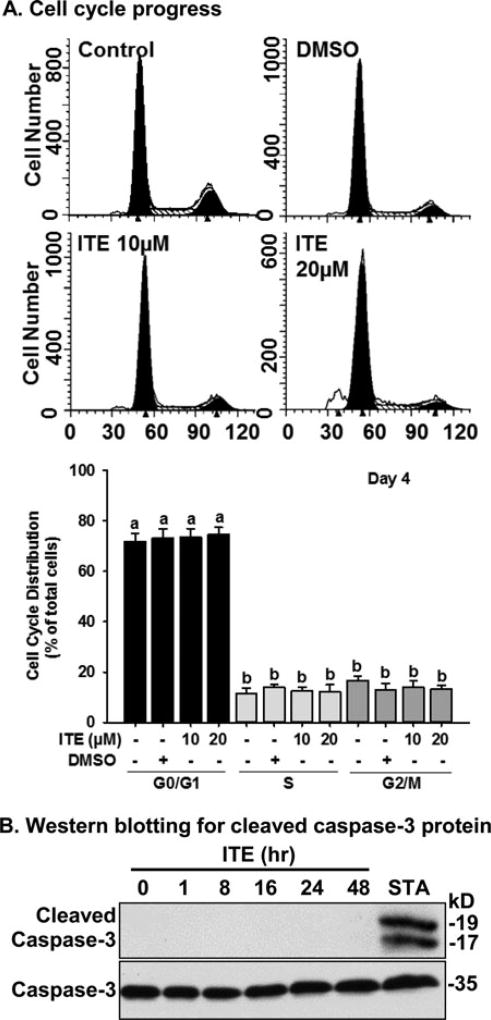
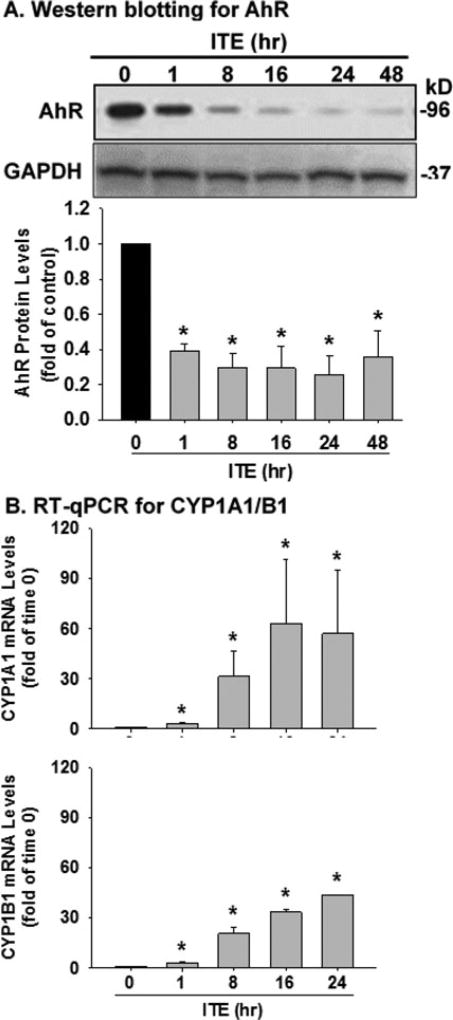
Immunohistochemistry revealed that AhR was present in human lung tissues, primarily in endothelial and smooth muscle cells of pulmonary veins and arteries, as well as in bronchial and alveolar sac epithelia. We also found that ITE dose- and time-dependently inhibited proliferation of HPAECs with a maximum inhibition of 83% at 20 µM after 6 days of treatment. ITE rapidly decreased AhR protein levels, while it increased mRNA levels of cytochrome P450 (CYP), family 1, member A1 (CYP1A1) and B1 (CYP1B1), indicating activation of the AhR/CYP1A1 and AhR/CYP1B1 pathways in HPAECs. The AhR siRNA significantly suppressed AhR protein expression, whereas it did not significantly alter ITE-inhibited growth of HPAECs.
ITE suppresses growth of HPAECs independent of AhR, suggesting that ITE may play an important role in preventing excessive growth of lung endothelial cells.
肺动脉高压(PAH)是一种致命性疾病,与人类肺动脉内皮细胞(HPAECs)和平滑肌细胞(HPASMCs)过度生长有关。目前的治疗主要旨在促进血管舒张,这仅能改善临床症状而无法治愈。2-(1'H-吲哚-3'-羰基)-噻唑-4-羧酸甲酯(ITE)是一种内源性芳烃受体(AhR)配体,并介导包括细胞生长在内的多种细胞功能。然而,ITE在人肺内皮细胞中的作用仍不清楚。在此,我们测试了一个假设,即ITE通过AhR抑制人肺动脉内皮细胞的生长。
采用免疫组织化学法在人肺组织中定位AhR表达。采用结晶紫法和MTT法测定ITE对HPAECs生长的影响。使用蛋白质印迹法和RT-qPCR法确认HPAECs中AhR的激活。采用siRNA敲低法,随后用结晶紫法评估AhR在ITE影响的HPAECs增殖中的作用。
免疫组织化学显示AhR存在于人肺组织中,主要存在于肺静脉和动脉的内皮细胞和平滑肌细胞以及支气管和肺泡囊上皮中。我们还发现,ITE以剂量和时间依赖性方式抑制HPAECs的增殖,在20 μM处理6天后最大抑制率为83%。ITE迅速降低AhR蛋白水平,同时增加细胞色素P450(CYP)1家族成员A1(CYP1A1)和B1(CYP1B1)的mRNA水平,表明HPAECs中AhR/CYP1A1和AhR/CYP1B1途径被激活。AhR siRNA显著抑制AhR蛋白表达,但未显著改变ITE抑制的HPAECs生长。
ITE不依赖AhR抑制HPAECs的生长,表明ITE可能在预防肺内皮细胞过度生长中起重要作用。