Laboratory of Cardiovascular Diseases, Guangdong Medical University, Zhanjiang 524001, China.
Cardiovascular Medicine Center, Affiliated Hospital of Guangdong Medical University, Zhanjiang 524001, China.
Biomed Res Int. 2018 Jun 10;2018:6058784. doi: 10.1155/2018/6058784. eCollection 2018.
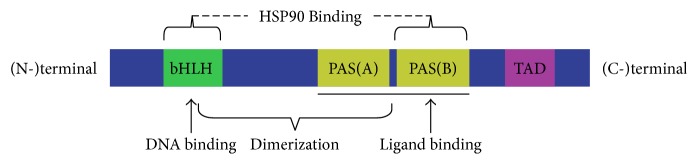
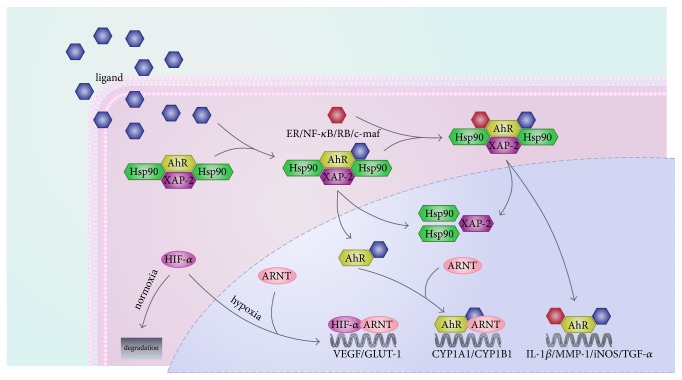
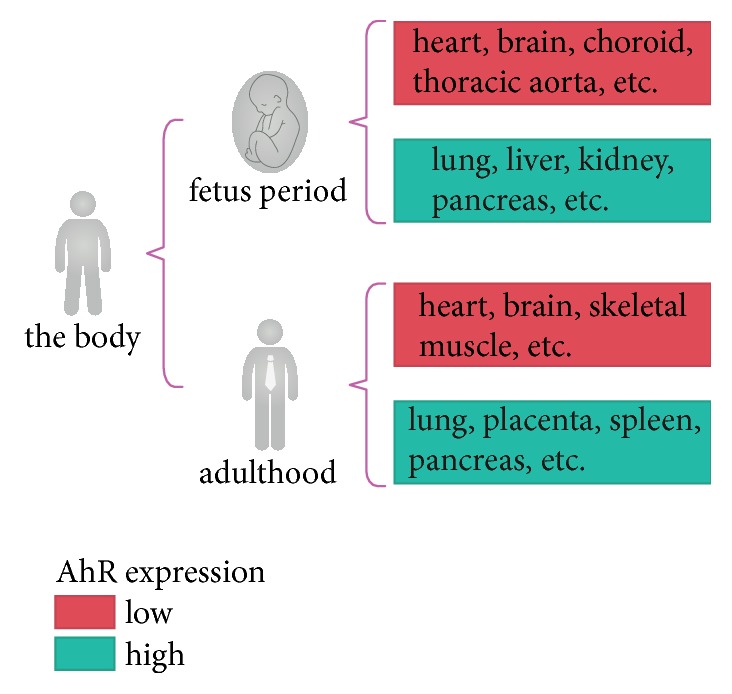
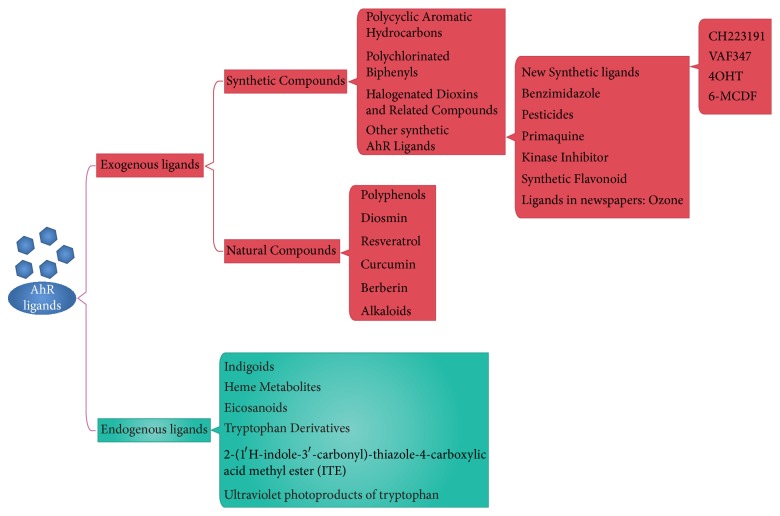
The aryl hydrocarbon receptor (AhR) is a DNA binding protein that acts as a nuclear receptor mediating xenobiotic metabolism and environmental responses. Owing to the evolutionary conservation of this gene and its widespread expression in the immune and circulatory systems, AhR has for many years been almost exclusively studied by the pharmacological/toxicological field for its role in contaminant toxicity. More recently, the functions of AhR in environmental adaption have been examined in the context of the occurrence, development, and therapy of cardiovascular diseases. Increasing evidence suggests that AhR is involved in maintaining homeostasis or in triggering pathogenesis by modulating the biological responses of critical cell types in the cardiovascular system. Here, we describe the structure, distribution, and ligands of AhR and the AhR signaling pathway and review the impact of AhR on cardiovascular physiology. We also discuss the potential contribution of AhR as a new potential factor in the targeted treatment of cardiovascular diseases.
芳香烃受体 (AhR) 是一种 DNA 结合蛋白,作为核受体介导外来化合物代谢和环境反应。由于该基因在进化上的保守性及其在免疫和循环系统中的广泛表达,AhR 多年来一直被药理学/毒理学领域专门研究,因为它在污染物毒性中的作用。最近,人们在心血管疾病的发生、发展和治疗背景下研究了 AhR 在环境适应中的功能。越来越多的证据表明,AhR 通过调节心血管系统中关键细胞类型的生物学反应,参与维持体内平衡或引发发病机制。在这里,我们描述了 AhR 的结构、分布和配体以及 AhR 信号通路,并回顾了 AhR 对心血管生理学的影响。我们还讨论了 AhR 作为心血管疾病靶向治疗新的潜在因素的潜在贡献。