School of Basic Medicine, Wannan Medical College, Wuhu, 241002, China.
School of Public Health, Wannan Medical College, Wuhu, 241002, China.
Sci Rep. 2017 Nov 17;7(1):15809. doi: 10.1038/s41598-017-16084-z.
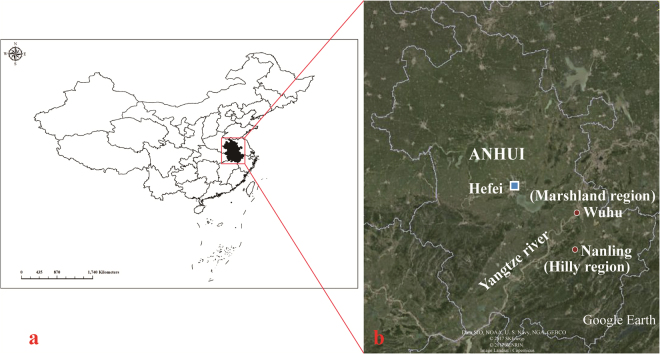
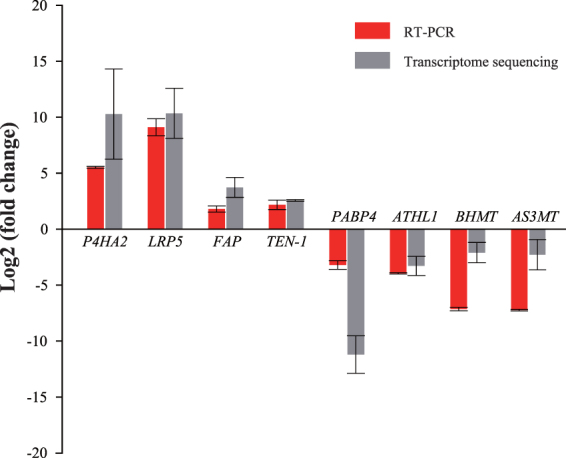
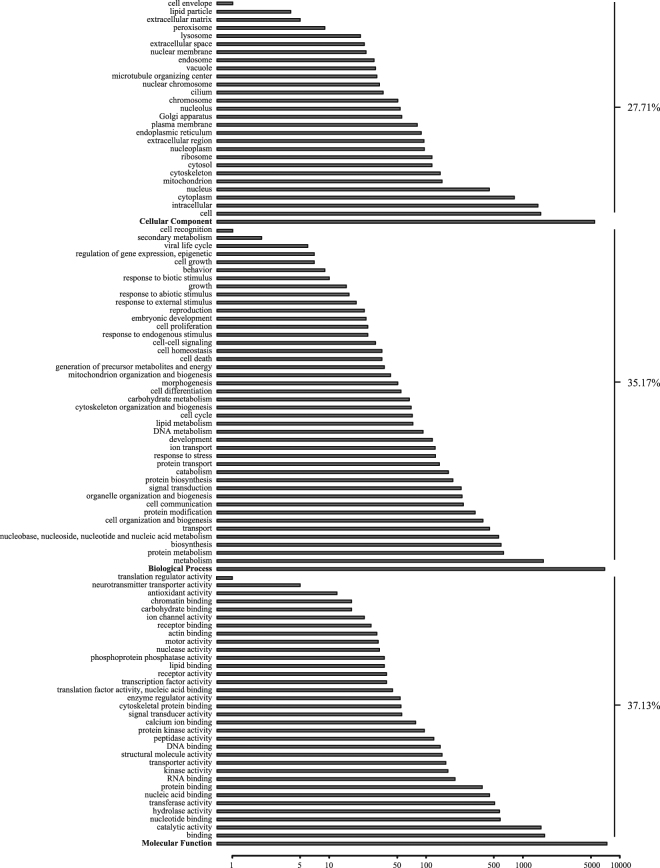
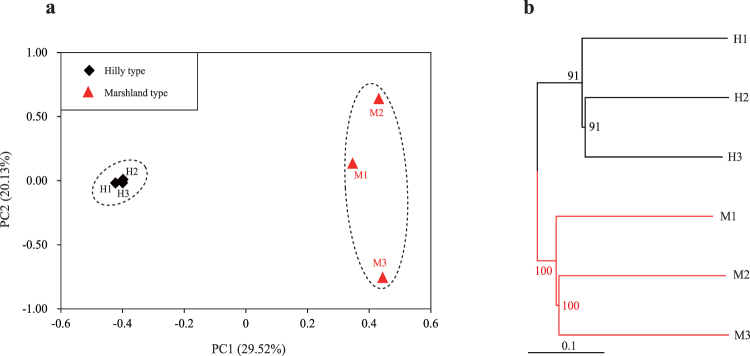
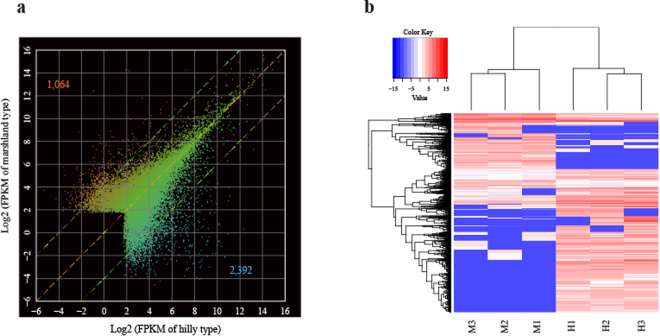
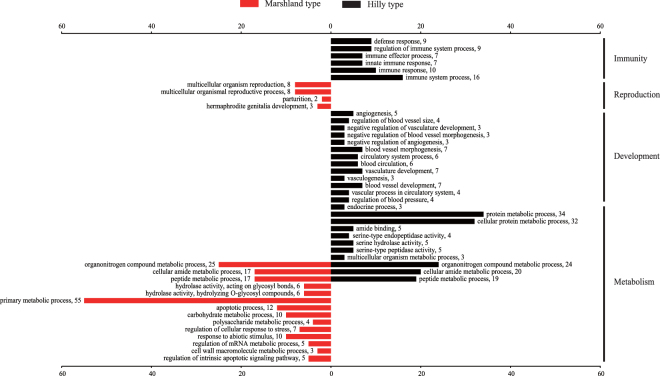
The freshwater snail Oncomelania hupensis is the unique intermediate host of the blood fluke Schistosoma japonicum, which is the major cause of schistosomiasis. The snail inhabits two contrasting environments: the hilly and marshland regions. The hilly snails are smaller in size and have the typical smooth shell, whereas the marshland snails are larger and possess the ribbed shell. To reveal the differences in gene expression between the hilly and marshland snails, a total of six snails, three per environment, were individually examined by RNA sequencing technology. All paired-end reads were assembled into contigs from which 34,760 unigenes were predicted. Based on single nucleotide polymorphisms, principal component analysis and neighbor-joining clustering revealed two distinct clusters of hilly and marshland snails. Analysis of expression changes between environments showed that upregulated genes relating to immunity and development were enriched in hilly snails, while those associated with reproduction were over-represented in marshland snails. Eight differentially expressed genes between the two types of snails were validated by qRT-PCR. Our study identified candidate genes that could be targets for future functional studies, and provided a link between expression profiling and ecological adaptation of the snail that may have implications for schistosomiasis control.
淡水蜗牛钉螺是日本血吸虫的唯一中间宿主,是血吸虫病的主要病因。这种蜗牛栖息在两种截然不同的环境中:丘陵地区和沼泽地区。丘陵地区的蜗牛体型较小,壳光滑,而沼泽地区的蜗牛体型较大,壳有肋纹。为了揭示丘陵地区和沼泽地区蜗牛之间的基因表达差异,我们使用 RNA 测序技术分别对 6 只蜗牛(每个环境 3 只)进行了单独检测。所有的双端读段都被组装成了连续的序列,从中预测出了 34760 个基因。基于单核苷酸多态性,主成分分析和邻接聚类揭示了丘陵地区和沼泽地区蜗牛的两个不同集群。对环境间表达变化的分析表明,与免疫和发育有关的上调基因在丘陵蜗牛中富集,而与繁殖有关的基因在沼泽蜗牛中过度表达。通过 qRT-PCR 验证了两种蜗牛之间的 8 个差异表达基因。我们的研究确定了候选基因,这些基因可能是未来功能研究的靶点,并为蜗牛的表达谱与生态适应性之间提供了联系,这可能对血吸虫病的控制具有重要意义。