Lu Jun, Wang Xing-Zhizi, Zhang Tian-Qi, Huang Xiao-Ying, Yao Jin-Guang, Wang Chao, Wei Zhong-Hong, Ma Yun, Wu Xue-Min, Luo Chun-Ying, Xia Qiang, Long Xi-Dai
Department of Liver Surgery, Ren Ji Hospital, School of Medicine, Shanghai Jiao Tong University, Shanghai 200127, P.R.China.
Department of Pathology, Youjiang Medical University for Nationalities, Baise 533000, P.R.China.
Oncotarget. 2017 Sep 28;8(50):87955-87970. doi: 10.18632/oncotarget.21360. eCollection 2017 Oct 20.
Our previous investigations have shown that the variants of X-ray repair complementing 4 (XRCC4) may be involved in hepatocellular carcinoma (hepatocarcinoma) tumorigenesis. This study aimed to investigate the possible prognostic significance of XRCC4 expression for hepatocarcinoma patients and possible value for the selection of transarterial chemoembolization (TACE) treatment.
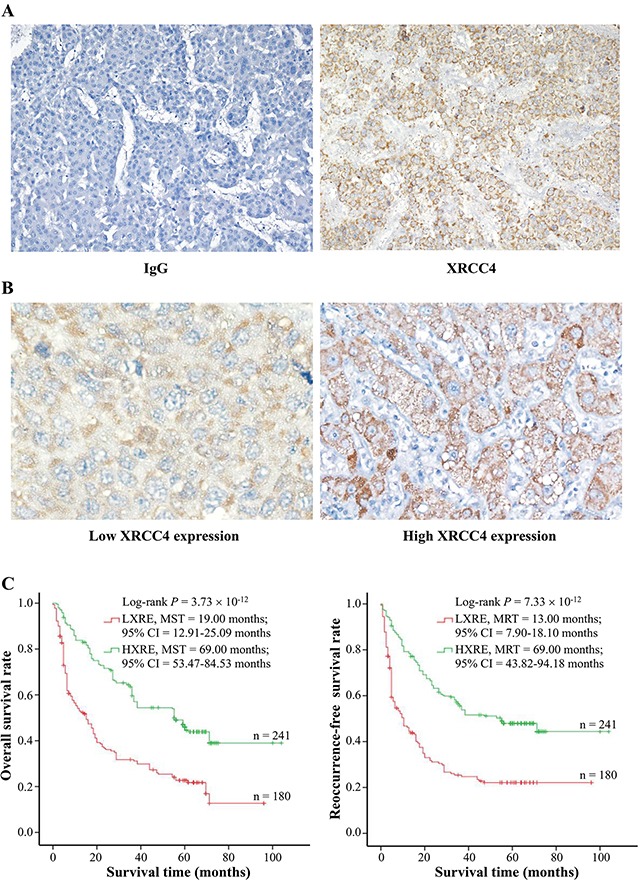
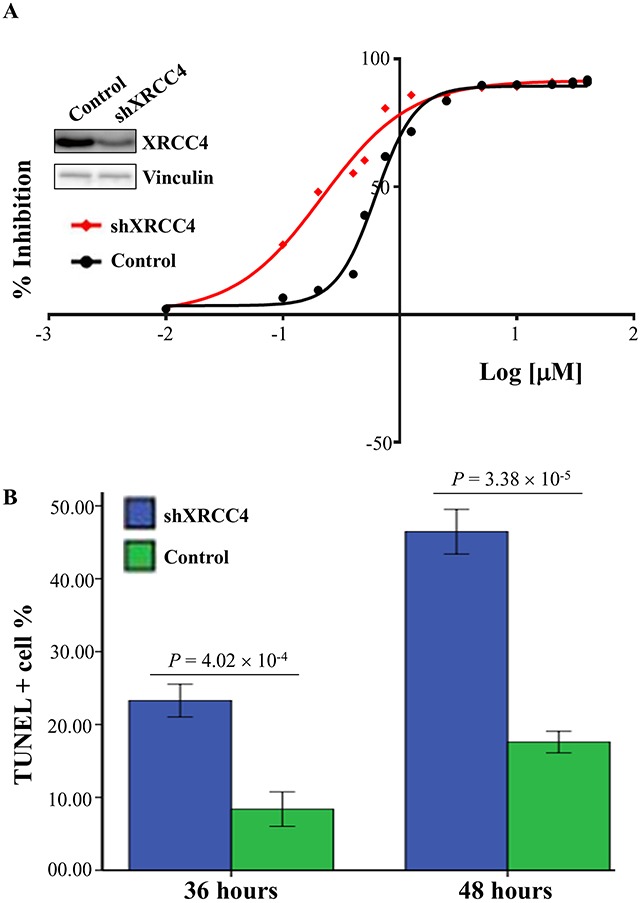
We conducted a hospital-based retrospective analysis (including 421 hepatocarcinoma cases) to analyze the effects of XRCC4 on hepatocarcinoma prognosis and TACE. The levels of XRCC4 expression were tested using immunohistochemistry. The sensitivity of cancer cells to anti-cancer drug doxorubicin was evaluated using the half-maximal inhibitory concentration (IC50).
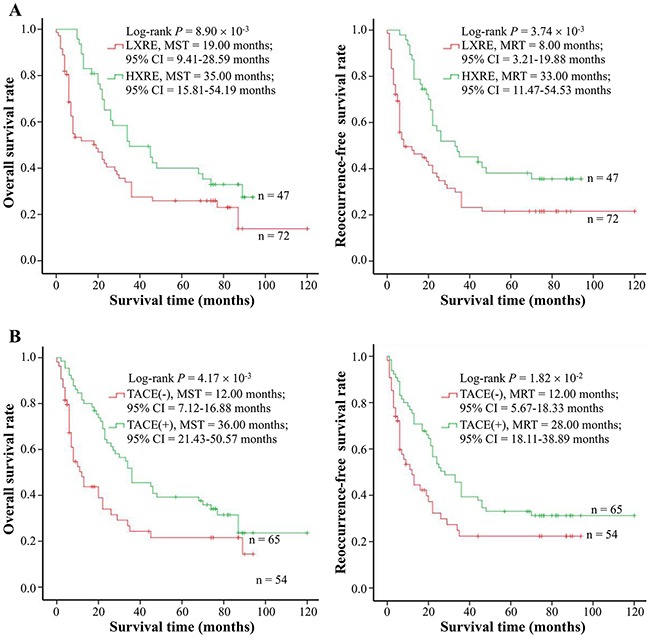
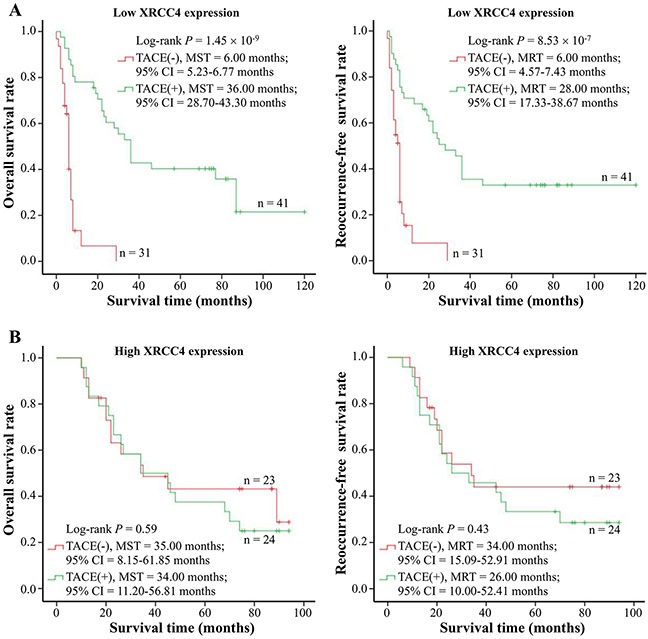
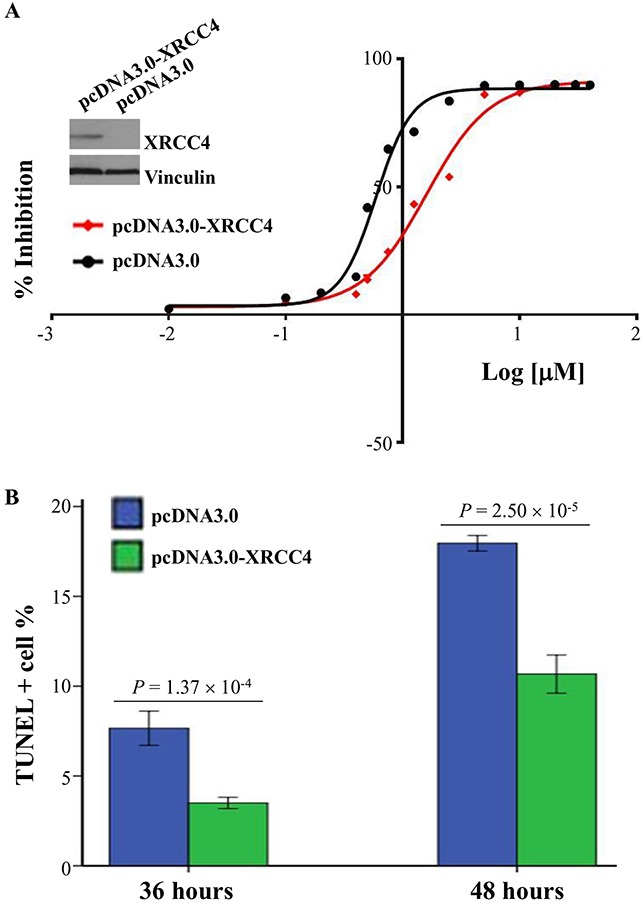
XRCC4 expression was significantly correlated with pathological features including tumor stage, liver cirrhosis, and micro-vessel density. XRCC4 expression was an independent prognostic factor of hepatocarcinoma, and TACE treatments had no effects on prognosis of hepatocarcinoma patients with high XRCC4 expression. More intriguingly, TACE improved the prognosis of hepatocarcinoma patients with low XRCC4 expression. Functionally, XRCC4 overexpression increased while XRCC4 knockdown reduced the IC50 of cancer cells to doxorubicin.
These results suggest that XRCC4 may be an independent prognostic factor for hepatocarcinoma patients, and that decreasing XRCC4 expression may be beneficial for post-operative adjuvant TACE treatment in hepatocarcinoma.
我们之前的研究表明,X射线修复互补蛋白4(XRCC4)的变体可能参与肝细胞癌(肝癌)的肿瘤发生。本研究旨在探讨XRCC4表达对肝癌患者可能的预后意义以及对经动脉化疗栓塞(TACE)治疗选择的可能价值。
我们进行了一项基于医院的回顾性分析(包括421例肝癌病例),以分析XRCC4对肝癌预后和TACE的影响。采用免疫组织化学检测XRCC4的表达水平。使用半数抑制浓度(IC50)评估癌细胞对抗癌药物阿霉素的敏感性。
XRCC4表达与包括肿瘤分期、肝硬化和微血管密度在内的病理特征显著相关。XRCC4表达是肝癌的独立预后因素,TACE治疗对XRCC4高表达的肝癌患者的预后没有影响。更有趣的是,TACE改善了XRCC4低表达的肝癌患者的预后。在功能上,XRCC4过表达增加而XRCC4敲低降低了癌细胞对阿霉素的IC50。
这些结果表明,XRCC4可能是肝癌患者的独立预后因素,降低XRCC4表达可能有利于肝癌术后辅助TACE治疗。