Centro de Investigación en Sanidad Animal (CISA-INIA), Instituto Nacional de Investigación y Tecnología Agraria y Alimentaria, Valdeolmos, Madrid, Spain.
Vet Res. 2017 Nov 21;48(1):79. doi: 10.1186/s13567-017-0482-x.
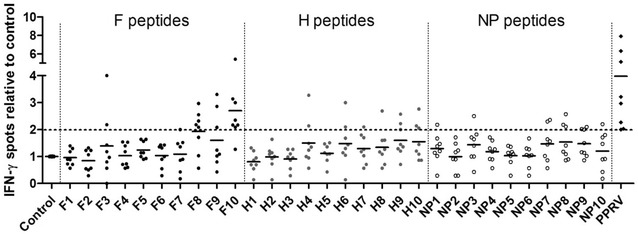
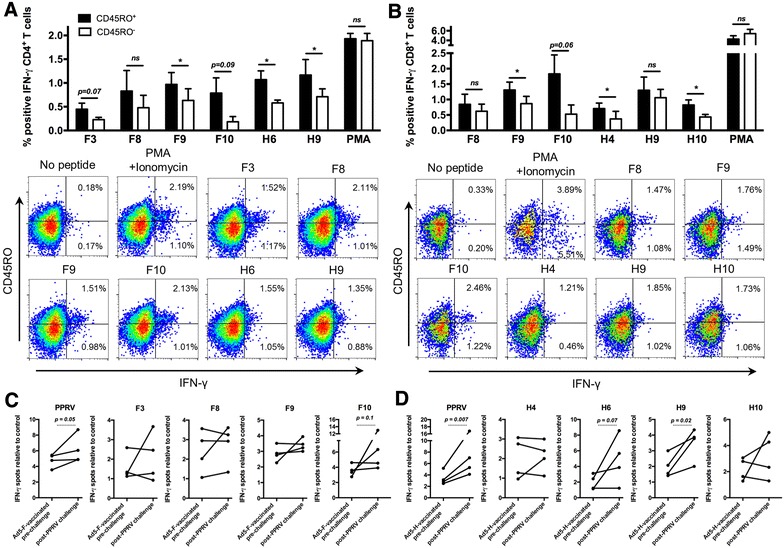
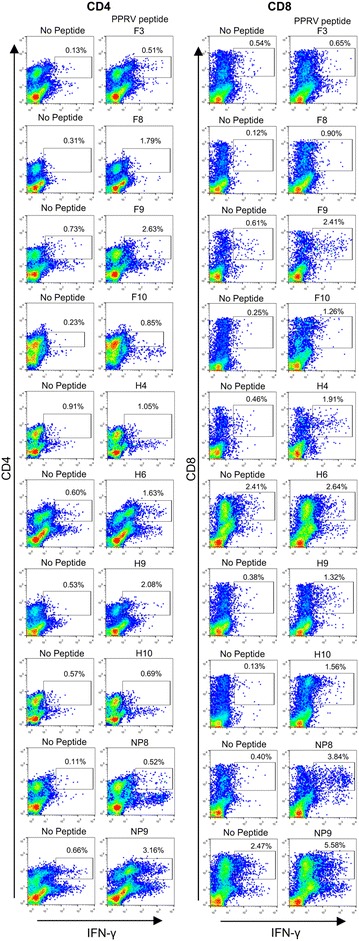
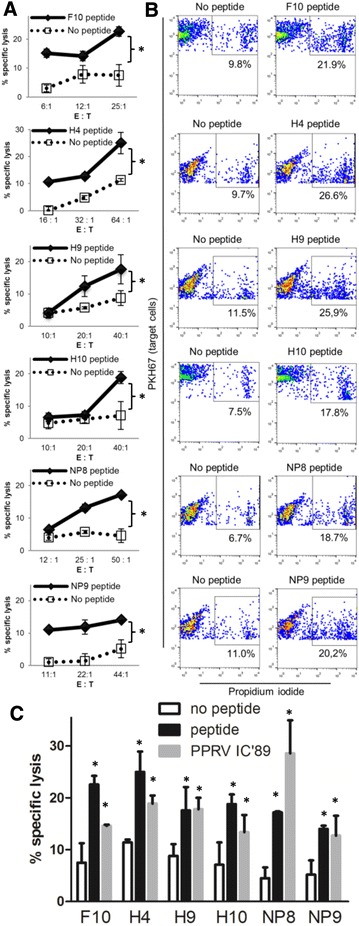
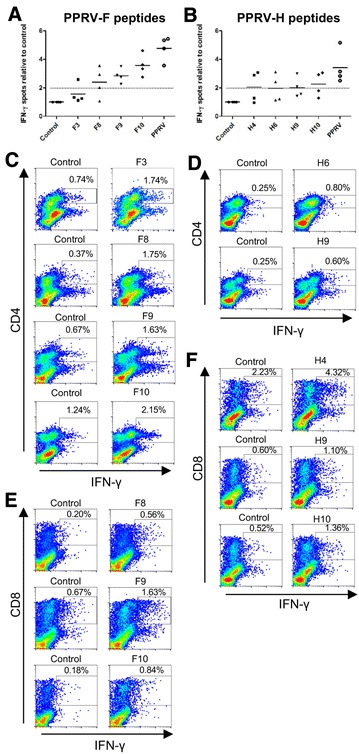
Peste des petits ruminants virus (PPRV) causes an economically important disease that limits productivity in small domestic ruminants and often affects the livestock of the poorest populations in developing countries. Animals that survive PPRV develop strong cellular and humoral responses, which are probably necessary for protection. Vaccination should thus aim at mimicking these natural responses. Immunization strategies against this morbillivirus using recombinant adenoviruses expressing PPRV-F or -H proteins can protect PPRV-challenged animals and permit differentiation of infected from vaccinated animals. Little is known of the T cell repertoire these recombinant vaccines induce. In the present work, we identified several CD4 and CD8 T cell epitopes in sheep infected with PPRV. We also show that recombinant adenovirus vaccination induced T cell responses to the same epitopes, and led to memory T cell differentiation. T cells primed by these recombinant adenovirus vaccines expanded after PPRV challenge and probably contributed to protection. These data validate the use of recombinant adenovirus expressing PPRV genes as DIVA strategies to control this highly contagious disease.
小反刍兽疫病毒(PPRV)会引起一种具有重要经济意义的疾病,这种疾病会降低小型家养反刍动物的生产力,而且常常影响发展中国家最贫困人群的牲畜。幸存于小反刍兽疫病毒的动物会产生强烈的细胞和体液反应,这可能对保护是必要的。因此,疫苗接种应该旨在模拟这些自然反应。使用表达 PPRV-F 或 -H 蛋白的重组腺病毒对这种副黏病毒的免疫策略可以保护 PPRV 感染的动物,并允许区分感染和接种的动物。对于这些重组疫苗诱导的 T 细胞库知之甚少。在本工作中,我们鉴定了感染 PPRV 的绵羊中的几个 CD4 和 CD8 T 细胞表位。我们还表明,重组腺病毒疫苗接种诱导了针对相同表位的 T 细胞反应,并导致记忆 T 细胞分化。这些重组腺病毒疫苗引发的 T 细胞在 PPRV 攻击后扩增,并可能有助于保护。这些数据验证了使用表达 PPRV 基因的重组腺病毒作为区分免疫和感染的策略来控制这种高度传染性疾病。