Wang Jialu, Zhao Fang, Liu Rui, Chen Jingjing, Zhang Qinghua, Lao Ruijuan, Wang Ze, Jin Xin, Liu Changxiao
School of Chinese Materia Medica, Tianjin University of Traditional Chinese Medicine, Nankai District.
Department of Pharmacology, Logistics University of Chinese People's Armed Police Force, Dongli District.
Int J Nanomedicine. 2017 Nov 6;12:8115-8127. doi: 10.2147/IJN.S139436. eCollection 2017.
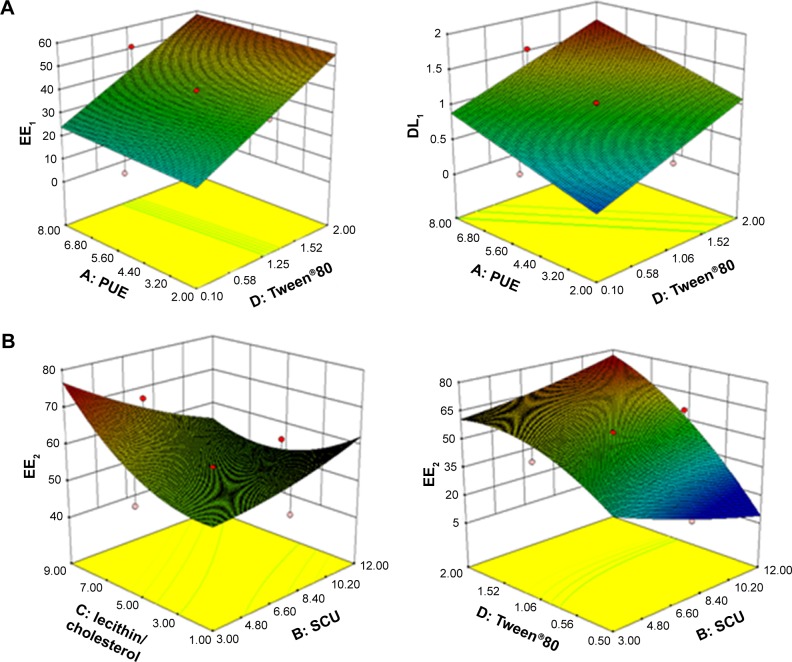
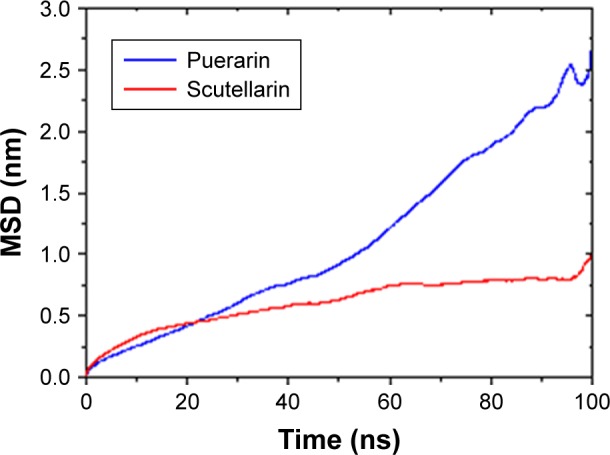
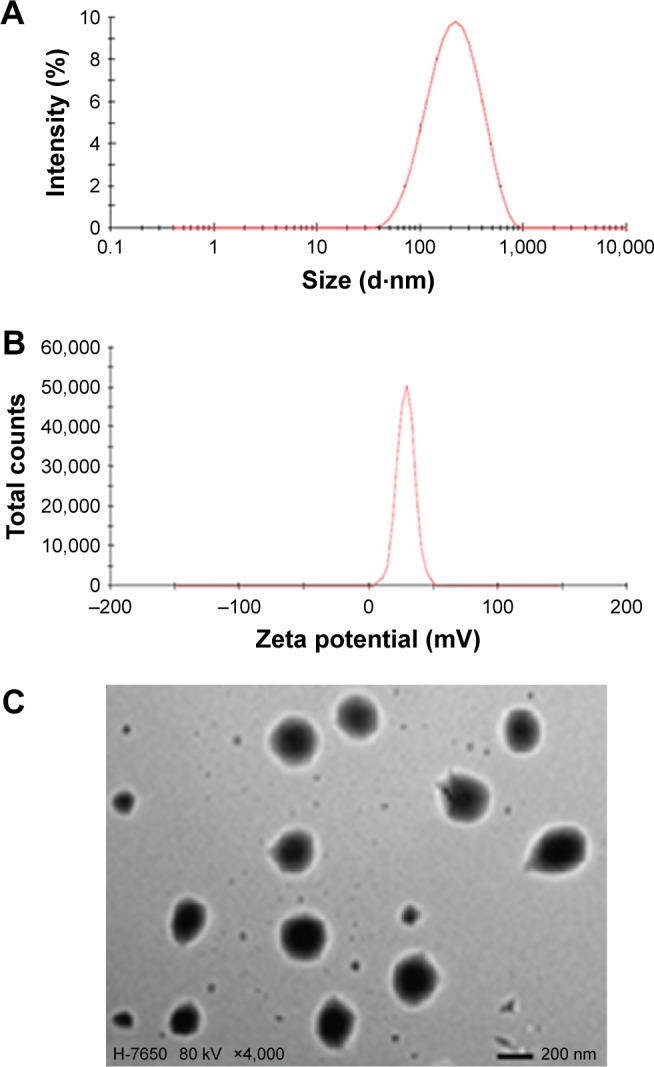
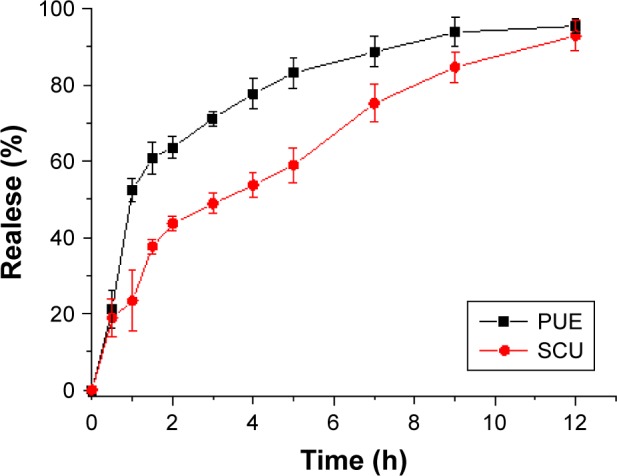
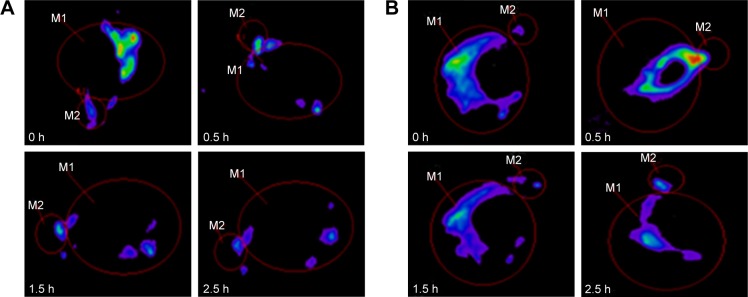
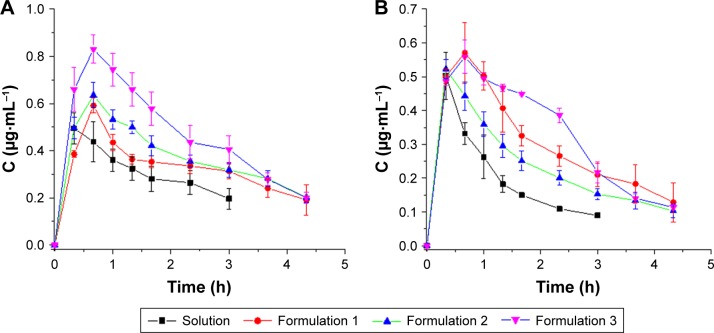
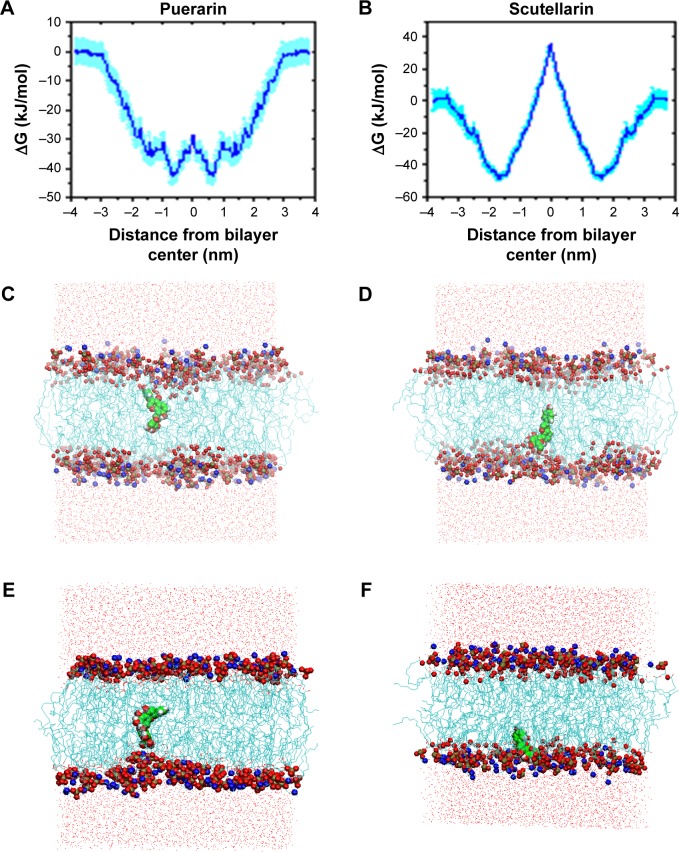
The purpose of this study was to prepare, optimize, and characterize a cationic lipid nanoparticle (CLN) system containing multicomponent drugs using a molecular dynamics model as a novel method of evaluating formulations. Puerarin (PUE) and scutellarin (SCU) were used as model drugs. CLNs were successfully prepared using melt-emulsion ultrasonication and low temperature-solidification technique. The properties of CLNs such as morphology, particle size, zeta potential, entrapment efficiency (EE), drug loading (DL), and drug release behavior were investigated. The CLNs were evaluated by corneal permeation, preocular retention time, and pharmacokinetics in the aqueous humor. Additionally, a molecular dynamics model was used to evaluate the formulation. Electron microscopy results showed that the nanoparticles were approximately spherical in shape. The EE (%) and DL (%) values of PUE and SCU in the optimal formulation were 56.60±3.73, 72.31±1.96 and 1.68±0.17, 2.44±1.14, respectively. The pharmacokinetic study in the aqueous humor showed that compared with the PUE and SCU solution, the area under the concentration-time curve (AUC) value of PUE was enhanced by 2.33-fold for PUE-SCU CLNs (<0.01), and the SCU AUC was enhanced by 2.32-fold (<0.01). In the molecular dynamics model, PUE and SCU passed through the POPC bilayer, with an obvious difference in the free energy well depth. It was found that the maximum free energy required for PUE and SCU transmembrane movement was ~15 and 88 kJ·mol, respectively. These findings indicated that compared with SCU, PUE easily passed through the membrane. The diffusion coefficient for PUE and SCU were 4.1×10±0.0027 and 1.0×10±0.0006 ecm·s, respectively. Data from the molecular dynamics model were consistent with the experimental data. All data indicated that CLNs have a great potential for ocular administration and can be used as an ocular delivery system for multicomponent drugs. Moreover, the molecular dynamics model can also be used as a novel method for evaluating formulations.
本研究的目的是使用分子动力学模型作为评估制剂的新方法,制备、优化并表征一种含有多组分药物的阳离子脂质纳米粒(CLN)系统。葛根素(PUE)和灯盏花素(SCU)用作模型药物。采用熔融乳化超声法和低温固化技术成功制备了CLN。研究了CLN的形态、粒径、zeta电位、包封率(EE)、载药量(DL)和药物释放行为等性质。通过角膜渗透、眼表滞留时间和房水中的药代动力学对CLN进行了评估。此外,还使用分子动力学模型评估制剂。电子显微镜结果表明,纳米粒呈近似球形。最佳制剂中PUE和SCU的EE(%)和DL(%)值分别为56.60±3.73、72.31±1.96和1.68±0.17、2.44±1.14。房水中的药代动力学研究表明,与PUE和SCU溶液相比,PUE-SCU CLN的浓度-时间曲线下面积(AUC)值提高了2.33倍(P<0.01),SCU的AUC提高了2.32倍(P<0.01)。在分子动力学模型中,PUE和SCU穿过POPC双层膜,自由能阱深度存在明显差异。发现PUE和SCU跨膜运动所需的最大自由能分别约为15和88 kJ·mol。这些发现表明,与SCU相比,PUE更容易穿过膜。PUE和SCU的扩散系数分别为4.1×10±0.0027和1.0×10±0.0006 ecm·s。分子动力学模型的数据与实验数据一致。所有数据表明,CLN在眼部给药方面具有很大潜力,可作为多组分药物的眼部给药系统。此外,分子动力学模型还可作为评估制剂的新方法。