Atik Ezgi, Taner Tülin
Assistant Professor in Orthodontics, School of Dentistry, University of Hacettepe (Ankara, Turkey).
Professor in Orthodontics, School of Dentistry, University of Hacettepe (Ankara, Turkey).
Dental Press J Orthod. 2017 Sep-Oct;22(5):75-82. doi: 10.1590/2177-6709.22.5.075-082.oar.
The aim of this study was to compare the longitudinal stability of the conventional straight-wire system after the use of a quad-helix appliance with Damon self-ligating system in patients with Class I malocclusion.
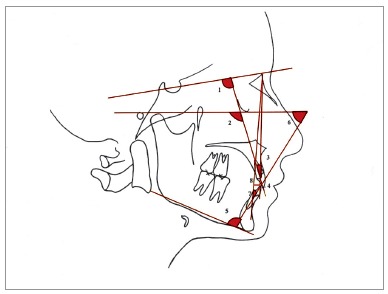
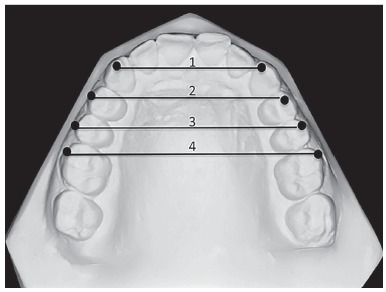
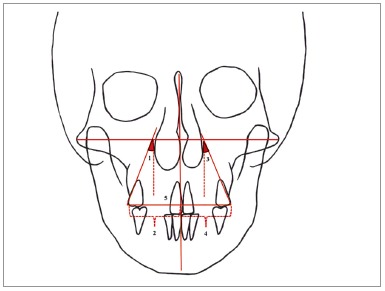
27 adolescent patients were evaluated at three different periods: pre-treatment (T1), post-treatment (T2) and three years post-treatment (T3). Group 1 included 12 patients (with a mean age of 14.65 year) treated with Damon 3MX bracket system; and Group 2 included 15 patients (with a mean age of 14.8 year) who underwent orthodontic treatment with Roth prescribed brackets after expansion with Quad-Helix appliance. Relapse was evaluated with dental cast examination and cephalometric radiograph tracings. Statistical analysis was performed with IBM-SPSS for Windows software, version 21 (SPSS Inc., Chicago, IL). A p-value smaller than 0.05 was considered statistically significant.
There were significant increases in all transverse dental and postero-anterior measurements (except for UL6-ML mm in Group 1) with active treatment. There was some significant relapse in the long-term in inter-canine width in both groups and in the inter-first premolar width in Group 2 (p< 0.05). Significant decrease in all frontal measurements from T2 to T3 was seen for both groups. Upper and lower incisors significantly proclined in T1-T2 (p< 0.05), however no relapse was found for both groups. When two systems were compared, there was no significant difference for the long-term follow-up period.
Conventional (quad-helix appliance with conventional brackets) and Damon systems were found similar with regard to the long-term incisor positions and transverse dimension changes of maxillary arch.
本研究旨在比较在安氏I类错牙合患者中,使用四螺旋矫治器后传统直丝弓矫治系统与Damon自结扎矫治系统的纵向稳定性。
对27例青少年患者在三个不同时期进行评估:治疗前(T1)、治疗后(T2)和治疗后三年(T3)。第1组包括12例患者(平均年龄14.65岁),采用Damon 3MX托槽系统治疗;第2组包括15例患者(平均年龄14.8岁),在使用四螺旋矫治器扩弓后,采用Roth定制托槽进行正畸治疗。通过模型检查和头影测量X线片描记评估复发情况。使用IBM-SPSS for Windows软件21版(SPSS公司,伊利诺伊州芝加哥)进行统计分析。p值小于0.05被认为具有统计学意义。
积极治疗后,所有横向牙及前后向测量值均显著增加(第1组中UL6-ML mm除外)。两组的犬齿间宽度和第2组的第一前磨牙间宽度在长期随访中有一些显著复发(p<0.05)。两组从T2到T3所有正面测量值均显著减小。上下切牙在T1-T2显著前倾(p<0.05),然而两组均未发现复发。当比较两种系统时,长期随访期无显著差异。
发现传统矫治系统(四螺旋矫治器与传统托槽)和Damon系统在上颌切牙的长期位置及上颌牙弓横向尺寸变化方面相似。