Koch Christine, Kim Younghoon, Zöller Tobias, Born Christina, Steinle Alexander
Institute for Molecular Medicine, Goethe-University Frankfurt am Main, Frankfurt am Main, Germany.
Department of Internal Medicine I, Division of Gastroenterology and Hepatology, University Hospital Frankfurt am Main, Frankfurt am Main, Germany.
Front Immunol. 2017 Nov 3;8:1466. doi: 10.3389/fimmu.2017.01466. eCollection 2017.
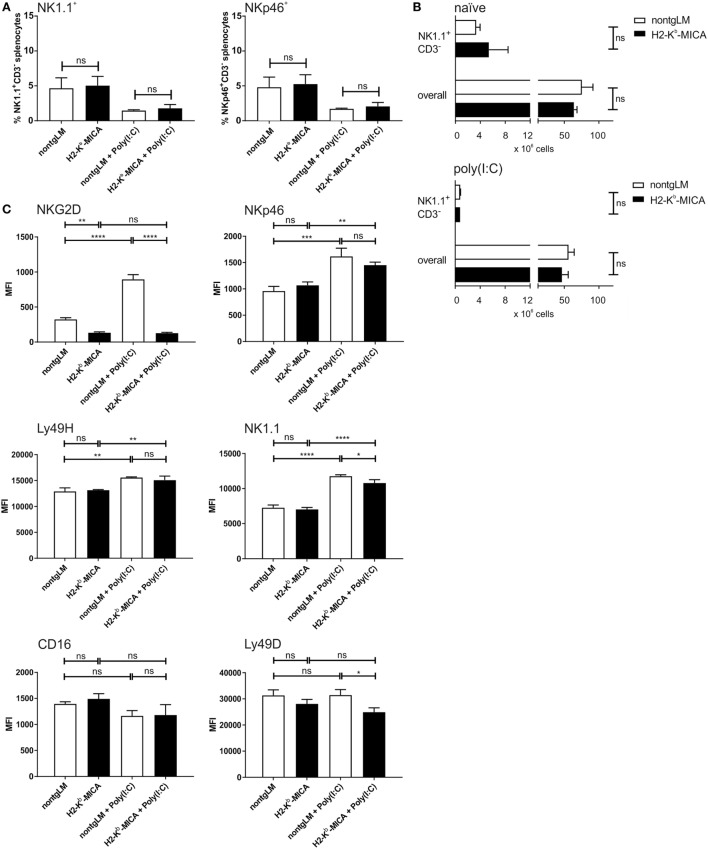
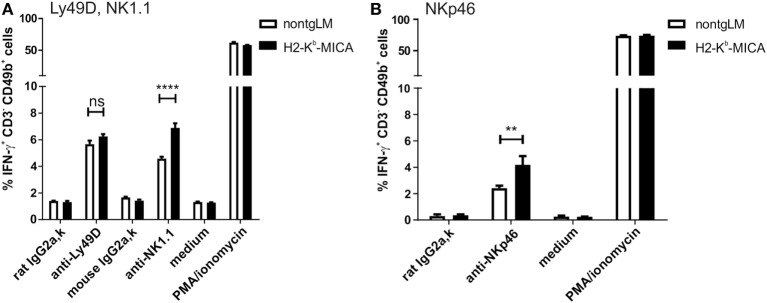
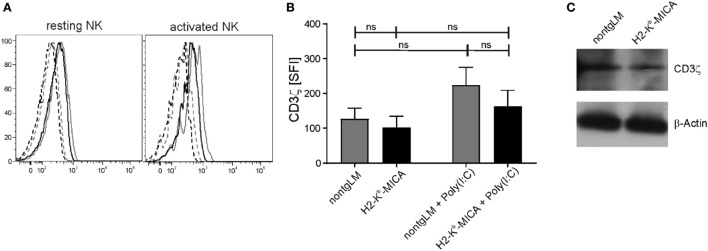
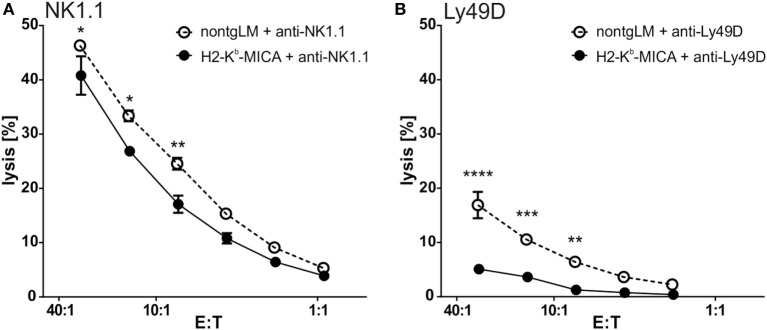
Immunosuppression is a typical hallmark of cancer and frequently includes perturbations of the NKG2D tumor recognition system as well as impaired signaling by other activating NK cell receptors. Several studies suggested that sustained engagement of the NKG2D receptor, as it is occurring in the tumor microenvironment, not only impairs expression and function of NKG2D but also impacts signaling by other activating NK receptors. Here, we made use of a transgenic mouse model of ubiquitous NKG2D ligand expression (H2-K-MICA mice) to investigate consequences of chronic NKG2D engagement for functional responsiveness by other activating NK receptors such as NKp46 and Ly49D. Unexpectedly, we found no evidence for an impairment of NKp46 expression and function in H2-K-MICA mice, as anticipated from previous experiments. However, we observed a marked downregulation and dysfunction of the activating receptor Ly49D in activated NK cells from H2-K-MICA mice. Ly49D shares the adaptor proteins DAP10 and DAP12 with NKG2D possibly explaining the collateral impairment of Ly49D function in situations of chronic NKG2D engagement. Altogether, our results demonstrate that persistent engagement of NKG2D , as often observed in tumors, can selectively impair functions of unrelated NK receptors and thereby compromise NK responsiveness to third-party antigens.
免疫抑制是癌症的典型特征,通常包括NKG2D肿瘤识别系统的紊乱以及其他激活型自然杀伤(NK)细胞受体的信号传导受损。多项研究表明,在肿瘤微环境中发生的NKG2D受体持续结合,不仅会损害NKG2D的表达和功能,还会影响其他激活型NK受体的信号传导。在此,我们利用一种普遍表达NKG2D配体的转基因小鼠模型(H2-K-MICA小鼠),来研究NKG2D长期结合对其他激活型NK受体(如NKp46和Ly49D)功能反应性的影响。出乎意料的是,与之前实验预期的相反,我们没有发现H2-K-MICA小鼠中NKp46表达和功能受损的证据。然而,我们观察到H2-K-MICA小鼠活化NK细胞中激活型受体Ly49D明显下调且功能异常。Ly49D与NKG2D共用衔接蛋白DAP10和DAP12,这可能解释了在NKG2D长期结合的情况下Ly49D功能的附带损伤。总之,我们的结果表明,在肿瘤中经常观察到的NKG2D持续结合,可选择性损害不相关NK受体的功能,从而损害NK细胞对第三方抗原的反应性。