Peultier-Celli Laetitia, Mainard Didier, Wein Frank, Paris Nicolas, Boisseau Patrick, Ferry Alexandre, Gueguen René, Chary-Valckenaere Isabelle, Paysant Jean, Perrin Philippe
Faculty of Medicine and UFR STAPS, University of Lorraine, EA 3450, Development, Adaptation and Handicap, Villers-lès-Nancy, France.
Laboratory for the Analysis of Posture, Equilibrium and Motor Function (LAPEM), University Hospital of Nancy, Vandoeuvre-lès-Nancy, France.
Front Surg. 2017 Nov 7;4:61. doi: 10.3389/fsurg.2017.00061. eCollection 2017.
Instability of the knee, related to anterior cruciate ligament injury, is treated by surgical reconstruction. During recovery, a loss of proprioceptive input can have a significant impact. Few studies have evaluated the benefits of rehabilitation of the knee in aquatic environment on functional outcomes.
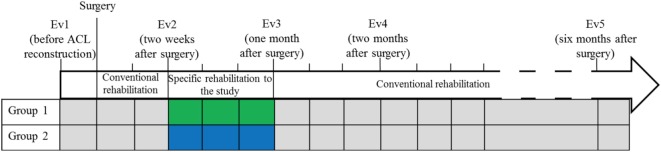
This study aimed to compare an innovative rehabilitation protocol combining reduced conventional rehabilitation with aquatic rehabilitation, with a conventional rehabilitation, according to the National French Health Authority, in terms of kinetics, development of proprioceptive skills, and functional improvement of the knee.
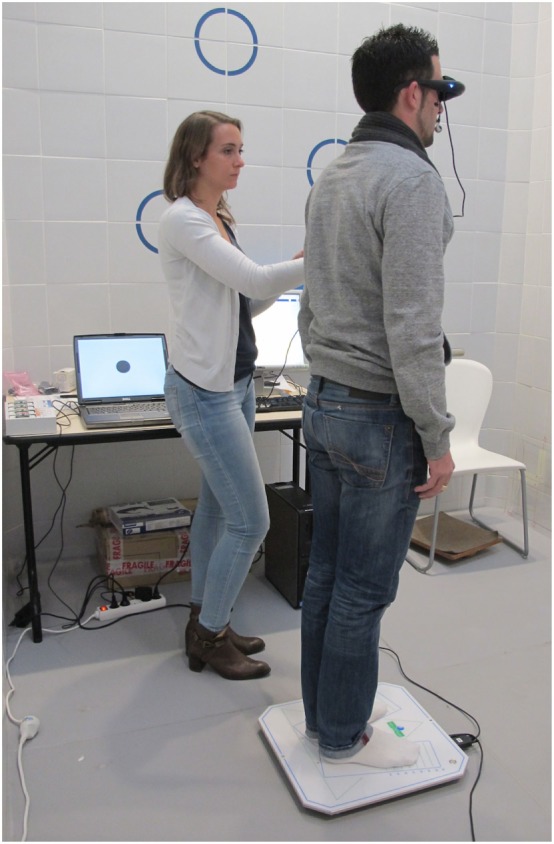
67 patients, who were amateur or professional athletes, were randomized into two groups: 35 patients followed the conventional rehabilitation protocol (Gr1) and 32 patients followed the innovative rehabilitation protocol (Gr2). Patients were evaluated before surgery, and at 2 weeks, 1, 2, and 6 months after surgery using posturography, and evaluation of muscular strength, walking performance and proprioception. This study is multicenter, prospective, randomized, and controlled with a group of patients following conventional rehabilitation (level of evidence I).
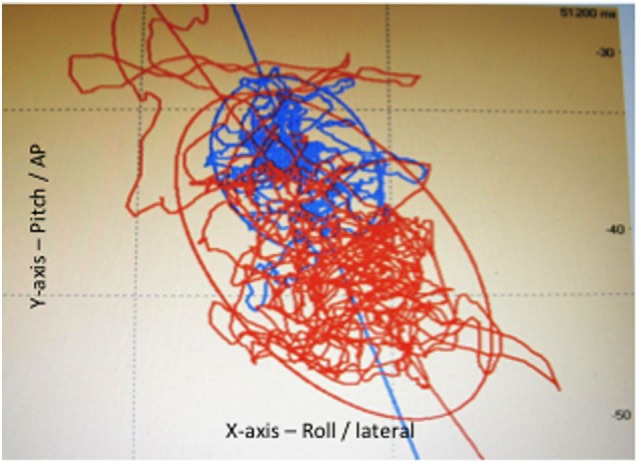
For the same quality of postural control, Gr2 relied more on somesthesia than Gr1 at 6 months. The affected side had an impact on postural control and in particular on the preoperative lateralization, at 2 weeks and at 1 month. Lateralization depended on the affected knee, with less important lateralization in Gr2 preoperatively and at 1 month. The quadriceps muscular strength was higher in Gr2 than in Gr1 at 2 and 6 months and muscle strength of the external hamstring was greater in Gr2 than in Gr1 at 6 months. The isokinetic test showed a greater quadriceps muscular strength in Gr2. Gr2 showed a greater walking distance than Gr1 at one month. Gr2 showed an improvement in the proprioceptive capacities of the operated limb in flexion for the first 2 months.
The effectiveness of the innovative rehabilitation program permits faster recovery, allowing for an earlier return to social, sporting, and professional activities. Faster retrieval of knee function following aquatic rehabilitation would prevent both short-term risk of lesions of the contralateral limb due to overcompensation and long-term risk of surgery due to osteoarthritis.
NCT02225613.
与前交叉韧带损伤相关的膝关节不稳通过手术重建进行治疗。在恢复过程中,本体感觉输入的丧失可能会产生重大影响。很少有研究评估在水环境中进行膝关节康复对功能结局的益处。
本研究旨在根据法国国家卫生管理部门的标准,比较一种创新的康复方案(将减少常规康复与水上康复相结合)与常规康复方案在动力学、本体感觉技能发展以及膝关节功能改善方面的差异。
67名业余或职业运动员患者被随机分为两组:35名患者遵循常规康复方案(第1组),32名患者遵循创新康复方案(第2组)。在手术前以及术后2周、1个月、2个月和6个月,使用姿势描记法以及对肌肉力量、步行表现和本体感觉进行评估。本研究是多中心、前瞻性、随机且有一组遵循常规康复的患者作为对照的研究(证据等级为I)。
在姿势控制质量相同的情况下,第2组在术后6个月比第1组更多地依赖躯体感觉。患侧在术后2周和1个月时对姿势控制有影响,尤其是对术前的偏侧化有影响。偏侧化取决于患侧膝关节,第2组在术前和术后1个月时的偏侧化程度较轻。第2组在术后2个月和6个月时股四头肌力量高于第1组,在术后6个月时外侧腘绳肌力量大于第1组。等速测试显示第2组股四头肌力量更大。第2组在术后1个月时步行距离比第1组长。第2组在术后前2个月患侧肢体屈曲时本体感觉能力有所改善。
创新康复方案的有效性使恢复更快,能更早回归社会、体育和职业活动。水上康复后膝关节功能更快恢复可预防因过度代偿导致的对侧肢体短期损伤风险以及因骨关节炎导致的长期手术风险。
NCT02225613