Alfaras Irene, Mitchell Sarah J, Mora Hector, Lugo Darisbeth Rosario, Warren Alessandra, Navas-Enamorado Ignacio, Hoffmann Vickie, Hine Christopher, Mitchell James R, Le Couteur David G, Cogger Victoria C, Bernier Michel, de Cabo Rafael
Experimental Gerontology Section, Translational Gerontology Branch, Intramural Research Program, National Institute on Aging, National Institutes of Health, 251 Bayview Boulevard, Baltimore, MD 21224 USA.
Centre for Education and Research on Ageing, ANZAC Research Institute, Sydney, NSW Australia.
NPJ Aging Mech Dis. 2017 Nov 20;3:16. doi: 10.1038/s41514-017-0018-7. eCollection 2017.
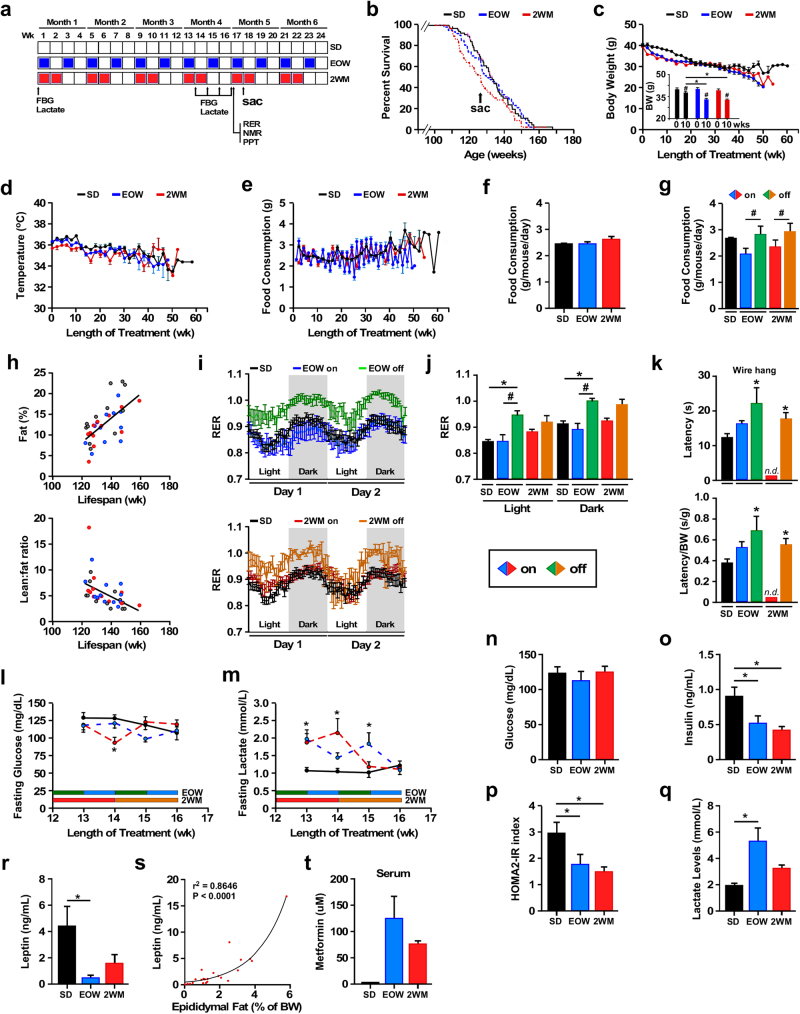
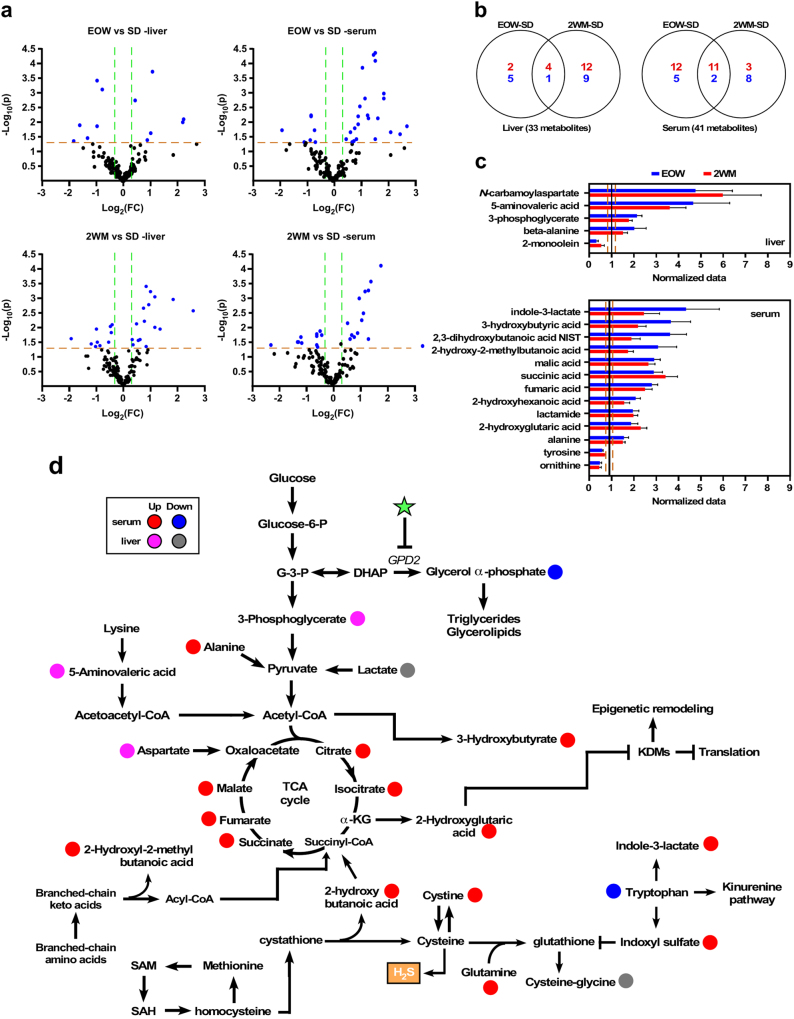
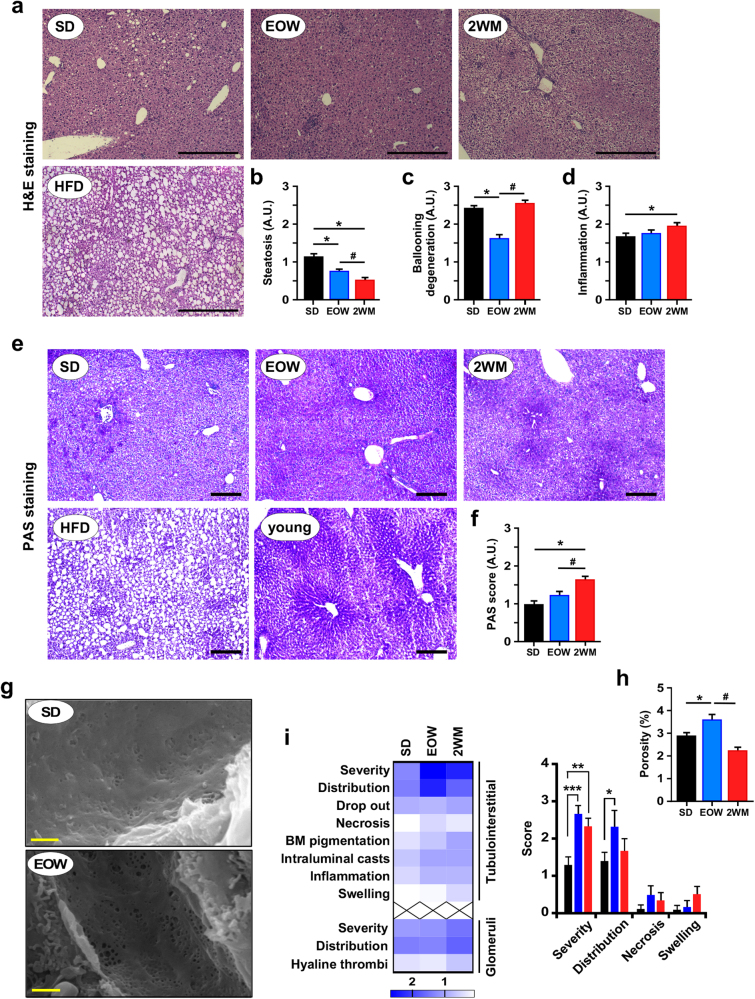
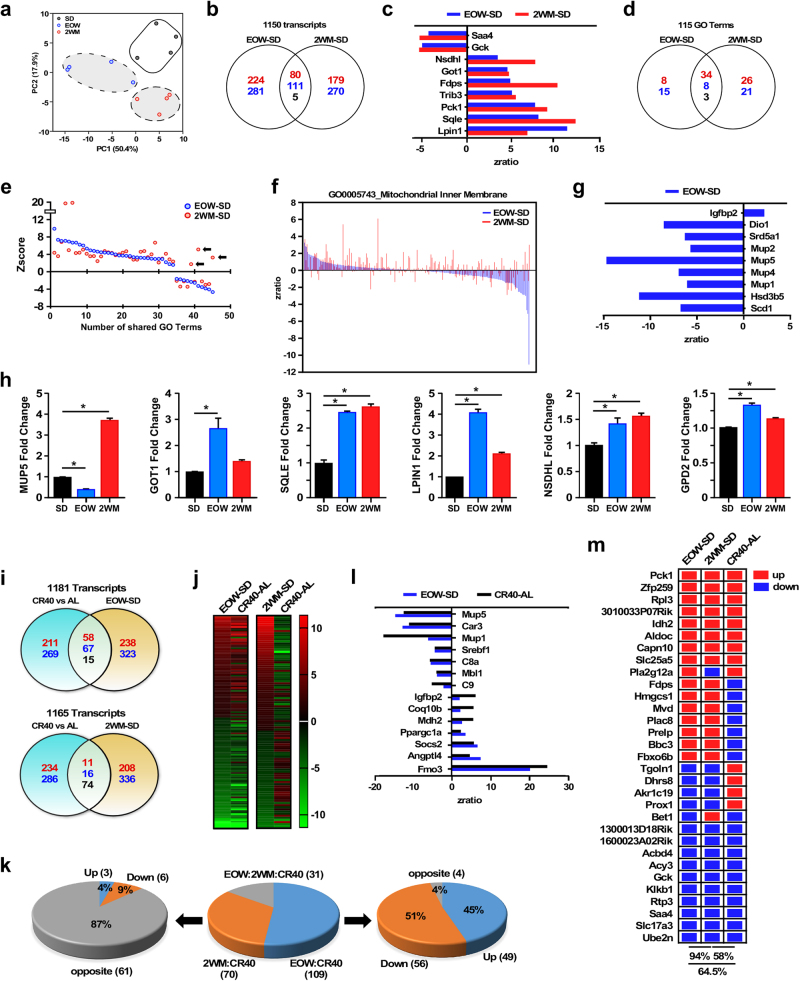
Chronic 1% metformin treatment is nephrotoxic in mice, but this dose may nonetheless confer health benefits if given intermittently rather than continuously. Here, we examined the effects of 1% metformin given every-other week (EOW) or two consecutive weeks per month (2WM) on survival of 2-year-old male mice fed standard chow. EOW and 2WM mice had comparable life span compared with control mice. A significant reduction in body weight within the first few weeks of metformin treatment was observed without impact on food consumption and energy expenditure. Moreover, there were differences in the action of metformin on metabolic markers between the EOW and 2WM groups, with EOW metformin conferring greater benefits. Age-associated kidney lesions became more pronounced with metformin, although without pathological consequences. In the liver, metformin treatment led to an overall reduction in steatosis and was accompanied by distinct transcriptomic and metabolomic signatures in response to EOW versus 2WM regimens. Thus, the absence of adverse outcomes associated with chronic, intermittent use of 1% metformin in old mice has clinical translatability into the biology of aging in humans.
长期给予1%的二甲双胍对小鼠具有肾毒性,但如果间歇性而非持续给药,该剂量仍可能带来健康益处。在此,我们研究了每隔一周(EOW)或每月连续两周(2WM)给予1%二甲双胍对喂食标准饲料的2岁雄性小鼠存活情况的影响。与对照小鼠相比,EOW组和2WM组小鼠的寿命相当。在二甲双胍治疗的最初几周内观察到体重显著下降,但对食物摄入量和能量消耗没有影响。此外,EOW组和2WM组之间二甲双胍对代谢标志物的作用存在差异,EOW组的二甲双胍带来的益处更大。尽管没有病理后果,但随着二甲双胍治疗,与年龄相关的肾脏病变变得更加明显。在肝脏中,二甲双胍治疗导致脂肪变性总体减少,并伴随着对EOW和2WM给药方案的不同转录组和代谢组特征。因此,老年小鼠长期间歇性使用1%二甲双胍未出现不良后果,这在临床上可转化为人类衰老生物学的研究。